Overview
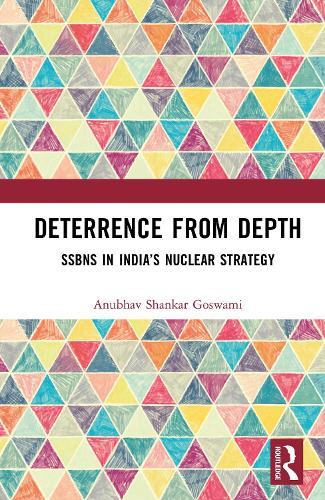
India’s sea-based nuclear deterrent is entering a new phase, with the third Arihant-class SSBN, INS Aridhaman, due for commissioning and a fourth boat at an advanced stage of construction. Together, this expanding force is intended to form the ultimate guarantor of India’s nuclear deterrence. The credibility and perceived invulnerability of these platforms are therefore sine qua non for deterrence stability. Against this backdrop, the book examines the optimal deployment strategies India might adopt to enhance the survivability of its SSBNs. The principal strategy is open-ocean patrols, while an alternative approach is the bastion strategy, under which SSBNs operate within relatively secure home waters. Both strategies can be operationalised through continuous at-sea deterrence, with at least one submarine maintained on patrol at all times to strengthen the credibility of assured retaliation. Each approach carries distinct advantages and limitations. Accordingly, the book analyses the experiences of the United States, Russia, the United Kingdom, France, and China with both bastion and open-ocean patrol concepts. Drawing on these comparative cases, it proposes policy options for India’s “silent guardians,” while remaining attentive to India’s unique nuclear doctrine, threat environment, and geographic constraints. This title has been co-published with Knowledge World Publishers. T&F does not sell or distribute the print versions in Bangladesh, Bhutan, India, Nepal, Pakistan, and Sri lanka.
Full Product Details
Author: Anubhav Shankar Goswami
Publisher: Taylor & Francis Ltd
Imprint: Routledge
Weight: 0.570kg
ISBN: 9781041255710
ISBN 10: 1041255713
Pages: 200
Publication Date: 07 April 2026
Audience:
College/higher education
,
Professional and scholarly
,
Tertiary & Higher Education
,
Professional & Vocational
Format: Hardback
Publisher's Status: Active
Availability: Not yet available

This item is yet to be released. You can pre-order this item and we will dispatch it to you upon its release.
Reviews
“By drawing out operational and doctrinal lessons from established strategic naval forces, the book fills an important gap in the existing literature and offers valuable context for thinking about India’s evolving sea-based nuclear deterrence posture.” — Troy Lee Brown, Researcher, University of Western Australia “Given its rigorous analysis and the critical importance of its subject, this book belongs in the global strategic conversations.” — Sriparna Pathak, Professor of China Studies, O.P. Jindal Global University, India “Deterrence in Depth is very well written and an important statement on India’s submarine nuclear strategy.” — David Brewster, Senior Research Fellow, Australian National University, Australia
“Anubhav analyses the sea leg of India’s nuclear triad in a very logical manner and makes the case for enhanced submarine force levels. Brilliantly written and a fascinating read.” — Rajesh Kumar (Retd) Former Commander-in-Chief, Strategic Forces Command, India. “An incisive and engaging study of a topical issue that is rarely if ever discussed in India. A must read for those interested in the development of India’s Sea Based Deterrent.” — Sanjay Mahindru (Retd) Former Deputy Chief of Naval Staff, India. “By drawing out operational and doctrinal lessons from established strategic naval forces, the book fills an important gap in the existing literature and offers valuable context for thinking about India’s evolving sea-based nuclear deterrence posture.” — Troy Lee Brown, Research Fellow, Defence and Security Institute (DSI), University of Western Australia, Australia. “Given its rigorous analysis and the critical importance of its subject, this book belongs in the global strategic conversations.” — Sriparna Pathak, Professor of China Studies, O.P. Jindal Global University, India. “Deterrence from Depth is very well written and an important statement on India’s submarine nuclear strategy.” — David Brewster, Senior Research Fellow, National Security College, Australian National University, Australia.
Author Information
Anubhav Shankar Goswami is Doctoral candidate in Politics and International Relations at the Indo-Pacific Research Centre (IPRC), Murdoch University, Australia. His research focuses on nuclear strategy, with particular emphasis on nuclear brinkmanship. His work on nuclear deterrence, nuclear terrorism, non-proliferation, and the representation of nuclear weapons in popular culture has been published in India and abroad.