Overview
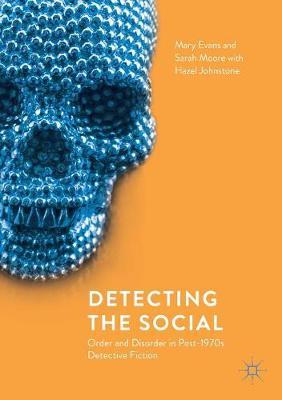
This book analyses the ways in which twenty-first century detective fiction provides an understanding of the increasingly complex and often baffling contemporary world — and what sociology, as a discipline, can learn from it. Conventional sociological accounts of fiction generally comprehend its value in terms of the ways in which it can illustrate, enlarge or help to articulate a particular social theory. Evans, Moore, and Johnstone suggest a different approach, and demonstrate that by taking a group of detective novels, we can unveil so far unidentified, but crucial, theoretical ideas about what it means to be an individual in the twenty-first century. More specifically, the authors argue that detective fiction of the last forty years illuminates the effects of urban isolation and separation, the invisibility of institutional power, financial insecurity, and the failure of public authorities to protect people. In doing so, this body of fiction traces out the fault-lines in our social arrangements, rehearses our collective fears, and captures a mood of restless disquiet. By engaging with detective stories in this way, the book revisits ideas about the promise and purpose of sociology.
Full Product Details
Author: Mary Evans ,
Sarah Moore ,
Hazel Johnstone
Publisher: Springer International Publishing AG
Imprint: Springer International Publishing AG
Edition: 2019 ed.
Weight: 0.454kg
ISBN: 9783319945194
ISBN 10: 331994519
Pages: 196
Publication Date: 26 September 2018
Audience:
Professional and scholarly
,
Professional & Vocational
Format: Paperback
Publisher's Status: Active
Availability: Manufactured on demand

We will order this item for you from a manufactured on demand supplier.
Reviews
The book revisits ideas about the promise and purpose of sociology. Detecting the social provides a unique and fascinating study into the World's favourite reading genre and is a must read for people interested in not only sociology and criminology but also those who want to investigate further the motives behind their favourite writers, and their detectives. (Barry Forshaw, Crime Time, crimetime.co.uk, February, 5 , 2019) The book uses a range of examples from the genre, as well as comparative discussions with previous eras of detective fiction. ... the book will be key reading across the social sciences. (New Books network, newbooksnetwork.com, January 14, 2019)
“The book revisits ideas about the promise and purpose of sociology. Detecting the social provides a unique and fascinating study into the World's favourite reading genre and is a must read for people interested in not only sociology and criminology but also those who want to investigate further the motives behind their favourite writers, and their detectives.” (Barry Forshaw, Crime Time, crimetime.co.uk, February, 5 , 2019) “The book uses a range of examples from the genre, as well as comparative discussions with previous eras of detective fiction. … the book will be key reading across the social sciences.” (New Books network, newbooksnetwork.com, January 14, 2019)
The book revisits ideas about the promise and purpose of sociology. Detecting the social provides a unique and fascinating study into the World's favourite reading genre and is a must read for people interested in not only sociology and criminology but also those who want to investigate further the motives behind their favourite writers, and their detectives. (Barry Forshaw, Crime Time, crimetime.co.uk, February, 5 , 2019)
Author Information
Mary Evans is Leverhulme Emeritus Professor, Department of Gender Studies, London School of Economics, UK. Sarah Moore is Senior Lecturer in the Department of Social & Policy Sciences, University of Bath, UK. Hazel Johnstone is Departmental Manager, Department of Gender Studies, London School of Economics, and Managing Editor, European Journal of Women's Studies, UK.