Overview
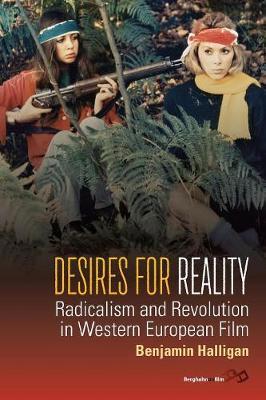
As with many aspects of European cultural life, film was galvanized and transformed by the revolutionary fervor of 1968. This groundbreaking study provides a full account of the era’s cinematic crises, innovations, and provocations, as well as the social and aesthetic contexts in which they appeared. The author mounts a genuinely fresh analysis of a contested period in which everything from the avant-garde experiments of Godard, Pasolini, Schroeter, and Fassbinder to the “low” cinematic genres of horror, pornography, and the Western reflected the cultural upheaval of youth in revolt—a cinema for the barricades.
Full Product Details
Author: Benjamin Halligan
Publisher: Berghahn Books
Imprint: Berghahn Books
ISBN: 9781789200867
ISBN 10: 1789200865
Pages: 262
Publication Date: 18 January 2019
Audience:
College/higher education
,
Undergraduate
,
Postgraduate, Research & Scholarly
Format: Paperback
Publisher's Status: Active
Availability: In Print

This item will be ordered in for you from one of our suppliers. Upon receipt, we will promptly dispatch it out to you. For in store availability, please contact us.
Reviews
Desires for Reality addresses a long-overlooked aspect of film culture in a manner that is both subtle and probing. Halligan analyzes theory and practice in a lucid and persuasive manner, connecting film culture not only to politics but also other art forms such as music and the plastic arts. I know of no other work that covers the same territory from this perspective, which offers a paradigm shift in the manner that we as scholars might think and write about this era. Catherine Wheatley, King's College London
“As a history of aesthetic priorities, formal shifts, and creative possibilities in broadly leftist cinema in Europe of the 1960s, the book is authoritative. The early chapters about the pre-history of the film production in question offer valuable insights into the influence of neo-realism on European post-war cinema, and the importance of concepts of Bazinian realism on the French New Wave specifically. The quality of the film analysis throughout is excellent.” • French Studies “Desires for Reality addresses a long-overlooked aspect of film culture in a manner that is both subtle and probing. Halligan analyzes theory and practice in a lucid and persuasive manner, connecting film culture not only to politics but also other art forms such as music and the plastic arts. I know of no other work that covers the same territory from this perspective, which offers a paradigm shift in the manner that we as scholars might think and write about this era.” • Catherine Wheatley, King’s College London “Halligan’s reading of 1960s European cinema history is compelling and intricate. He moves beyond pre-existing scholarly categories and offers a new approach to these films, introducing them to unlikely company and providing fresh ways of looking at them. This book has the potential to reinvigorate debates about film history, revolutionary culture, realism and modernism, and a variety of other topics.” • Catherine Fowler, University of Otago
As a history of aesthetic priorities, formal shifts, and creative possibilities in broadly leftist cinema in Europe of the 1960s, the book is authoritative. The early chapters about the pre-history of the film production in question offer valuable insights into the influence of neo-realism on European post-war cinema, and the importance of concepts of Bazinian realism on the French New Wave specifically. The quality of the film analysis throughout is excellent. * French Studies Desires for Reality addresses a long-overlooked aspect of film culture in a manner that is both subtle and probing. Halligan analyzes theory and practice in a lucid and persuasive manner, connecting film culture not only to politics but also other art forms such as music and the plastic arts. I know of no other work that covers the same territory from this perspective, which offers a paradigm shift in the manner that we as scholars might think and write about this era. * Catherine Wheatley, King's College London Halligan's reading of 1960s European cinema history is compelling and intricate. He moves beyond pre-existing scholarly categories and offers a new approach to these films, introducing them to unlikely company and providing fresh ways of looking at them. This book has the potential to reinvigorate debates about film history, revolutionary culture, realism and modernism, and a variety of other topics. * Catherine Fowler, University of Otago
Author Information
Benjamin Halligan is the Director of the Doctoral College of the University of Wolverhampton. His publications include Michael Reeves (2003), and the co-edited collections The Music Documentary: Acid Rock to Electropop (2013) and The Arena Concert: Music, Media and Mass Entertainment (2015).