Overview
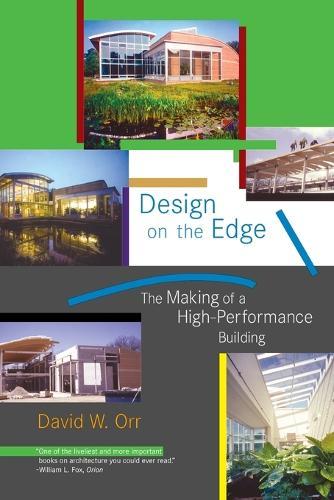
The story of the building of the Adam Joseph Lewis Center at Oberlin College in the context of ecological design, institutional learning, and the green campus movement. The story of the Adam Joseph Lewis Center at Oberlin College—the first substantially green building to be built on a college campus—encompasses more than the particulars of one building. In Design on the Edge, David Orr writes about the planning and design of Oberlin's environmental studies building as part of a larger story about the art and science of ecological design and the ability of institutions of higher learning themselves to learn. The Lewis Center, which has attracted worldwide attention as a model of ecological design, operates according to environmental principles. It is powered entirely by solar energy, features landscaping with fruit trees and vegetable gardens, and houses a Living Machine, which processes all wastewater for reuse in the building or landscape. Orr puts the Lewis Center into historical design context and describes the obstacles and successes he encountered in obtaining funds and college approval, interweaving the particulars of the center with thoughts on the larger environmental and societal issues the building process illustrates. Equal parts analysis, personal reflection, and call to action, Design on the Edge illustrates the process of institutional change, institutional learning, and the political economy of design. It describes how the idea of the Lewis Center originated and was translated into reality with the help of such environmental visionaries as William McDonough and John Todd, and how the building has performed since its completion. College and university administrators will spend 17 billion dollars on new buildings over the next few years. Design on the Edge is essential reading for architects, planners, and environmentalists who need to sell the innovations of ecological design to wary institutions, and for educators and students whose profession is undermined by the very buildings they work in—and for anyone who has ever tried to change an organization for the better.
Full Product Details
Author: David W. Orr (Lewis Ctr Environmental Study)
Publisher: MIT Press Ltd
Imprint: MIT Press
Dimensions:
Width: 15.20cm
, Height: 1.30cm
, Length: 22.90cm
Weight: 0.431kg
ISBN: 9780262651127
ISBN 10: 0262651122
Pages: 296
Publication Date: 15 February 2008
Recommended Age: From 18 years
Audience:
Professional and scholarly
,
Professional & Vocational
Format: Paperback
Publisher's Status: Inactive
Availability: In Print

Limited stock is available. It will be ordered for you and shipped pending supplier's limited stock.
Reviews
This is a story about one particular building's design and construction. In other respects, its is a provocative theoretical treatise on ecological design and its implications. Quite remarkable... Highly recommended. -- Choice Just as the Lewis Center raised the standard for academic architecture, so Orr once again raises the bar for those of us pondering the multiple intersections of architecture, environment, and politics. His book is one of the liveliest and more important books on architecture you could ever read. -- William L. Fox, Orion Design on the Edge is an original, powerful, and inspiring book. David Orr has been on the cutting edge of sustainability issues for decades, and few academics can tell the truth with the humor, insight, and graceful style he brings. Here he challenges higher education to rise to the challenge of addressing the critical issues that threaten our survival, a task that requires moral courage and passion, as well as science and reason. --Sim Van der Ryn, author of Ecological Design and Design for Life, and Director, Center for Regenerative Design, College of Marin With the wisdom of Wendell Berry and the fervor of Ian McHarg, Orr challenges architecture and higher education to repair the breach between the built and natural environments and between institutional rhetoric and behavior. His is a compelling argument for both designers and educators to get their houses in better ecological order. --Douglas Kelbaugh, Dean, Taubman College of Architecture and Urban Planning, University of Michigan With this bold and insightful book, Orr has provided the design and construction industry exactly what we need: a candid, detailed account of the actions and results of the Lewis Center, one of the most ambitious projects of our time. It's an essential read for anyone interested in creating buildings or communities that increase health and vitality. --Bob Berkebile, BNIM Architects David Orr writes with verve, wit, and wisdom about the most pressing issue of our time: 'How are we to live sustainably?' There are few who have reflected on this question in a more comprehensive and engaging manner. Moreover, as this book demonstrates, Orr is a leading voice in articulating and building a revolutionary response. --Mary Evelyn Tucker, Yale University Is it possible to change the world with one small building? David Orr gives us the story of the Lewis Center for Environmental Studies, a building that makes us think differently about the spaces we inhabit. If we are too succeed in addressing global warming and the degradation of the environment, we need beacons of hope, and this is one. --Bill Browning, Principal, Browning + Bannon LLC, Washington, DC The Lewis Center is a seminal green building, and David Orr has written a thoroughly engaging account of how the project tested the will of its design and delivery team. By illuminating the process and politics behind the construction, he offers clues to success for similar ventures. His wide-ranging story, providing us with moments of both humor and anguish, is well worth the read. --Peter Busby, C.M., architect, Vancouver
Author Information
David W. Orr is Paul Sears Distinguished Professor of Environmental Studies and Politics at Oberlin College and the author of The Nature of Design: Ecology, Culture, and Human Intention, The Last Refuge: Patriotism, Politics, and the Environment in an Age of Terror, Earth in Mind: On Education, Environment, and the Human Prospect, and Ecological Literacy.