|
|
|||
|
||||
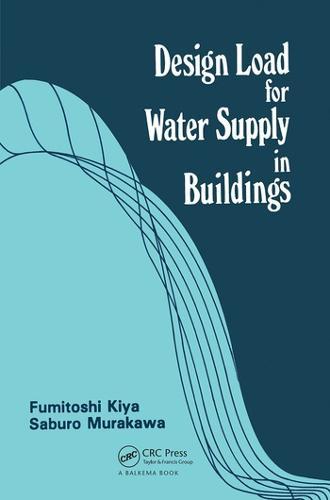
OverviewA collection of articles on Design Load for Water Supply in Buildings originally published in 1989. Full Product DetailsAuthor: Fumitsohi Kiya , Saburo Murakawa , P.R. KanadePublisher: A A Balkema Publishers Imprint: A A Balkema Publishers Weight: 0.635kg ISBN: 9789061919032ISBN 10: 9061919037 Pages: 300 Publication Date: 01 January 1989 Audience: College/higher education , Professional and scholarly , Undergraduate , Postgraduate, Research & Scholarly Format: Hardback Publisher's Status: Active Availability: In Print This item will be ordered in for you from one of our suppliers. Upon receipt, we will promptly dispatch it out to you. For in store availability, please contact us. Table of ContentsPREFACE CHAPTER 1. INTRODUCTION 1.1. Traditional Methods of Determining Design Load 1.2. New Ideas in Europe and the USA 1.3. Concepts in New Methods of Determining Design Load 1.4. Applications and Problems of Data CHAPTER 2. BASIC THEORY OF DESIGN METHODS 2.1. Water Usage Behavior and Fixture Parameters 2.2. Probability Theory and Distribution Function 2.3. Queuing Theory 2.4. Monte Carlo Method and Simulation CHAPTER 3. EVALUATION OF DESIGN LOAD BY THE SIMULATION METHOD 3.1. Optimum Number and Usage of Fixtures 3.2. Pattern of Water Usage 3.3. Simulation of Water Usage 3.4. Results of Calculations and their Applications CHAPTER 4. DETERMINATION OF DESIGN LOAD BY THE PROBABILITY METHOD 4.1. Pattern of Water Usage 4.2. Probability of Simultaneous Use 4.3. Instantaneous Water Supply Load and Number of Simultaneous Uses 1) Method of Calculation 2) Number of simultaneous water uses 3) Optimum number of sanitary fixtures 4) Ratio of simultaneous use 5) Instantaneous water supply load 4.4. Hourly Water Supply Load 1) Method of calculation 2) Hourly water supply load CHAPTER 5. DATA NECESSARY FOR METHODS TO DETERMINE LOAD 5.1. Outline of Data 5.2! Office Buildings 5.3. Apartment Buildings 5.4.Theaters and Schools CHAPTER 6. WATER CONSUMPTION 6.1. Object of Investigation 6.2. Method of Investigation 1) Planning the measurement 2) Measurement methods 3) Conclusions 6.3. Results of Investigations on Water Consumption 1) Office buildings 2) Apartment buildings 3) Hotels 4) Shops 5) Hospitals6) Universities, Junior colleges 7) Theaters, cinema halls, etc 6.4. Results of the Investigations Regarding Hot Water Consumption 1) Office buildings 2) Apartment houses 3) Hotels 4) Shops CHAPTER 7. EXPERIMENTS ON WATER CONSUMPTION 7.1. Hydraulic Studies 7.2. Factors Affecting Water Consumption 1) Hydraulic parameters of water supply load 2) Pattern of water discharge 7.3. Discharge from Sanitary Fixtures and Coefficient of Resistance 1) Method of experiment 2) Discharge properties of fixtures 3) Coefficient of resistance of fixtures 4) Relative area of opening of a fixture 7.4. Variation in Water Discharge due to Simultaneous Use 1) Experiments on simultaneous use 2) Variation in discharge quantity due to simultaneous use CHAPTER 8. IMPLICATIONS OF THE NEW DESIGN METHOD AND POSSIBILITIES 8.1. Design Load and System Design 8.2. Problems of Water Saving 8.3. Water Drainage Problem 8.4. Problems in Water Recycling.ReviewsAuthor InformationFumitsohi Kiya, graduated from Department of Architecture, Faculty of Engineering, Tokyo Institute of Technology, and is presently Professor, Seibu Institute of Technology. Saburo Murakawak, graduated from Department of Architecture, Faculty of Engineering, Tokyo Institute of Technology , and is presently Associate Professor, Faculty of Engineering, Hiroshima University. Tab Content 6Author Website:Countries AvailableAll regions |
||||