|
Overview
Full Product Details
Author: Elio Caccavale (Glasgow School of Art, UK) , Professor Gordon Hush (Glasgow School of Art, UK) , Professor Gordon Hush (Glasgow School of Art, UK) , Professor Gordon Hush (Glasgow School of Art, UK)
Publisher: Bloomsbury Publishing PLC
Imprint: Bloomsbury Visual Arts
Dimensions:
Width: 19.20cm
, Height: 2.40cm
, Length: 24.80cm
Weight: 1.100kg
ISBN: 9781350338074
ISBN 10: 1350338079
Pages: 344
Publication Date: 22 January 2026
Audience:
College/higher education
,
Professional and scholarly
,
Tertiary & Higher Education
,
Professional & Vocational
Format: Hardback
Publisher's Status: Active
Availability: To order 
Stock availability from the supplier is unknown. We will order it for you and ship this item to you once it is received by us.
Table of Contents
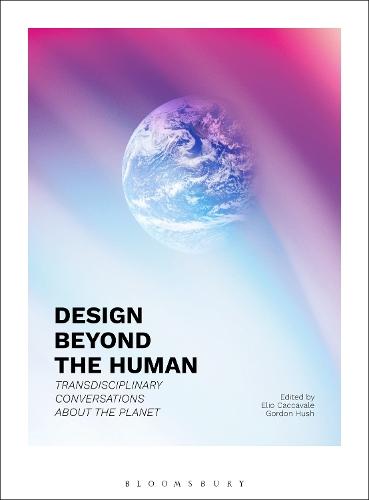
List of Illustrations List of Contributors Acknowledgements Foreword, Erin O’Donnell (University of Melbourne, Australia) Introduction, Elio Caccavale and Gordon Hush (Glasgow School of Art, UK) Section I: We Are Not Alone 1. A Political Economy of Structural Anthropocentrism, Steven McMullen (Hope College, USA) 2. Co-Creating Multispecies Worlds, Danielle Celermajer (University of Sydney, Australia) and Matthew Darmour-Paul (Australia National University, Australia) 3. Global Trajectories of Oil Palm: From African Communal Groves to Asian Plantation Frontiers, Noboru Ishikawa (Kyoto University, Japan) 4. The Call of the Cricket, Helen Hollyman (Independent Scholar, USA) and James Skeet (Co-founder Sprit Farm, Navajo Nation, USA) 5. Design, Education and the Moulding of Alternative Futures in the Anthropocene, Peter Sutoris (University of Leeds, UK) Section II: Design Beyond the Human 6. Design and the Invention of the Modern Human, Samer Akkach and John Powell (University of Adelaide, Australia) 7. Ecological Design Thinking in the Anthropocene/Ecocene, Joanna Boehnert (Bath Spa University, UK) 8. Indigenous Design: A Relational Practice Between People and Place, Desiree Hernandez Ibinarriaga (Monash University, Australia) 9. Life-Centered Design: A Sub-Saharan Perspective, François-Xavier Nzi iyo Nsenga, (Independent Scholar, Rwanda) 10. Design and Deep Time, Naiyi Wang (China Central Academy of Fine Arts, China) 11. Orbital Debris: Design and its Extraterrestrial Aftermath, Alice Twemlow (Royal Academy of Art, the Netherlands) Section III: Mediating Human–Non-Human Relations Through Design 12. Consider Everything: A New Kind of Design for a Computationally Irreducible World, J. Paul Neeley (Royal College of Art, UK) 13. Planetarity: Designing for Coexistence, Erinma Ochu (University of the West of England, UK) and Caroline Ward (Ada Lovelace Institute, UK) 14. Indigenous Futures: Epistemologies of Care for a World in Crisis, Felipe Viveros (Culture Hack Labs, UK) 15. A Bottom-Up Approach to Conservation: The Vertical University, Nepal, Priyanka Bista (Vertical University, Nepal) 16. Design That Thinks Like a Mountain, Xinlin Song (Yunhe Centre, China) 17. A Larger, Less Humanised Design Community, Kate Fletcher (Royal Danish Academy, Denmark) 18. Talking Materials: A Discursive Design Practice for a Design Beyond the Human. Domitilla Dardi (European Institute of Design, Italy) 19. Towards a Culture of Life: A New Synthesis for the Living World, Rachel Armstrong (KU Leuven, Belgium) 20. Designing the Future of Agriculture, Kris Spiros (From Fauna, USA) Afterword, Elio Caccavale and Gordon Hush (Glasgow School of Art, UK) Bibliography Index
Reviews
"""Connecting relevant dots in an emerging transdisciplinary discourse - both well-known positions and weak signals. The broad disciplinary nature of this book allows and encourages thinking and exploration of design for social, ecological, and political transformations. It could become a compass for entering uncharted territory for Humanity!"" --Philipp Heidkamp, K�ln International School of Design, Germany"
Author Information
Professor Elio Caccavale is Subject Lead for the MDes in Design Innovation and Citizenship at The Glasgow School of Art. His teaching practice explores how design can foster more equitable relationships among all living beings and ecological systems - recognising their 'citizenship' within an expanded, more-than-human conception of society. Elio’s research investigates the ethical, social, and environmental dimensions of scientific knowledge and emerging technologies. Professor Gordon Hush is Head of the School of Innovation & Technology at The Glasgow School of Art, UK. He is a Sociologist, with an interest in the way that design-led innovation initiates and informs social, economic and ecological change. He is keen to explore the ways in which scientific or technological expertise are incorporated within or applied to the material circumstances and design outcomes which shape human experience, and the consequences that these have for life on the planet.
Tab Content 6
Author Website:
Countries Available
All regions
|