Overview
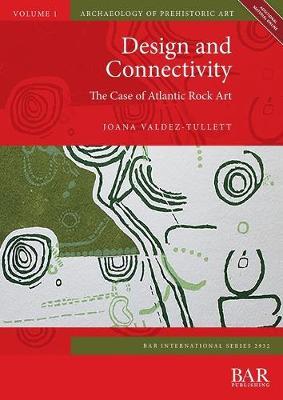
Atlantic Rock Art is a rock art tradition which includes emblematic motifs such as cup-marks, cup-and-rings and lines, known to several countries on the Atlantic seaboard. Design and Connectivity springs from an inter-regional study of this tradition, based on an original and innovative methodology applied to an empirical dataset. The project builds on Richard Bradley's work, investigating differences and similarities in Atlantic Art over study areas in five countries: Scotland, England, Ireland, Spain and Portugal. It applies a multi-scalar methodology developed under the principles of Relational Ontology and Assemblage Theory, providing a dynamic perspective on the empirical data. A thorough categorical scheme was scrutinised using a Presence/Absence Matrix, spatial analysis (fieldwork and GIS) and the development of Social Network Analysis (SNA) to relate and explore the relationships and connectivity between study areas. Concepts of developmental psychology support the idea of intentional teaching and cultural transmission.
Full Product Details
Author: Joana Valdez-Tullett
Publisher: BAR Publishing
Imprint: BAR Publishing
Weight: 1.141kg
ISBN: 9781407316628
ISBN 10: 1407316621
Pages: 286
Publication Date: 28 June 2019
Audience:
Professional and scholarly
,
Professional & Vocational
Format: Mixed media product
Publisher's Status: Active
Availability: Available To Order

We have confirmation that this item is in stock with the supplier. It will be ordered in for you and dispatched immediately.
Reviews
{\rtf1\fbidis\ansi\ansicpg1252\deff0\deflang2057{\fonttbl{\f0\fswiss\fprq2\fcharset0 Calibri;}{\f1\fnil\fcharset0 Verdana;}} \viewkind4\uc1\pard\ltrpar\f0\fs22\lquote This book is an essential read, with an excellent contextual introduction and an interpretative account based on rigorous fieldwork and research.\rquote George Nash, Current World Archaeology, December 2019\par \par 'As Andrew Meirion Jones points out in the Preface, 'This is simply the most extensive study of the Atlantic rock art tradition to date. For that alone it should be commended, but this is much more than the study of a single rock art tradition. It is clear from this book that Joana Valdez-Tullett has directly contributed to wider archaeological debates in her study of connectivity in the Atlantic rock art region. Because of this,the book deserves to be read not only by rock art scholars, but by all archaeologists interested in the dynamics of interaction in prehistoric Europe.' I would agree.' Bradshaw Foundation review, Wednesday 11th December 2019\par \par \lquote Original and illuminating. The book sheds exciting new light on a complex and controversial topic and takes Atlantic Rock Art from the periphery into the centre of contemporary research.\rquote Richard Bradley, Emeritus Professor, University of Reading\par \par \lquote It is evident that it is a very important work, and one that goes deeply into the material of a large region defined by its shared imagery - a seminal work, following up on a research tradition introduced by Richard Bradley. This is carried out by way of a sound and innovative approach and methodology.\rquote Prof. Ingrid Fuglestvedt, University of Oslo\f1\fs17\par }
'Original and illuminating. The book sheds exciting new light on a complex and controversial topic and takes Atlantic Rock Art from the periphery into the centre of contemporary research.' Richard Bradley, Emeritus Professor, University of Reading 'It is evident that it is a very important work, and one that goes deeply into the material of a large region defined by its shared imagery - a seminal work, following up on a research tradition introduced by Richard Bradley. This is carried out by way of a sound and innovative approach and methodology.' Prof. Ingrid Fuglestvedt, University of Oslo
{\rtf1\fbidis\ansi\ansicpg1252\deff0\deflang2057{\fonttbl{\f0\fswiss\fprq2\fcharset0 Calibri;}{\f1\fnil\fcharset0 Verdana;}} \viewkind4\uc1\pard\ltrpar\sa160\sl252\slmult1\f0\fs22\lquote contains huge amounts of data and images which will be valuable to anyone researching Atlantic Rock Art, Neolithic culture, and connections between ancient societies in western Europe. The discussion of methodology and analytical techniques will be of use to anyone setting out to use similar methods. The empirical approach lets data and methodology take precedence over contextualising the art in Neolithic archaeology.\rquote Laura Slack, Time and Mind, 14(1)\lang1033\par \pard\ltrpar\par \lquote (T)his is an innovative must-read work on the subject of the Prehistory of the European Atlantic fa\'e7ade. It exposes and discusses, in a very honest, clear, and detailed way (and with excellent illustrations and images), the premises, data (and their variation) in each case study, along with the arguments for the existence of stronger or weaker relationships among each of the five considered regions.\rquote Maria de Jesus Sanches, Trabajos de Prehistoria, Volume 78 (1), 2021\par \par \lquote Overall, the level of analysis that the author has applied to such a complex topic over such a geographically wide area is almost unprecedented and sets a high bar for future rock art scholars\rquote Kerri Cleary, Journal of Irish Archaeology, Volume 28, 2019\lang2057\par \par \lquote This book is an essential read, with an excellent contextual introduction and an interpretative account based on rigorous fieldwork and research.\rquote George Nash, Current World Archaeology, December 2019\par \par 'As Andrew Meirion Jones points out in the Preface, 'This is simply the most extensive study of the Atlantic rock art tradition to date. For that alone it should be commended, but this is much more than the study of a single rock art tradition. It is clear from this book that Joana Valdez-Tullett has directly contributed to wider archaeological debates in her study of connectivity in the Atlantic rock art region. Because of this,the book deserves to be read not only by rock art scholars, but by all archaeologists interested in the dynamics of interaction in prehistoric Europe.' I would agree.' Bradshaw Foundation review, Wednesday 11th December 2019\par \par \lquote Original and illuminating. The book sheds exciting new light on a complex and controversial topic and takes Atlantic Rock Art from the periphery into the centre of contemporary research.\rquote Richard Bradley, Emeritus Professor, University of Reading\par \par \lquote It is evident that it is a very important work, and one that goes deeply into the material of a large region defined by its shared imagery - a seminal work, following up on a research tradition introduced by Richard Bradley. This is carried out by way of a sound and innovative approach and methodology.\rquote Prof. Ingrid Fuglestvedt, University of Oslo\f1\fs17\par }
Author Information
Joana Valdez-Tullett is a specialist in rock art and prehistory with experience in the archaeology of Iberia, Britain and Ireland. She has studied Atlantic Art extensively for the last fifteen years. In her research, Joana is interested in exploring the potential of digital technologies, as well as new theoretical developments.