Overview
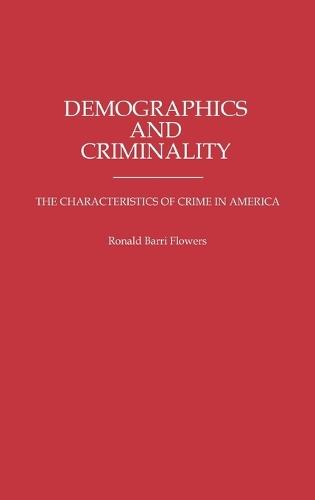
As the problem of crime continues to worsen in the 1980s, the need for up-to-date, comprehensive information on its dynamics and incidence increases. This work, the fourth in a four-volume series, is the first study to focus exclusively on demographic trends in criminality and victimization for crime as a whole. Concerned with the broad picture of crime in America as well as specific demographic correlates and characteristics, it develops profiles of patterns in criminality and suggests ways of applying this demographic data to promote more effective crime control. Flowers begins by exploring the demographic aggregate features of crime and victimization in America, as well as geographical and temporal trends. The demographic correlates examined in the next section include age, gender, race, ethnicity, class, employment, income, education, marital status, and substance abuse. The third section is devoted to a survey of demographic characteristics of three deviant groups--habitual and career criminals, the prison population, and violent families. The author concludes with a discussion of the implications of demographics for the study and control of criminality and victimization in the years ahead. This book, together with its three companion volumes, will be an important resource for professionals, academians, and students in criminology, criminal justice, law, victimology, racial and ethnic studies, and related disciplines, as well as laypersons who seek greater insight into the world of crime.
Full Product Details
Author: R. Barri Flowers
Publisher: Bloomsbury Publishing Plc
Imprint: Praeger Publishers Inc
Volume: No. 23
Dimensions:
Width: 15.60cm
, Height: 1.40cm
, Length: 23.40cm
Weight: 0.496kg
ISBN: 9780313253676
ISBN 10: 0313253676
Pages: 223
Publication Date: 06 December 1989
Recommended Age: From 7 to 17 years
Audience:
College/higher education
,
Undergraduate
,
Postgraduate, Research & Scholarly
Format: Hardback
Publisher's Status: Active
Availability: Manufactured on demand

We will order this item for you from a manufactured on demand supplier.
Reviews
?Examines demographic trends in criminality and victimization to help law enforcement and criminal justice professionals better understand the nature of U.S. crime and the population groups most affected by it. The book explores demographic correlates of criminality such as geography, age, gender, socioeconomic class, income level, race, marital status, education, and use of illegal substances. In addition, the book describes the primary means of measuring crime and indicates how demographic data can be best used in crime theory and crime control.?-NIJ Reports ?The book does acomplish the author's objective in effectively illustrating the significance of the demography of crime in America and therefore contributing gainfully to the study and understanding of criminality. The book's unique perspective and the author's efforts in bringing forth the first of its kind, the presentation and comparison of the varied topics and literature on demographics and criminality, should be commended.?-Criminal Justice Review ?The final book of a four-volume series by Flowers (Children and Criminality, Women and Criminality, Minorities and Criminality, 1988) resembles an accountant's report more than a work of scholarship. Nonetheless, some libraries will want to acquire this assembly of demographic facts about criminality simply to have in a single source recent (mostly 1987) quantitative summaries for a host of crime correlates. Topics range from ecological variables such as time and place, to the status variables of age, gender, race, class and its subsets (i.e., income, education), to offender characteristics such as drug use, chronic criminality, and violent family experience. Flowers offers no new data, although it is helpful to have this abundance of detail nearly arranged and reviewed in a narrative that does recognize some research in criminology. There are 62 tables drawn from commonly available US government documents, the limitations of which are acknowledged in the first chapter. There are also no new ideas in this volume, and the commentary consistently reflects bivariate thinking. The book is thus seriously limited as a source of insight for students or general readers, although it is quite convenient as a source of details.?-Choice Examines demographic trends in criminality and victimization to help law enforcement and criminal justice professionals better understand the nature of U.S. crime and the population groups most affected by it. The book explores demographic correlates of criminality such as geography, age, gender, socioeconomic class, income level, race, marital status, education, and use of illegal substances. In addition, the book describes the primary means of measuring crime and indicates how demographic data can be best used in crime theory and crime control. -NIJ Reports The book does acomplish the author's objective in effectively illustrating the significance of the demography of crime in America and therefore contributing gainfully to the study and understanding of criminality. The book's unique perspective and the author's efforts in bringing forth the first of its kind, the presentation and comparison of the varied topics and literature on demographics and criminality, should be commended. -Criminal Justice Review The final book of a four-volume series by Flowers (Children and Criminality, Women and Criminality, Minorities and Criminality, 1988) resembles an accountant's report more than a work of scholarship. Nonetheless, some libraries will want to acquire this assembly of demographic facts about criminality simply to have in a single source recent (mostly 1987) quantitative summaries for a host of crime correlates. Topics range from ecological variables such as time and place, to the status variables of age, gender, race, class and its subsets (i.e., income, education), to offender characteristics such as drug use, chronic criminality, and violent family experience. Flowers offers no new data, although it is helpful to have this abundance of detail nearly arranged and reviewed in a narrative that does recognize some research in criminology. There are 62 tables drawn from commonly available US government documents, the limitations of which are acknowledged in the first chapter. There are also no new ideas in this volume, and the commentary consistently reflects bivariate thinking. The book is thus seriously limited as a source of insight for students or general readers, although it is quite convenient as a source of details. -Choice
?The final book of a four-volume series by Flowers (Children and Criminality, Women and Criminality, Minorities and Criminality, 1988) resembles an accountant's report more than a work of scholarship. Nonetheless, some libraries will want to acquire this assembly of demographic facts about criminality simply to have in a single source recent (mostly 1987) quantitative summaries for a host of crime correlates. Topics range from ecological variables such as time and place, to the status variables of age, gender, race, class and its subsets (i.e., income, education), to offender characteristics such as drug use, chronic criminality, and violent family experience. Flowers offers no new data, although it is helpful to have this abundance of detail nearly arranged and reviewed in a narrative that does recognize some research in criminology. There are 62 tables drawn from commonly available US government documents, the limitations of which are acknowledged in the first chapter. There are also no new ideas in this volume, and the commentary consistently reflects bivariate thinking. The book is thus seriously limited as a source of insight for students or general readers, although it is quite convenient as a source of details.?-Choice
The final book of a four-volume series by Flowers (Children and Criminality, Women and Criminality, Minorities and Criminality, 1988) resembles an accountant's report more than a work of scholarship. Nonetheless, some libraries will want to acquire this assembly of demographic facts about criminality simply to have in a single source recent (mostly 1987) quantitative summaries for a host of crime correlates. Topics range from ecological variables such as time and place, to the status variables of age, gender, race, class and its subsets (i.e., income, education), to offender characteristics such as drug use, chronic criminality, and violent family experience. Flowers offers no new data, although it is helpful to have this abundance of detail nearly arranged and reviewed in a narrative that does recognize some research in criminology. There are 62 tables drawn from commonly available US government documents, the limitations of which are acknowledged in the first chapter. There are also no new ideas in this volume, and the commentary consistently reflects bivariate thinking. The book is thus seriously limited as a source of insight for students or general readers, although it is quite convenient as a source of details. -Choice The book does acomplish the author's objective in effectively illustrating the significance of the demography of crime in America and therefore contributing gainfully to the study and understanding of criminality. The book's unique perspective and the author's efforts in bringing forth the first of its kind, the presentation and comparison of the varied topics and literature on demographics and criminality, should be commended. -Criminal Justice Review Examines demographic trends in criminality and victimization to help law enforcement and criminal justice professionals better understand the nature of U.S. crime and the population groups most affected by it. The book explores demographic correlates of criminality such as geography, age, gender, socioeconomic class, income level, race, marital status, education, and use of illegal substances. In addition, the book describes the primary means of measuring crime and indicates how demographic data can be best used in crime theory and crime control. -NIJ Reports ?The book does acomplish the author's objective in effectively illustrating the significance of the demography of crime in America and therefore contributing gainfully to the study and understanding of criminality. The book's unique perspective and the author's efforts in bringing forth the first of its kind, the presentation and comparison of the varied topics and literature on demographics and criminality, should be commended.?-Criminal Justice Review ?Examines demographic trends in criminality and victimization to help law enforcement and criminal justice professionals better understand the nature of U.S. crime and the population groups most affected by it. The book explores demographic correlates of criminality such as geography, age, gender, socioeconomic class, income level, race, marital status, education, and use of illegal substances. In addition, the book describes the primary means of measuring crime and indicates how demographic data can be best used in crime theory and crime control.?-NIJ Reports ?The final book of a four-volume series by Flowers (Children and Criminality, Women and Criminality, Minorities and Criminality, 1988) resembles an accountant's report more than a work of scholarship. Nonetheless, some libraries will want to acquire this assembly of demographic facts about criminality simply to have in a single source recent (mostly 1987) quantitative summaries for a host of crime correlates. Topics range from ecological variables such as time and place, to the status variables of age, gender, race, class and its subsets (i.e., income, education), to offender characteristics such as drug use, chronic criminality, and violent family experience. Flowers offers no new data, although it is helpful to have this abundance of detail nearly arranged and reviewed in a narrative that does recognize some research in criminology. There are 62 tables drawn from commonly available US government documents, the limitations of which are acknowledged in the first chapter. There are also no new ideas in this volume, and the commentary consistently reflects bivariate thinking. The book is thus seriously limited as a source of insight for students or general readers, although it is quite convenient as a source of details.?-Choice
Author Information
RONALD BARRI FLOWERS is an independent scholar and research analyst specializing in the study of crime and criminal justice. He is the author of Demographics and Criminality, Minorities and Criminality, Women and Criminality, and Children and Criminality (Greenwood Press, 1989, 1988, 1987, and 1986).