|
|
|||
|
||||
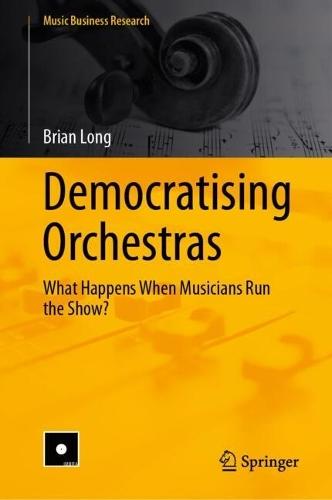
OverviewThis book explores how democratic decision-making can transform orchestras, which have long been governed by top-down authority. Rooted in early twentieth-century organizational models, orchestras have thrived under centralized control, creating a global industry after 1945. However, this approach has left musicians with limited influence over key decisions, from repertoire to conductor selection. Through case studies of player-governed orchestras (PGOs), the author reveals how shared control reshapes traditional power dynamics, empowering musicians to take part in both artistic and managerial choices. A vital resource for musicians, conductors, arts managers, and researchers in organizational studies, this book offers critical insights for modernizing orchestral governance. It is particularly useful for those leading or forming orchestras, as well as academics studying participatory management, labor relations, or the arts sector. Readers will find practical strategies for sustaining democracy in traditionally hierarchical institutions. Full Product DetailsAuthor: Brian LongPublisher: Springer Nature Switzerland AG Imprint: Springer Nature Switzerland AG ISBN: 9783032173980ISBN 10: 3032173981 Pages: 162 Publication Date: 12 April 2026 Audience: College/higher education , Postgraduate, Research & Scholarly Format: Hardback Publisher's Status: Forthcoming Availability: Not yet available This item is yet to be released. You can pre-order this item and we will dispatch it to you upon its release. Table of ContentsReviewsAuthor InformationBrian Long is a lecturer in arts and cultural management at the University of Melbourne (Australia). After early work as a freelance orchestral musician and conductor, he began a research and lecturing career in 2008. The move led to research in political science, orchestra management, and the creative industries. During a ten-year stint working in Vienna, Brian first encountered the player-governed orchestra model in the Vienna Philharmonic and was intrigued by the mix of benefits and challenges it created. This interest grew into a multi-year research project across Germany and London where he interviewed orchestral musicians and managers at the forefront of workplace democracy in professional orchestras. He has previously written on the political contexts of postwar German film and cultural diplomacy and contributed to the Directory of World Cinema Germany. Tab Content 6Author Website:Countries AvailableAll regions |
||||