Overview
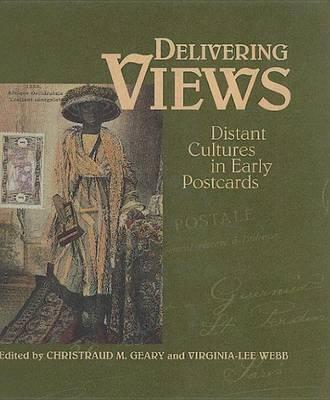
The heyday of postcard production was also an era of rapidly expanding European and American control over the rest of the world. In the late nineteenth and early twentieth centuries, images of distant peoples from the Americas, Africa, Oceania, and Asia became ubiquitous souvenirs of imperialism. The six contributors to this abundantly illustrated volume show how images of Plains Indians, World's Fair cards, and portraits from Africa, the Pacific Islands, Australia, New Zealand, and Japan documented distant cultures but also reinforced Western biases by emphasizing the seemingly vast cultural differences between viewers and subjects. The authors discuss the differences between original photographs and their postcard equivalents, and they explore in detail common practices - such as artificial settings, costumes and props, colorization, and patronizing captions - that perpetuated racist, sexist, and romantic stereotypes. Drawing on anthropological, historical, and art historical analyses, contributors examine examples from both public and private collections, tracing the postcard's overlapping roles as souvenir, collectible, and popular art form. Showcasing 132 images, many of which have never before been published, the book concludes that early postcards both provide historical information about the peoples they depict and reveal Westerners' perceptions of - and apprehensions about - cultures that differed from their own.
Full Product Details
Author: Christraud M. Geary ,
Virginia-Lee Webb
Publisher: Smithsonian Books
Imprint: Smithsonian Institution Scholarly Press
Dimensions:
Width: 23.50cm
, Height: 2.00cm
, Length: 30.20cm
Weight: 1.175kg
ISBN: 9781560987598
ISBN 10: 1560987596
Pages: 208
Publication Date: 17 April 1998
Audience:
General/trade
,
General
Format: Hardback
Publisher's Status: Out of Print
Availability: Out of stock

Reviews
As European influence and control penetrated vast areas of Asia and Africa in the nineteenth century, the sending of postcards was frequently a means for European settlers, civil servants, and military officials to convey images of their new surroundings to family and friends back home. This wonderful collection of 132 cards provides a window on the way a dominant, dynamic culture perceived traditional, static, indigenous cultures. In general, the cards do not depict individuals as much as exotic archetypes. Many of the shots are clearly posed to convey an image of primitive and savage but still noble majesty. The striking photographs are accompanied by a text that is easily digested and highly informative, particularly in its recounting of the evolution of the postcard industry. (From Booklist; Jay Freeman)
As European influence and control penetrated vast areas of Asia and Africa in the nineteenth century, the sending of postcards was frequently a means for European settlers, civil servants, and military officials to convey images of their new surroundings to family and friends back home. This wonderful collection of 132 cards provides a window on the way a dominant, dynamic culture perceived traditional, static, indigenous cultures. In general, the cards do not depict individuals as much as ""exotic"" archetypes. Many of the shots are clearly posed to convey an image of primitive and savage but still ""noble"" majesty. The striking photographs are accompanied by a text that is easily digested and highly informative, particularly in its recounting of the evolution of the postcard industry. (From Booklist; Jay Freeman)
Author Information
Christraud M. Geary is the curator of the Eliot Elisofon Photographic Archives at the Smithsonian's National Museum of African Art. Virginia-Lee Webb is the archivist of the photograph collection in the department of the arts of Africa, Oceania, and the Americas at the Metropolitan Museum of Art.