Overview
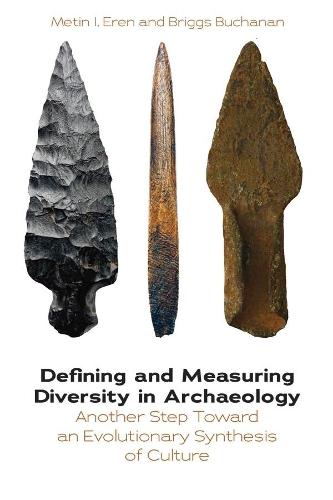
Calculating the diversity of biological or cultural classes is a fundamental way of describing, analyzing, and understanding the world around us. Understanding archaeological diversity is key to understanding human culture in the past. Archaeologists have long experienced a tenuous relationship with statistics; however, the regular integration of diversity measures and concepts into archaeological practice is becoming increasingly important. This volume includes chapters that cover a wide range of archaeological applications of diversity measures. Featuring studies of archaeological diversity ranging from the data-driven to the theoretical, from the Paleolithic to the Historic periods, authors illustrate the range of data sets to which diversity measures can be applied, as well as offer new methods to examine archaeological diversity.
Full Product Details
Author: Metin I. Eren ,
Briggs Buchanan
Publisher: Berghahn Books
Imprint: Berghahn Books
ISBN: 9781800734296
ISBN 10: 1800734298
Pages: 358
Publication Date: 18 July 2022
Audience:
Professional and scholarly
,
Professional & Vocational
,
Postgraduate, Research & Scholarly
Format: Hardback
Publisher's Status: Active
Availability: In Print

This item will be ordered in for you from one of our suppliers. Upon receipt, we will promptly dispatch it out to you. For in store availability, please contact us.
Reviews
“I think it is an important volume for archaeologists to mine the work of all of these incredible researchers for a greater understanding of what diversity can tell us about within our assemblages and regions, and the chapters provide approaches for a diversity of archaeological materials that has something for almost any archaeologist no matter what their specialty or focus.” • Christopher Wolff, University at Albany
I think it is an important volume for archaeologists to mine the work of all of these incredible researchers for a greater understanding of what diversity can tell us about within our assemblages and regions, and the chapters provide approaches for a diversity of archaeological materials that has something for almost any archaeologist no matter what their specialty or focus. * Christopher Wolff, University at Albany
I think it is an important volume for archaeologists to mine the work of all of these incredible researchers for a greater understanding of what diversity can tell us about within our assemblages and regions, and the chapters provide approaches for a diversity of archaeological materials that has something for almost any archaeologist no matter what their specialty or focus. Christopher Wolff, University at Albany
Author Information
Metin I. Eren is an Associate Professor of Anthropology at Kent State University and a Research Associate at the Cleveland Museum of Natural History. He is Co-Director of the Kent State University Experimental Archaeology Laboratory and has conducted research in North America, Europe, Africa, and Asia. A master flintknapper, Eren knaps, uses, shoots, and breaks stone technologies from across the Stone Age to figure out how they work and to better understand technological evolution.