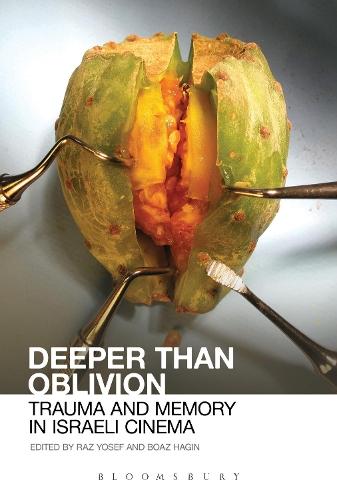
Overview
In this collection, leading scholars in both film studies and Israeli studies show that beyond representing familiar historical accounts or striving to offer a more complete and accurate depiction of the past, Israeli cinema has innovatively used trauma and memory to offer insights about Israeli society and to engage with cinematic experimentation and invention. Tracing a long line of films from the 1940s up to the 2000s, the contributors use close readings of these films not only to reconstruct the past, but also to actively engage with it. Addressing both high-profile and lesser known fiction and non-fiction Israeli films, Deeper than Oblivion underlines the unique aesthetic choices many of these films make in their attempt to confront the difficulties, perhaps even impossibility, of representing trauma. By looking at recent and classic examples of Israeli films that turn to memory and trauma, this book addresses the pressing issues and disputes in the field today.
Full Product Details
Author: Raz Yosef (Tel-Aviv University, Israel) ,
Boaz Hagin (Tel Aviv University, Israel)
Publisher: Bloomsbury Publishing Plc
Imprint: Bloomsbury Academic
Dimensions:
Width: 15.20cm
, Height: 2.00cm
, Length: 22.90cm
Weight: 0.513kg
ISBN: 9781501319617
ISBN 10: 1501319612
Pages: 384
Publication Date: 19 May 2016
Audience:
College/higher education
,
Undergraduate
,
Postgraduate, Research & Scholarly
Format: Paperback
Publisher's Status: Active
Availability: Manufactured on demand

We will order this item for you from a manufactured on demand supplier.
Reviews
This intriguing collection of essays provides a perceptive and thought provoking look at Israeli cinema and its relations to Israeli society. It contains various approaches to the cinematic contemplations of 'trauma' in Israeli film, which shed new light on the fundamentals of the Israeli experience in the past decades. In going beyond the commonly discussed canon of Israeli films, the articles in Deeper than Oblivion illustrate the contour of a novel framework for the reading of Israeli cinema and its cultural significance. It is an essential addition to the growing scholarship on Israeli culture. -- Ofer Ashkenazi, Koebner-Minerva Center for German History, The Hebrew University, Jerusalem This timely collection offers a spectrum of critical perspectives on Israel's past and present through the lens of its cinema. In addition to examining a wide range of reactions to trauma and memory, the essays explore the tension between fiction and documentary, space and identity, and aesthetics and politics. The engaging book reveals the richness of Israeli cinema and its astonishing resonance for us today. -- Anton Kaes, Professor, Department of German, University of California, Berkeley, US, and author of Shell Shock Cinema: Weimar Culture and the Wounds of War This collection of sophisticated articles exposes how Israeli cinema navigates the web of traumas that constitute the collective national memory as well as threaten the coherence of the familiar Zionist meta-narrative. Discussing traumas of wars, the Naqba, the Holocaust, the trauma of the perpetrator, of immigration and of dislocating others, of terrorism, of occupation, and of guilt and responsibility these articles offer critical reflection on Israeli histories and cultures. -- Orly Lubin, Chair of the Porter Institute for Poetics and Semiotics, Tel Aviv University Deeper Than Oblivion is an ambitious project that explores the representation of personal and collective traumas in Israeli cinema . . . [The book] does not simply constitute an introductory volume to key tropes in Israeli cinema, but presents a refreshingly in-depth study of questions of personal recollection, and collective and cultural memory . . . Yosef and Hagin have perfectly pitched their study -- Elena Caoduro, University of Southampton, UK * Historical Journal of Film, Television and Radio, vol. 32 *
This intriguing collection of essays provides a perceptive and thought provoking look at Israeli cinema and its relations to Israeli society. It contains various approaches to the cinematic contemplations of 'trauma' in Israeli film, which shed new light on the fundamentals of the Israeli experience in the past decades. In going beyond the commonly discussed canon of Israeli films, the articles in Deeper than Oblivion illustrate the contour of a novel framework for the reading of Israeli cinema and its cultural significance. It is an essential addition to the growing scholarship on Israeli culture. -- Ofer Ashkenazi, Koebner-Minerva Center for German History, The Hebrew University, Jerusalem This timely collection offers a spectrum of critical perspectives on Israel's past and present through the lens of its cinema. In addition to examining a wide range of reactions to trauma and memory, the essays explore the tension between fiction and documentary, space and identity, and aesthetics and politics. The engaging book reveals the richness of Israeli cinema and its astonishing resonance for us today. -- Anton Kaes, Professor, Department of German, University of California, Berkeley, US, and author of Shell Shock Cinema: Weimar Culture and the Wounds of War This collection of sophisticated articles exposes how Israeli cinema navigates the web of traumas that constitute the collective national memory as well as threaten the coherence of the familiar Zionist meta-narrative. Discussing traumas of wars, the Naqba, the Holocaust, the trauma of the perpetrator, of immigration and of dislocating others, of terrorism, of occupation, and of guilt and responsibility these articles offer critical reflection on Israeli histories and cultures. -- Orly Lubin, Chair of the Porter Institute for Poetics and Semiotics, Tel Aviv University Deeper Than Oblivion is an ambitious project that explores the representation of personal and collective traumas in Israeli cinema ... [The book] does not simply constitute an introductory volume to key tropes in Israeli cinema, but presents a refreshingly in-depth study of questions of personal recollection, and collective and cultural memory ... Yosef and Hagin have perfectly pitched their study -- Elena Caoduro, University of Southampton, UK Historical Journal of Film, Television and Radio, vol. 32
Author Information
Raz Yosef is Senior Lecturer and the chair of the cinema studies B.A. Program at the Department of Film and Television, Tel Aviv University. He is the author of Beyond Flesh: Queer Masculinities and Nationalism in Israeli Cinema (2004), To Know a Man: Masculinity, Sexuality and Ethnicity in Israeli Cinema (2010, in Hebrew), The Politics of Loss and Trauma in Contemporary Israeli Cinema (2011), and co-editor of Just Images: Ethics and the Cinematic (2011). Boaz Hagin is Lecturer at the Department of Film and Television, Tel Aviv University. He is author of Death in Classical Hollywood Cinema (2010), co-editor of Just Images: Ethics and the Cinematic (2011), and co-author with Thomas Elsaesser of Memory, Trauma, and Fantasy in American Cinema (2012, in Hebrew).