|
|
|||
|
||||
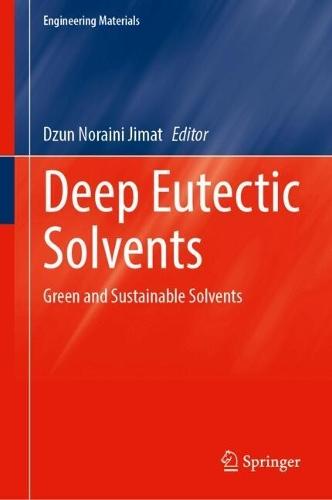
OverviewThis book highlights the overview of deep eutectic solvents (DESs), their physical and chemical properties for both hydrophilic and hydrophobic types. The multipurpose use of DES in extraction, treatment processes of obtaining value-added products such as organic polymer, biodiesel, active compound or protein from various sources such as biomass, plastics, plant, and animals are discussed. Additionally, this book also includes the impact of its usage on the environment and socio-economic challenges in high scale consumption in various applications as well as its recyclable capability. This book could be a reference for scholars or professionals and students who are involved in this field. Full Product DetailsAuthor: Dzun Noraini JimatPublisher: Springer Verlag, Singapore Imprint: Springer Verlag, Singapore ISBN: 9789819519118ISBN 10: 981951911 Pages: 129 Publication Date: 03 January 2026 Audience: Professional and scholarly , Professional & Vocational Format: Hardback Publisher's Status: Active Availability: Manufactured on demand We will order this item for you from a manufactured on demand supplier. Table of ContentsIntroduction to Deep eutectic solvents (DESs).- Extraction of carboxylic acid from biomass using deep eutectic solvents.- Pretreatment of biomass using deep eutectic solvents.- Extraction of antioxidant from biomass using deep eutectic solvents.- Extraction of active compound from plant/animal using deep eutectic solvents.- Extraction of protein from plant materials using deep eutectic solvents.- Advances of deep eutectic solvents in biodiesel production.- Socio-economic impact and environmental advantages and challenges.ReviewsAuthor InformationDr. Dzun Noraini Jimat is an associate professor at the Department Chemical Engineering & Sustainability, Faculty of Engineering. She obtained her Ph.D. in Chemical Engineering and Advanced Materials from Newcastle University upon Tyne, United Kingdom. Her research interests are in the areas of Synthesis and Characterization of Nanocellulose from lignocellulosic materials such as sugarcane bagasse and palm oil empty fruit bunches and bionanocomposites and hydrogel. Tab Content 6Author Website:Countries AvailableAll regions |
||||