Overview
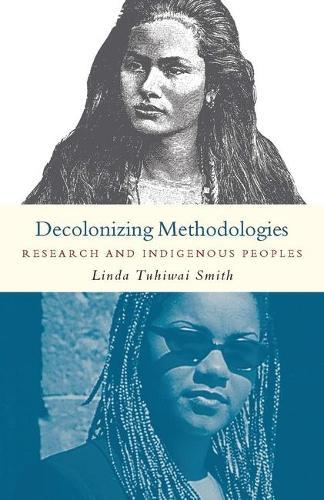
'A landmark in the process of decolonizing imperial Western knowledge.' Walter Mignolo, Duke University To the colonized, the term 'research' is conflated with European colonialism; the ways in which academic research has been implicated in the throes of imperialism remains a painful memory. This essential volume explores intersections of imperialism and research - specifically, the ways in which imperialism is embedded in disciplines of knowledge and tradition as 'regimes of truth.' Concepts such as 'discovery' and 'claiming' are discussed and an argument presented that the decolonization of research methods will help to reclaim control over indigenous ways of knowing and being. Now in its eagerly awaited second edition, this bestselling book has been substantially revised, with new case-studies and examples and important additions on new indigenous literature, the role of research in indigenous struggles for social justice, which brings this essential volume urgently up-to-date.
Full Product Details
Author: Professor Linda Tuhiwai Smith
Publisher: Bloomsbury Publishing PLC
Imprint: Zed Books Ltd
Edition: 7th
Dimensions:
Width: 13.80cm
, Height: 13.80cm
, Length: 21.60cm
Weight: 0.280kg
ISBN: 9781856496247
ISBN 10: 1856496244
Pages: 224
Publication Date: 22 February 1999
Audience:
College/higher education
,
Professional and scholarly
,
Tertiary & Higher Education
,
Professional & Vocational
Replaced By: 9781848139503
Format: Paperback
Publisher's Status: Out of Print
Availability: In Print

Limited stock is available. It will be ordered for you and shipped pending supplier's limited stock.
Reviews
'This book is a counter-story to western ideas about the benefits of the pursuit of knowledge. Looking through the eyes of the colonized, cautionary tales are told from an indigenous perspective, tales designed not just to voice the voiceless but to prevent the dying - of people, of culture, of eco-systems. The book is particularly strong in situating the development of counter practices of research within both western critiques of western knowledge and global indigenous movements. Informed by critical and feminist critiques of positivism, Tuhiwai Smith urges 'researching back' and disrupting the rules of the research game toward practices that are 'more respectful, ethical, sympathetic and useful' vs racist practices and attitudes, ethnocentric assumptions and exploitative research. Using Kaupapa Maori, a 'fledgling approach', toward culturally appropriate research protocols and methodologies, the book is designed primarily to develop indigenous peoples as researchers. In short, Tuhiwai Smith begins to articulate research practices that arise out of the specificities of epistemology and methodology rooted in survival struggles, a kind of research that is something other than a 'dirty word' to those on the suffering side of history.' - Patti Lather, Professor of Educational Policy and Leadership, Ohio State University and author of Getting Smart: Feminist Research and Pedagogy With/in the Postmodern (Routledge, 1991) and Troubling the Angels: Women Living With HIV/AIDS, with Chris Smithies (Westview, 1997) 'Finally, a book for researchers working in indigenous context. Finally, a book especially for indigenous researchers. Linda Smith goes far beyond de-colonizing research methodology. Our contextual histories, politics, and cultural considerations are respectfully interwoven together. Our distinctiveness remains distinct, but there are important places where our issues and methodologies intersect. Stories of research experiences, examples of projects, critical examination, and mindful reflection are woven together to make meaningful and practical designs related to indigenous issues and research' - Jo-ann Archibald, Sto:lo Nation and Director of the First Nations House of Learning at the University of British Columbia 'A book like this is long overdue. It will be most useful for both indigenous and non-indigenous researchers in educational and non-educational institutions. It will empower indigenous students to undertake research which uses methods that are culturally sensitive and appropriate instead of those which they have learned about in Research Methods courses in universities which assume that research and research methods are culture-free and that researchers occupy some kind of moral high ground from which they can 'observe' their subjects and make judgements about them' - Konai Thaman, Professor of Pacific Education and Culture, and UNESCO Chair of Education, University of the South Pacific 'Linda Tuhiwai Smith is the leading theorist on decolonisation of Maori in New Zealand. This book opts for a dynamic interpretation of power relations of domination, struggle and emancipation. She uses the dual framework the whakapapa of Maori knowledge, and European epistemology, to interpret and capture the world of reality for a 'moment in time'. Thus the search for truth in complex human relations is a never ending quest' - Ranginui Walker, Previously Professor of Maori Studies Department and Pro-Vice Chancellor, University of Auckland. 'We have needed this book. Academic research facilitates diverse forms of economic and cultural imperialism by shaping and legitimating policies which entrench existing unjust power relations. Linda Tuhiwai Smith's powerful critique of dominant research methodologies is eloquent, informed and timely. Her distinctive proposals for an indigenous research agenda are especially valuable. Decolonization, she reminds us, cannot be limited to deconstructing the dominant story and revealing underlying texts, for none of that helps people improve their current conditions or prevents them from dying. This careful articulation of a range of research methodologies is vital, welcome and full of promise' - Laurie Anne Whitt, Professor of Philosophy, Michigan Technological University. 'A brilliant, evocative and timely book about an issue that served to both define and create indigenous realities. In recent years, indigenous people, often led by the emerging culturally affirmed and positioned indigenous scholars have intensified the struggle to break free from the chains of colonialism and its oppressive legacy. In writing this book, Linda Tuhiwai Smith makes a powerful and impassioned contribution to this struggle. No budding researcher should be allowed to leave the academy without reading this book and no teacher should teach without it at their side' - Bob Morgan, Director, Jumbunna CAISER, Centre for Aboriginal and Torres Strait Islanders, University of Tec
This book, which can be used in helping design and carry out research or in teaching research methods, will certainly play a role in remedying this clearly identified and sorely felt absence in the field of health research. -- Journal of Health Psychology <br>
Author Information
Professor Smith is Vice-Chancellor with responsibilities for Maori development at the University of Waikato, as well as Dean of the School of Maori and Pacific Development.