Overview
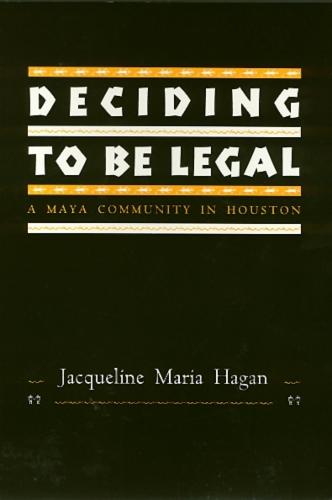
Understanding the process of becoming legal from the perspective of an immigrant community
Full Product Details
Author: Jacqueline Hagan
Publisher: Temple University Press,U.S.
Imprint: Temple University Press,U.S.
Dimensions:
Width: 14.00cm
, Height: 1.80cm
, Length: 21.00cm
Weight: 0.281kg
ISBN: 9781566392570
ISBN 10: 1566392578
Pages: 256
Publication Date: 30 December 1994
Audience:
Professional and scholarly
,
Professional & Vocational
Format: Paperback
Publisher's Status: Active
Availability: Out of stock

The supplier is temporarily out of stock of this item. It will be ordered for you on backorder and shipped when it becomes available.
Reviews
This book makes an important contribution to the debate over immigration. It is theoretically sophisticated, particularly in its analysis of immigration and legalization as processes rather than definitive decisions, in its recognition that immigrants vary in the cultural and social capital that they bring, and in making clear that immigration means different things for men and for women. The empirical research is unusually rich since it is based on three years of intensive field work in which Hagan followed closely the decisions that her informants made with respect to staying or returning and taking advantage of the legalization provisions of the Immigration Reform and Control Act. The result is a fascinating account of how Maya Indians from Guatemala have adjusted to life in the post-industrial world of Houston. As one of the best urban ethnographies that I have read in a long time, it is essential reading not just for specialists in immigration but for anyone interested in how ethnicity is constructed in urban settings, in the formation of transnational communities, and in the study of the family as both resource and constraint among the urban poor. --Bryan R. Roberts, Population Research Center, University of Texas at Austin
Hagan's study is a welcome addition to the small but growing literature on the contemporary Maya diaspora. -Geographical Review This book makes an important contribution to the debate over immigration. It is theoretically sophisticated, particularly in its analysis of immigration and legalization as processes rather than definitive decisions, in its recognition that immigrants vary in the cultural and social capital that they bring, and in making clear that immigration means different things for men and for women. The empirical research is unusually rich since it is based on three years of intensive field work in which Hagan followed closely the decisions that her informants made with respect to staying or returning and taking advantage of the legalization provisions of the Immigration Reform and Control Act. The result is a fascinating account of how Maya Indians from Guatemala have adjusted to life in the post-industrial world of Houston. As one of the best urban ethnographies that I have read in a long time, it is essential reading not just for specialists in immigration but for anyone interested in how ethnicity is constructed in urban settings, in the formation of transnational communities, and in the study of the family as both resource and constraint among the urban poor. -Bryan R. Roberts, Population Research Center, University of Texas at Austin
Author Information
Jacqueline Maria Hagan is Assistant Professor of Sociology at the University of Houston.