Overview
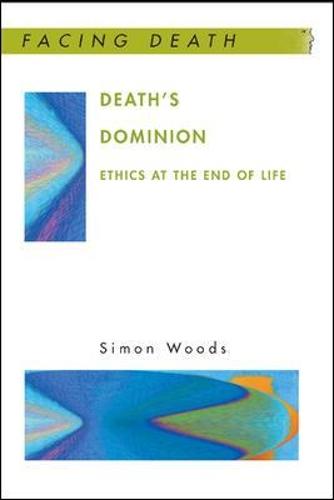
""I enjoyed reading this book very much. It is very readable and well argued using real life cases and thought experiments as well … The book provides the reader with a short history of and an overview of the most important issues in modern palliative care. Various theoretical discussions are clearly set out, such as: the relationship between the hospice movement and modern palliative care, between palliative care and health care in general, between palliative sedation and euthanasia, and the question whether euthanasia can be part of palliative care. The author starts with exploring the existing debates and then develops his own arguments in a balanced and well-structured way."" Medicine, Health Care and Philosophy""The text of this book is accessible, the philosophical and ethical arguments are clearly articulated, and relevant ethical principles are integrated into the critique of the issues, making this a very useful book for nurses working in palliative as well as in general care."" Nursing Ethics ""It is crucially important for any student or researcher who is seriously consideringethical and policy matters at the end of life to embrace and tackle intellectually the issues that Woods raises in this book. I would happily recommend it."" Journal of Medical Ethics What constitutes a good death? Is it possible to arrange a good death? Is killing compatible with caring? This book looks at death and the issues and ethical dilemmas faced at the end of life. It addresses the central issues in the field such as: Withholding and withdrawing treatment Euthanasia and assisted suicide Terminal sedation The role of autonomy Palliative care Drawing on a philosophical framework, the author explores end-of-life issues in order to reflect on the nature of the good death and how this may be achieved. The book considers whether it is permissible or desirable to influence the quality of dying: offering palliative sedation as a possible alternative to terminal sedation, the argument is extended to examine why some forms of assisted dying can be shown to be compatible with the ideas of palliative care.Consideration is also given to future developments such as life extension techniques and the ethical questions that that these techniques might raise. As such, the book follows in the ongoing philosophical tradition to critique and analyse current thought on the topic of death, encouraging self-reflection in the reader and offering suggestions for practice in end-of-life care. Death’s Dominion is key reading for students and professionals involved in care of the dying, as well as those with an interest in the philosophical issues surrounding end-of-life care.
Full Product Details
Author: Simon Woods
Publisher: Open University Press
Imprint: Open University Press
Dimensions:
Width: 15.40cm
, Height: 1.30cm
, Length: 23.10cm
ISBN: 9780335211609
ISBN 10: 0335211607
Pages: 192
Publication Date: 16 December 2006
Audience:
Professional and scholarly
,
College/higher education
,
Professional & Vocational
,
Tertiary & Higher Education
Format: Paperback
Publisher's Status: Out of Stock Indefinitely
Availability: Out of stock

Author Information
Simon Woods is Senior Lecturer and Director of Learning in the Policy Ethics and Life Sciences Research Institute (PEALS) at the University of Newcastle. He has ten years clinical experience as a cancer nurse and holds bachelor and doctoral degrees in philosophy. He has conducted empirical and conceptual research and has taught and published widely in the health care ethics field.