|
Overview
Full Product Details
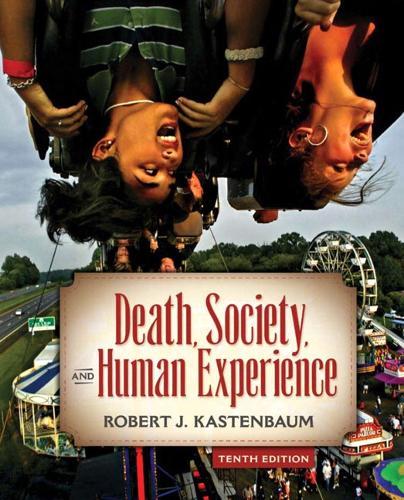
Author: Robert J. Kastenbaum
Publisher: Taylor & Francis Inc
Imprint: Routledge
Edition: 10th edition
Dimensions:
Width: 19.10cm
, Height: 2.30cm
, Length: 23.50cm
Weight: 0.820kg
ISBN: 9780205610532
ISBN 10: 0205610536
Pages: 560
Publication Date: 23 January 2009
Audience:
College/higher education
,
Tertiary & Higher Education
Replaced By: 9780205001088
Format: Paperback
Publisher's Status: Out of Print
Availability: In Print 
Limited stock is available. It will be ordered for you and shipped pending supplier's limited stock.
Table of Contents
Found in This Section: 1. Brief Table of Contents 2. Comprehensive Table of Contents BRIEF TABLE OF CONTENTS: Preface Chapter 1: As We Think About Death Chapter 2: What is Death? Chapter 3: The Death System Chapter 4: Dying Chapter 5: Hospice and Palliative Care Chapter 6: End of Life Issues and Decisions Chapter 7: Suicide Chapter 8: Violent Death: Murder, Terrorism, Genocide, Disaster, and Accident Chapter 9: Euthanasia. Assisted Death, Abortion, and the Right to Die Chapter 10: Death in the World of Childhood Chapter 11: Bereavement, Grief, and Mourning Chapter 12: The Funeral Process Chapter 13: Do We Survive Death? Chapter 14: How Can We Help? Chapter 15: Good Life, Good Death? COMPREHENSIVE TABLE OF CONTENTS: *Every chapter ends with Summary, References, and Glossary Chapter 1: AS WE THINK ABOUT DEATH Not Thinking About Death: A Failed Experiment Your Self-Inventory Of Attitudes, Beliefs, And Feelings Some Answers–And The Questions They Raise Man Is Mortal: But What Does That Have To Do With Me? Anxiety, Denial, And Acceptance: Three Core Concepts Studies And Theories Of Death Anxiety 18 Major Findings From Self-Reports Of Death Anxiety Major Findings From Self-Reports of Death Anxiety Theoretical Perspectives on Death Anxiety Accepting and Denying Death Chapter 2: WHAT IS DEATH? Ideas About The Nature And Meaning Of Death Death as Observed, Proclaimed, and Imagined Biomedical Approaches to the Definition of Death Event Versus State What Does Death Mean? Interpretations of the Death State Conditions that Resemble Death Death as a Person Conditions that Death Resembles The Undead Death as an Agent of Personal, Political, and Social Change Chapter 3: THE DEATH SYSTEM A WORLD WITHOUT DEATH BASIC CHARACTERISTICS OF THE DEATH SYSTEM COMPONENTS OF THE DEATH SYSTEM Functions of the Death System Tsunami, Cyclone, Earthquake, and Hurricane Katrina–Challenges to the Death System Hurricanes Katrina and Rita How Our Death System Has Been Changing–And the “Deathniks” Who are Making a Difference Chapter 4: DYING The Moment of Death: Is It Vanishing? What is Dying, and When Does it Begin? Trajectories of Dying: From Beginning to End Guarded Feelings, Subtle Communications Individuality and Universality in the Experience of Dying Theoretical Models of the Dying Process Chapter 5: Hospice and Palliative Care Hospice: a New Flowering from Ancient Roots Standards of Care for the Terminally Ill The Hospice in Action Relief of Pain and Suffering Hospice Access, Decision Making, and Challenges Dame Cicely Saunder’s Reflections on Hospice Chapter 6: End-0f-Life Issues and Decisions From Description to Decision Making Who Should Participate in End-Of-Life Decisions The Living Will and its Impact Right-To-Die Decisions that We Can Make A Right Not to Die? The Cryonics Alternative Organ Donation Funeral-Related Decisions Chapter 7: Suicide What Do the Statistics Tell Us? Four Problem Areas Some Cultural Meanings of Suicide A Powerful Sociological Theory of Suicide Some Individual Meanings of Suicide Facts and Myths about Suicide Suicide Prevention Chapter 8: Violent Death: Murder, Terrorism, Genocide, Disaster, and Accident Murder Terrorism Accident and Disaster Chapter 9: Euthanasia, Assisted Death, Abortion, and the Right to Die “I Swear By Apollo the Physician”: What Happened to the Hippocratic Oath? Our Changing Attitudes Toward a Right to Die The Right-To-Die Dilemma: Case Examples Terri Schiavo: Who Decides? Dr. Kevorkian and the Assisted-Suicide Movement Assisted Death in the United States Induced Abortion Chapter 10: Death in the World of Childhood Respecting the Child’s Concern and Curiosity Adult Assumptions About Children and Death Children Do Think About Death Concepts and Fears: Developing Through Experience How Do Children Cope with Bereavement? The Dying Child Sharing the Child’s Death Concerns: A Few Guidelines The “Right” to Decide: Should the Child’s Voice Be Heard? Chapter 11: Bereavement, Grief and Mourning Some Responses to Loss Defining Our Terms: Bereavement, Grief, Mourning What Kind of Grief? Theories of Greif How Do People Recover from Grief? Bereavement in Later Life Are Bereaved People At Higher Risk for Death? How Well Do We Support the Bereaved? Meaningful Help for Bereaved People Widows in Third World Nations On the Future of Grieving and Mourning Chapter 12: The Funeral Process A Sampler of Responses to the Dead What Do Funerals Mean to Us? From Dead Body to Living Memory: A Process Approach Making Death “Legal” What Does the Funeral Process Accomplish? Memories of Our People: Cemeteries in the United States The Place of the Dead in Society: Yesterday and Today The Funeral Director’s Perspective Improving the Funeral Process Spontaneous Memorialization in Response to Violent Death Integrity and Abuse in the Funeral and Memorial Process Chapter 13: Do We Survive Death? Concept of Survival in Historic Perspective Heavens and Hells The Desert Religions and Their One God What Other People Believe Today Can Survival Be Proved? When Spiritism Was in Flower Near-Death Experiences: Evidence for Survival? Should We Survive Death? But What Kind of Survival? Assisted and Symbolic Survival The Suicide-Survival Connection Chapter 14: How Can We Help? “Compassionate Fatigue”: Burnout and the Healthcare Provider Death Educators and Counselors: The “Border Patrol” Death Education in Historical Perspective Death Education and Counseling: The Current Scene Counseling and The Counselors How We All Can Help Chapter 15: Good Life, Good Death? Three Paths to Death A Father Dies: A Mission Begins A Shift in the Meaning of Life and Death Utopia: A Better Death in a Better Place? “The Good Death”: Fantasy or Reality? Extinction: Death of Life or Death of Death? From Good Life to Good Death: A Personal Statement
Reviews
Author Information
Bob Kastenbaum’s exploits as skating messenger apparently qualified him to become editor of two community newspapers, an eccentric career trajectory that somehow led to a graduate scholarship in philosophy and a Ph.D. in psychology at the University of Southern California (1959). He was most interested in fields of psychological study that barely existed at the time: lifespan development and aging, time perspective, creativity, and death and dying. Kastenbaum became part of an emerging cadre that overcame the prevailing neglect and resistance to these issues. He worked in varied settings as clinician, researcher, activist, hospital administrator, educator, and author. The innovative programs he introduced into a geriatric hospital and his article, “The Reluctant Therapist” have been credited with preparing the way for increased attention to the needs and potentials of vulnerable elders and terminally ill people. With Dick Kalish, he founded Omega, the first peer-reviewed journal focused on death-related issues. Kastenbaum taught the first regularly-scheduled university course on death and dying and came up with the first textbook (Death, Society, & Human Experience, 1977). He also established the first university-based educational and research center on death and dying (Wayne State University, 1966). His other books include The Psychology of Death (1972, 1990, 2000); Dorian, Graying: Is Youth the Only Thing Worth Having? (1995), and On Our Way. The Final Passage Through Life and Death (2004). He has also served as editor of the Macmillan Encyclopedia of Death and Dying, (2003) and two previous encyclopedias. In the public sphere he has served as a co-founder of The National Caucus on Black Aging, consultant to the United States Senate Special Subcommittee on Aging, and participant in developing the Veterans Administration’s geriatric research and educational centers, and the landmark National Hospice Demonstration Project. Kastenbaum lives in Tempe, Arizona with Bunny (wife), Angel (The Incredible Leaping Dog), enhanced by Pumpkin and Snowflake in the cat department. Along with his continuing research interests, Kastenbaum has been writing book and verse for musicals and operas. He notes that nobody has died in the two most recently premiered operas (Closing Time; American Gothic, music by Kenneth LaFave), but cannot make any such promises about the next opera.
Tab Content 6
Author Website:
Countries Available
All regions
|