Overview
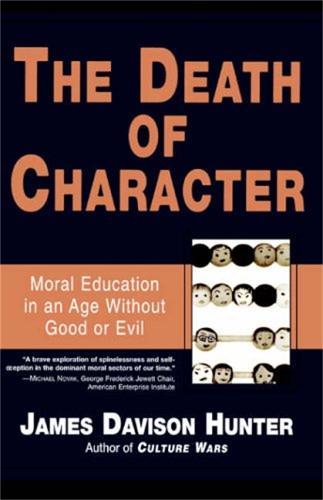
The Death of Character is a broad historical, sociological, and cultural inquiry into the moral life and moral education of young Americans based upon a huge empirical study of the children themselves. The children's thoughts and concerns-expressed here in their own words-shed a whole new light on what we can expect from moral education. Targeting new theories of education and the prominence of psychology over moral instruction, Hunter analyses the making of a new cultural narcissism.
Full Product Details
Author: James Hunter
Publisher: Basic Books
Imprint: Basic Books
Edition: New edition
Dimensions:
Width: 14.10cm
, Height: 2.20cm
, Length: 21.40cm
Weight: 0.430kg
ISBN: 9780465031771
ISBN 10: 0465031773
Pages: 336
Publication Date: 18 May 2001
Audience:
General/trade
,
General
Format: Paperback
Publisher's Status: Active
Availability: Manufactured on demand

We will order this item for you from a manufactured on demand supplier.
Reviews
A too-strongly argued case for modifying moral education and rescuing character from the self-esteem Nazis and feel-good shrinks. Sociologist Hunter (Before the Shooting Begins, 1994) echoes Nietzsche at the start by declaring that `Character is dead.` He goes on to describe how the humanistic and Bible-based moral education of the past has been replaced by subjective values and vapid advice (on the order of `Just say no`). Having adopted the optimistic premises of secular psychology, teachers believe that morality is innate and will flourish if left alone. Traditional family values, where children bowed to parents and didn't speak until spoken to, have become `offensive to our cosmopolitan sensibilities.` Hunter's third source of moral guidelinesbesides the psychological strategy (if it feels good, it must be right) favored by liberals and the neo-classical strategy (to err is sinful) maintained by conservativesmay be found in the values of social consensus, based on shared experience. Rather than suggesting this synthesis between the extremes, Hunter is mostly concerned with accusing liberals of crucifying character. A history of the reformers who led up to Dewey (such as Horace Mann, the progressive Unitarian who robbed schoolroom Bible-reading of its Calvinist interpretations) is mapped out. Hunter also provides survey questions on character issues, such as cheating on exams and premarital sex. The charted results show that children with the contemporary, psychological-based sense of character are five times more likely than religious children to condone suicide. Hunter strongly makes his point, but he fails to address the question of what negative effects theist concepts and upbringing can inculcate in children.Hunter provides some important balance for excesses in contemporary amorality, but he won't be able to roll back the tide that has long since washed over us. (Kirkus Reviews)
Author Information
James Davidson Hunter is professor of sociology and religious studies at the University of Virginia and author of Evangelicalism: The Coming Generation (1987).