Overview
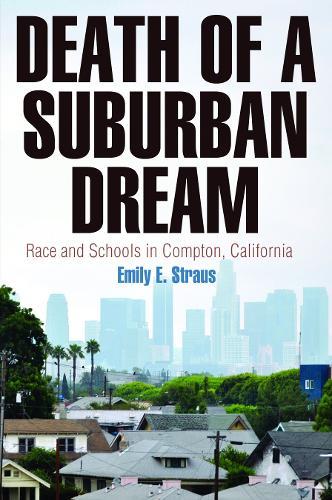
Compton, California, is often associated in the public mind with urban America's toughest problems, including economic disinvestment, gang violence, and failing public schools. Before it became synonymous with inner-city decay, however, Compton's affordability, proximity to manufacturing jobs, and location ten miles outside downtown Los Angeles made it attractive to aspiring suburbanites seeking single-family homes and quality schools. As Compton faced challenges in the twentieth century, and as the majority population shifted from white to African American and then to Latino, the battle for control over the school district became symbolic of Compton's economic, social, and political crises. Death of a Suburban Dream explores the history of Compton from its founding in the late nineteenth century to the present, taking on three critical issues-the history of race and educational equity, the relationship between schools and place, and the complicated intersection of schooling and municipal economies-as they shaped a Los Angeles suburb experiencing economic and demographic transformation. Emily E. Straus carefully traces the roots of antagonism between two historically disenfranchised populations, blacks and Latinos, as these groups resisted municipal power sharing within a context of scarcity. Using archival research and oral histories, this complex narrative reveals how increasingly racialized poverty and violence made Compton, like other inner-ring suburbs, resemble a troubled urban center. Ultimately, the book argues that Compton's school crisis is not, at heart, a crisis of education; it is a long-term crisis of development. Avoiding simplistic dichotomies between urban and suburban, Death of a Suburban Dream broadens our understanding of the dynamics connecting residents and institutions of the suburbs, as well as the changing ethnic and political landscape in metropolitan America.
Full Product Details
Author: Emily E. Straus
Publisher: University of Pennsylvania Press
Imprint: University of Pennsylvania Press
Dimensions:
Width: 15.20cm
, Height: 3.20cm
, Length: 22.90cm
Weight: 0.730kg
ISBN: 9780812245981
ISBN 10: 0812245989
Pages: 328
Publication Date: 22 April 2014
Audience:
College/higher education
,
Professional and scholarly
,
Tertiary & Higher Education
,
Professional & Vocational
Format: Hardback
Publisher's Status: Active
Availability: In Print

This item will be ordered in for you from one of our suppliers. Upon receipt, we will promptly dispatch it out to you. For in store availability, please contact us.
Reviews
Compton is a remarkable American story. A suburb that started white and modest, it convulsed its way toward racial diversity and now represents a new norm of American suburban life-fiscally strained, majority minority, struggling for survival. In this extraordinary journey through Compton's history, Emily E. Straus interweaves the structural and the local, showing how Compton and its schools fell victim to a vicious cycle of debt and despair. Anyone who cares about why our public schools are faltering should pay attention to this story. -Becky Nicolaides, University of California, Los Angeles Death of a Suburban Dream is a unique contribution to our understanding of the interplay of place and education with community and politics in the United States. Straus embeds the history of Compton schools and of educational reform firmly within a spatial analysis of suburban Los Angeles. She shows how past decisions, not only about schools but also about what kind of community Compton residents wanted, now limit the possibilities of reform by residents, politicians, and educators as they confront a dysfunctional system. The book will be of interest not only to metropolitan historians and historians of education, but to anyone interested in civil rights and the history of African Americans and Latinos in the American West. -Eric Schneider, author of Smack: Heroin and the American City Death of a Suburban Dream explains how Compton transformed from a blue-collar suburb into an emblem of African American poverty and violence. With meticulous research and engaging prose, Emily E. Straus offers a sweeping account of this singular suburb's rise and fall, as well as the educational system that contributed to both. -John Rury, University of Kansas
Author Information
Emily E. Straus is Associate Professor of History at the State University of New York at Fredonia.