Overview
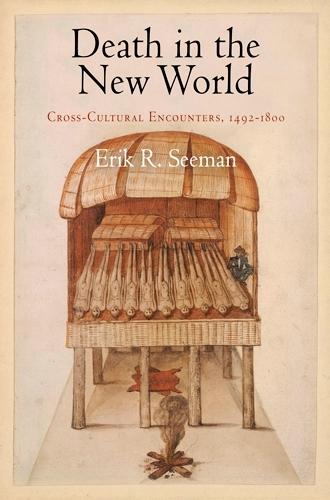
Reminders of death were everywhere in the New World, from the epidemics that devastated Indian populations and the mortality of slaves working the Caribbean sugar cane fields to the unfamiliar diseases that afflicted Europeans in the Chesapeake and West Indies. According to historian Erik R. Seeman, when Indians, Africans, and Europeans encountered one another, they could not ignore the similarities in their approaches to death. All of these groups believed in an afterlife to which the soul or spirit traveled after death. As a result all felt that corpses-the earthly vessels for the soul or spirit-should be treated with respect, and all mourned the dead with commemorative rituals. Seeman argues that deathways facilitated communication among peoples otherwise divided by language and custom. They observed, asked questions about, and sometimes even participated in their counterparts' rituals. At the same time, insofar as New World interactions were largely exploitative, the communication facilitated by parallel deathways was often used to influence or gain advantage over one's rivals. In Virginia, for example, John Smith used his knowledge of Powhatan deathways to impress the local Indians with his abilities as a healer as part of his campaign to demonstrate the superiority of English culture. Likewise, in the 1610-1614 war between Indians and English, the Powhatans mutilated English corpses because they knew this act would horrify their enemies. Told in a series of engrossing narratives, Death in the New World is a landmark study that offers a fresh perspective on the dynamics of cross-cultural encounters and their larger ramifications in the Atlantic world.
Full Product Details
Author: Erik R. Seeman
Publisher: University of Pennsylvania Press
Imprint: University of Pennsylvania Press
Dimensions:
Width: 15.20cm
, Height: 2.80cm
, Length: 22.90cm
Weight: 0.640kg
ISBN: 9780812221947
ISBN 10: 081222194
Pages: 384
Publication Date: 01 November 2011
Audience:
College/higher education
,
Tertiary & Higher Education
Format: Paperback
Publisher's Status: Active
Availability: In Print

This item will be ordered in for you from one of our suppliers. Upon receipt, we will promptly dispatch it out to you. For in store availability, please contact us.
Reviews
This book offers a broad compendium of early American deathways; it is the most complete and comprehensive treatment of the subject. But it can also be read as a synthetic account of the history of colonial America itself; readers will learn much of the essential story of North American colonization. -American Historical Review Through an imaginative use of sources and an engaging narrative, Erik Seeman has produced what is sure to become an influential book in early American history. By situating death at the center of an analysis of cross-cultural interactions in the New World, Seeman sheds new light on important questions in current historiography. -Daniel Usner, Vanderbilt University A meticulous study. . . . Seeman skillfully reveals how people with different languages, religions, and cultures learned to speak through the symbolism of death. -Journal of American History Seeman's achievement is significant. . . . Death in the New World is refreshingly broad in sweep, blending insights drawn from anthropology, archaeology, and religious and military history. It is also an imaginative work, in the complimentary sense of the term, as Seeman cheerfully, and with erudition, fills in gaps where the written or archaeological record falls silent. If the subject of history is nearly always the lives and deeds of the now deceased, Erik Seeman shows that the disposal of their mortal remains was a vitally important, if not especially uplifting, part of the story. -Times Literary Supplement [Death in the New World] serves as an excellent introduction to comparative burial and mourning practices and to the ways in which written, archaeological, and ethnographic evidence can be employed to elucidate cross-cultural exchanges. It is a sophisticated interdisciplinary study that weaves together multiple strands of evidence; historians, historical archaeologists, anthropologists, and material culture specialists are all likely to discover relevant but unfamiliar findings Seeman has gleaned from related disciplines. The book also advances cogent arguments about cultural continuities and discontinuities, syncretism, and the relationship between direction and degree of change in burial practices and power relationships. -William and Mary Quarterly
[Death in the New World] serves as an excellent introduction to comparative burial and mourning practices and to the ways in which written, archaeological, and ethnographic evidence can be employed to elucidate cross-cultural exchanges. It is a sophisticated interdisciplinary study that weaves together multiple strands of evidence; historians, historical archaeologists, anthropologists, and material culture specialists are all likely to discover relevant but unfamiliar findings Seeman has gleaned from related disciplines. The book also advances cogent arguments about cultural continuities and discontinuities, syncretism, and the relationship between direction and degree of change in burial practices and power relationships. -William and Mary Quarterly Seeman's achievement is significant... Death in the New World is refreshingly broad in sweep, blending insights drawn from anthropology, archaeology, and religious and military history. It is also an imaginative work, in the complimentary sense of the term, as Seeman cheerfully, and with erudition, fills in gaps where the written or archaeological record falls silent. If the subject of history is nearly always the lives and deeds of the now deceased, Erik Seeman shows that the disposal of their mortal remains was a vitally important, if not especially uplifting, part of the story. -Times Literary Supplement A meticulous study... Seeman skillfully reveals how people with different languages, religions, and cultures learned to speak through the symbolism of death. -Journal of American History Through an imaginative use of sources and an engaging narrative, Erik Seeman has produced what is sure to become an influential book in early American history. By situating death at the center of an analysis of cross-cultural interactions in the New World, Seeman sheds new light on important questions in current historiography. -Daniel Usner, Vanderbilt University This book offers a broad compendium of early American deathways; it is the most complete and comprehensive treatment of the subject. But it can also be read as a synthetic account of the history of colonial America itself; readers will learn much of the essential story of North American colonization. -American Historical Review
Seeman's achievement is significant... Death in the New World is refreshingly broad in sweep, blending insights drawn from anthropology, archaeology, and religious and military history. It is also an imaginative work, in the complimentary sense of the term, as Seeman cheerfully, and with erudition, fills in gaps where the written or archaeological record falls silent. If the subject of history is nearly always the lives and deeds of the now deceased, Erik Seeman shows that the disposal of their mortal remains was a vitally important, if not especially uplifting, part of the story. -Times Literary Supplement This book offers a broad compendium of early American deathways; it is the most complete and comprehensive treatment of the subject. But it can also be read as a synthetic account of the history of colonial America itself; readers will learn much of the essential story of North American colonization. -American Historical Review A meticulous study... Seeman skillfully reveals how people with different languages, religions, and cultures learned to speak through the symbolism of death. -Journal of American History Through an imaginative use of sources and an engaging narrative, Erik Seeman has produced what is sure to become an influential book in early American history. By situating death at the center of an analysis of cross-cultural interactions in the New World, Seeman sheds new light on important questions in current historiography. -Daniel Usner, Vanderbilt University
Seeman's achievement is significant... In an age of academic hyperspecialization, Death in the New World is refreshingly broad in sweep, blending insights drawn from anthropology, archaeology, and religious and military history. It is also an imaginative work, in the complimentary sense of the term, as Seeman cheerfully, and with erudition, fills in gaps where the written or archaeological record falls silent. If the subject of history is nearly always the lives and deeds of the now deceased, Erik Seeman shows that the disposal of their mortal remains was a vitally important, if not especially uplifting, part of the story. -Times Literary Supplement This book offers a broad compendium of early American deathways; it is the most complete and comprehensive treatment of the subject. But it can also be read as a synthetic account of the history of colonial America itself; readers will learn much of the essential story of North American colonization. -American Historical Review A meticulous study... Seeman skillfully reveals how people with different languages, religions, and cultures learned to speak through the symbolism of death. -Journal of American History Through an imaginative use of sources and an engaging narrative, Erik Seeman has produced what is sure to become an influential book in early American history. By situating death at the center of an analysis of cross-cultural interactions in the New World, Seeman sheds new light on important questions in current historiography. -Daniel Usner, Vanderbilt University
Author Information
Erik R. Seeman is Professor of History at the University at Buffalo (SUNY).