Overview
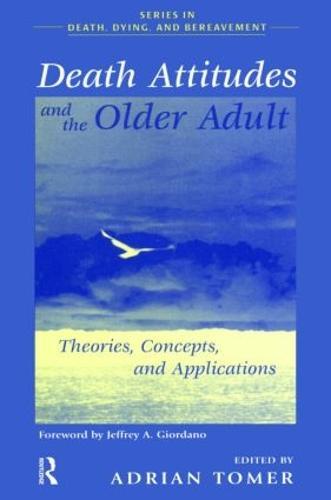
Death and ageing are two topics not often discussed together in the present literature. This text bridges the fields of gerontology and thanatology. Death attitudes - defined as attitudes towards the dying process, end-of-life decision making, and death itself - are explored. Those contributing to this volume hail from several specialized backgrounds including gerontology, death, education, and general psychology. This mix of contributors adds to the interdisciplinary perspective of the text.
Full Product Details
Author: Adrian Tomer
Publisher: Taylor & Francis Ltd
Imprint: Brunner-Routledge
Dimensions:
Width: 15.20cm
, Height: 2.20cm
, Length: 22.90cm
Weight: 0.740kg
ISBN: 9780876309889
ISBN 10: 0876309880
Pages: 294
Publication Date: 24 August 2000
Audience:
College/higher education
,
Undergraduate
,
Postgraduate, Research & Scholarly
Format: Hardback
Publisher's Status: Active
Availability: In Print

This item will be ordered in for you from one of our suppliers. Upon receipt, we will promptly dispatch it out to you. For in store availability, please contact us.
Reviews
Tomer is to be congratulated for his initiative. He and his colleagues have begun the research that will eventually lead to the development of a predictive model. As I note in more detail, his initial model had to be seriously refined; and it will need more refinement. However, what is most important is that the initial conceptual design has begun. As more research is undertaken, the model will become better articulated and its predictive power more definitive...the text provides a good discussion of hospice care and geriatric counseling. Hospice provides a viable alternative to hospital care. However, as the author points out, financing and length of care are major concerns.. -Contemporary Psychology, APA Review of Books, 2003, Vol. 48, No.2
Tomer is to be congratulated for his initiative. He and his colleagues have begun the research that will eventually lead to the development of a predictive model. As I note in more detail, his initial model had to be seriously refined; and it will need more refinement. However, what is most important is that the initial conceptual design has begun. As more research is undertaken, the model will become better articulated and its predictive power more definitive...the text provides a good discussion of hospice care and geriatric counseling. Hospice provides a viable alternative to hospital care. However, as the author points out, financing and length of care are major concerns.. <br>-Contemporary Psychology, APA Review of Books, 2003, Vol. 48, No.2 <br>
"""Tomer is to be congratulated for his initiative. He and his colleagues have begun the research that will eventually lead to the development of a predictive model. As I note in more detail, his initial model had to be seriously refined; and it will need more refinement. However, what is most important is that the initial conceptual design has begun. As more research is undertaken, the model will become better articulated and its predictive power more definitive...the text provides a good discussion of hospice care and geriatric counseling. Hospice provides a viable alternative to hospital care. However, as the author points out, financing and length of care are major concerns."" -- Contemporary Psychology, APA Review of Books, 2003, Vol. 48, No.2"