Overview
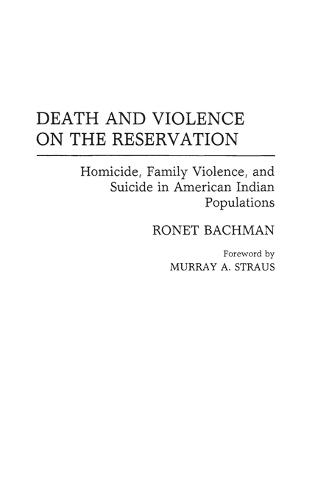
This volume is the first major attempt to systematically examine the etiology of violence in American Indian communities. Using fieldwork as well as quantitative and qualitative research, Bachman first presents an overview of American Indians from historical and contemporary perspectives, before she focuses specifically on violence and its causes. Homicide, suicide, and family violence are analyzed in depth, and the destructive impacts of alcohol and other addictive substances are documented. Dr. Bachman effectively uses personal stories and narratives given by American Indians to illustrate the living reality behind the statistics she presents. She concludes with a variety of policy recommendations that will be of interest not only to policymakers, but also to academic researchers and students in criminology, ethnic relations, sociology, and anthropology.
Full Product Details
Author: Ronet Bachman
Publisher: Bloomsbury Publishing Plc
Imprint: Praeger Publishers Inc
Dimensions:
Width: 15.60cm
, Height: 1.80cm
, Length: 23.50cm
Weight: 0.397kg
ISBN: 9780865690158
ISBN 10: 0865690154
Pages: 192
Publication Date: 23 June 1992
Recommended Age: From 7 to 17 years
Audience:
College/higher education
,
Undergraduate
,
Postgraduate, Research & Scholarly
Format: Hardback
Publisher's Status: Active
Availability: Manufactured on demand

We will order this item for you from a manufactured on demand supplier.
Reviews
?Examining a widely recognized but little-studied program, Bachman has ambitious goals in this book. She applies both quantitative and qualitative methods to the study of homicide, family violence, and suicide on Native American reservations. To accomplish this, the author weaves human stories collected from personal interviews with statistical methods common to standard sociological analyses. The insights gained from this combination of approaches are then used to construct a model of Native American homicide. This model links socioeconomic factors, such as poverty, alcoholism, and family breakdown with a lack of cultural identity that Bachman attributes to a long history of internal colonialism. She is successful in her attempts to unite the two methodological approaches and provides valid direction for future policies, but as might be expected, has tackled too large a topic to be dealt with in one short book. Her presentation of the problem, although never appearing simplistic, lacks the depth that the topic requires. Given the paucity of work in this field, however, Bachman's book is a welcome addition to the literature. Advanced undergraduate; graduate; faculty; preprofessional; professional.?-Choice
Examining a widely recognized but little-studied program, Bachman has ambitious goals in this book. She applies both quantitative and qualitative methods to the study of homicide, family violence, and suicide on Native American reservations. To accomplish this, the author weaves human stories collected from personal interviews with statistical methods common to standard sociological analyses. The insights gained from this combination of approaches are then used to construct a model of Native American homicide. This model links socioeconomic factors, such as poverty, alcoholism, and family breakdown with a lack of cultural identity that Bachman attributes to a long history of internal colonialism. She is successful in her attempts to unite the two methodological approaches and provides valid direction for future policies, but as might be expected, has tackled too large a topic to be dealt with in one short book. Her presentation of the problem, although never appearing simplistic, lacks the depth that the topic requires. Given the paucity of work in this field, however, Bachman's book is a welcome addition to the literature. Advanced undergraduate; graduate; faculty; preprofessional; professional. -Choice One of the most compelling aspects of the book is the extensive material from in-depth interviews with American Indian male inmates and women from battered women's shelters. -Contemporary Sociology Bachman, an analyst with the US Justice Department, combines quantitative and qualitative data, fieldwork, and personal narratives, to illustrate the character and possible causes of violence among Native Americans. She also makes a variety of policy recommendations. Should interest readers involved either with Indians or other minorities, or with criminology. -Reference & Research Book News ?One of the most compelling aspects of the book is the extensive material from in-depth interviews with American Indian male inmates and women from battered women's shelters.?-Contemporary Sociology ?Bachman, an analyst with the US Justice Department, combines quantitative and qualitative data, fieldwork, and personal narratives, to illustrate the character and possible causes of violence among Native Americans. She also makes a variety of policy recommendations. Should interest readers involved either with Indians or other minorities, or with criminology.?-Reference & Research Book News ?Examining a widely recognized but little-studied program, Bachman has ambitious goals in this book. She applies both quantitative and qualitative methods to the study of homicide, family violence, and suicide on Native American reservations. To accomplish this, the author weaves human stories collected from personal interviews with statistical methods common to standard sociological analyses. The insights gained from this combination of approaches are then used to construct a model of Native American homicide. This model links socioeconomic factors, such as poverty, alcoholism, and family breakdown with a lack of cultural identity that Bachman attributes to a long history of internal colonialism. She is successful in her attempts to unite the two methodological approaches and provides valid direction for future policies, but as might be expected, has tackled too large a topic to be dealt with in one short book. Her presentation of the problem, although never appearing simplistic, lacks the depth that the topic requires. Given the paucity of work in this field, however, Bachman's book is a welcome addition to the literature. Advanced undergraduate; graduate; faculty; preprofessional; professional.?-Choice
?Bachman, an analyst with the US Justice Department, combines quantitative and qualitative data, fieldwork, and personal narratives, to illustrate the character and possible causes of violence among Native Americans. She also makes a variety of policy recommendations. Should interest readers involved either with Indians or other minorities, or with criminology.?-Reference & Research Book News ?Examining a widely recognized but little-studied program, Bachman has ambitious goals in this book. She applies both quantitative and qualitative methods to the study of homicide, family violence, and suicide on Native American reservations. To accomplish this, the author weaves human stories collected from personal interviews with statistical methods common to standard sociological analyses. The insights gained from this combination of approaches are then used to construct a model of Native American homicide. This model links socioeconomic factors, such as poverty, alcoholism, and family breakdown with a lack of cultural identity that Bachman attributes to a long history of internal colonialism. She is successful in her attempts to unite the two methodological approaches and provides valid direction for future policies, but as might be expected, has tackled too large a topic to be dealt with in one short book. Her presentation of the problem, although never appearing simplistic, lacks the depth that the topic requires. Given the paucity of work in this field, however, Bachman's book is a welcome addition to the literature. Advanced undergraduate; graduate; faculty; preprofessional; professional.?-Choice ?One of the most compelling aspects of the book is the extensive material from in-depth interviews with American Indian male inmates and women from battered women's shelters.?-Contemporary Sociology Bachman, an analyst with the US Justice Department, combines quantitative and qualitative data, fieldwork, and personal narratives, to illustrate the character and possible causes of violence among Native Americans. She also makes a variety of policy recommendations. Should interest readers involved either with Indians or other minorities, or with criminology. -Reference & Research Book News One of the most compelling aspects of the book is the extensive material from in-depth interviews with American Indian male inmates and women from battered women's shelters. -Contemporary Sociology Examining a widely recognized but little-studied program, Bachman has ambitious goals in this book. She applies both quantitative and qualitative methods to the study of homicide, family violence, and suicide on Native American reservations. To accomplish this, the author weaves human stories collected from personal interviews with statistical methods common to standard sociological analyses. The insights gained from this combination of approaches are then used to construct a model of Native American homicide. This model links socioeconomic factors, such as poverty, alcoholism, and family breakdown with a lack of cultural identity that Bachman attributes to a long history of internal colonialism. She is successful in her attempts to unite the two methodological approaches and provides valid direction for future policies, but as might be expected, has tackled too large a topic to be dealt with in one short book. Her presentation of the problem, although never appearing simplistic, lacks the depth that the topic requires. Given the paucity of work in this field, however, Bachman's book is a welcome addition to the literature. Advanced undergraduate; graduate; faculty; preprofessional; professional. -Choice
Author Information
RONET BACHMAN is a Research Analyst and Statistician with the Bureau of Justice Statistics, U.S. Justice Department. She is also Visiting Assistant Professor of Criminal Justice and Criminology at the University of Maryland.