Overview
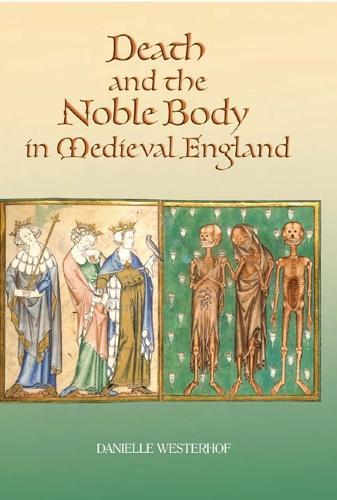
An examination of early medieval ideas about death and dying, in relation to funeral practices, traditions and rituals. We all die, but how we perceive death as an event, process or state is inextricably connected to our experiences and the social and environmental culture in which we live. During the early middle ages, the body was used to demonstrate a whole range of concepts and assumptions: the ideal aristocrat possessed a strong, whole and virile body which reflected his inner virtues, and nobility of birth was understood to presuppose and enhance nobility of character and action. Here, the author examines how contemporary ideas about death and dying disrupted this abstract ideal. She explores the meaning of aristocratic funerary practices such as embalming and heart burial, and, conversely, looks at what the gruesomely elaborate executions of aristocratic traitors in England around the turn of the fourteenth century reveal about the role of the body in perceptions of group identity and society at large. Dr DANIELLE WESTERHOF is Honorary Visiting Fellow, School of Historical Studies, University of Leicester.
Full Product Details
Author: Danielle Westerhof
Publisher: Boydell & Brewer Ltd
Imprint: The Boydell Press
Dimensions:
Width: 15.60cm
, Height: 2.10cm
, Length: 23.40cm
Weight: 0.001kg
ISBN: 9781843834168
ISBN 10: 1843834162
Pages: 202
Publication Date: 16 October 2008
Audience:
Professional and scholarly
,
Professional & Vocational
Format: Hardback
Publisher's Status: Out of Print
Availability: Out of stock

Reviews
Offers valuable new information on multiple burials and a fresh perspective on the link between aristocratic burial and aristocratic execution in medieval England. MEDICAL HISTORY Westerhof's emphasis on the spiritual and symbolic meaning of the heart is valuable, and her exploration of the traitorous corpse is interesting. Her quantitative approach is useful, and two appendices set out the evidence for 'multiple burials' and aristocratic executions. CHURCH MONUMENTS Death and the Noble Body brings much-needed attention to a connection that has too often been overlooked: the division of the noble body for burial and its dismemberment on the scaffold. (...) Fill(s) an important gap in the scholarship on medieval penal practice, which has too often failed to acknowledge that kings and queens, as well as traitors, were dismembered after death. JOURNAL OF BRITISH STUDIES A very useful and well-written synthesis in terms of both historiography and the historical content itself. AMERICAN HIS
Should be essential reading for archaeologists with an interest in burial. In particular, her analysis of 'multiple burials' - those where the heart and/or viscera were interred in a separate location from the body - provides an explanation for phenomena detectable in the archaeological record. MEDIEVAL ARCHAEOLOGY Offers valuable new information on multiple burials and a fresh perspective on the link between aristocratic burial and aristocratic execution in medieval England. MEDICAL HISTORY Westerhof's emphasis on the spiritual and symbolic meaning of the heart is valuable, and her exploration of the traitorous corpse is interesting. Her quantitative approach is useful, and two appendices set out the evidence for 'multiple burials' and aristocratic executions. CHURCH MONUMENTSBR> Death and the Noble Body brings much-needed attention to a connection that has too often been overlooked: the division of the noble body for burial and its dismemberment on the scaffold. (...) Fill(s) an impo
Wide ranging and fully interdisciplinary... clear, stimulating and accessible. ENGLISH HISTORICAL REVIEW (A) fascinating book. THE RICARDIAN (The author) demonstrates an impressive mastery of the documentary sources and her thesis on the noble body should be essential reading for archaeologists with an interest in burial. JOURNAL OF MEDIEVAL ARCHAEOLOGY Should be essential reading for archaeologists with an interest in burial. In particular, her analysis of 'multiple burials' - those where the heart and/or viscera were interred in a separate location from the body - provides an explanation for phenomena detectable in the archaeological record. MEDIEVAL ARCHAEOLOGY Offers valuable new information on multiple burials and a fresh perspective on the link between aristocratic burial and aristocratic execution in medieval England. MEDICAL HISTORY Westerhof's emphasis on the spiritual and symbolic meaning of the heart is valuable, and her exploration of the traitorous corpse is interesting. Her quantitative approach is useful, and two appendices set out the evidence for 'multiple burials' and aristocratic executions. CHURCH MONUMENTS Death and the Noble Body brings much-needed attention to a connection that has too often been overlooked: the division of the noble body for burial and its dismemberment on the scaffold. (...) Fill(s) an important gap in the scholarship on medieval penal practice, which has too often failed to acknowledge that kings and queens, as well as traitors, were dismembered after death. JOURNAL OF BRITISH STUDIES A very useful and well-written synthesis in terms of both historiography and the historical content itself. AMERICAN HISTORICAL REVIEW (The author) convincingly portrays a time when the bodies of the dead still spoke for them and the eternal part of them. TIMES LITERARY SUPPLEMENT