Overview
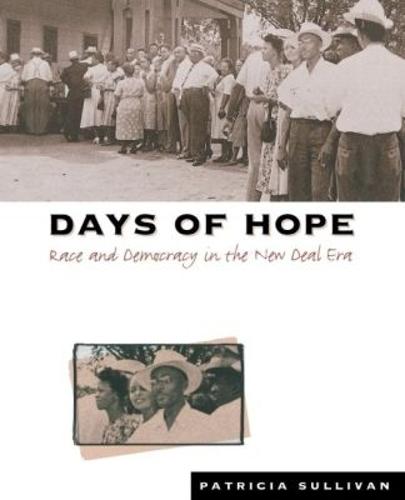
In the 1930s and 1940s, a loose alliance of blacks and whites, individuals and organizations, came together to offer a radical alternative to southern conservative politics. In Days of Hope , Patricia Sullivan traces the rise and fall of this movement. Using oral interviews with participants in this movement as well as documentary sources, she demonstrates that the New Deal era inspired a coalition of liberals, black activists, labor organizers, and Communist Party workers who sought to secure the New Deal's social and economic reforms by broadening the base of political participation in the South. From its origins in a nationwide campaign to abolish the poll tax, the initiative to expand democracy in the South developed into a regional drive to register voters and elect liberals to Congress. The NAACP, the CIO Political Action Committee, and the Southern Conference for Human Welfare coordinated this effort, which combined local activism with national strategic planning. Although it dramatically increased black voter registration and led to some electoral successes, the movement ultimately faltered, according to Sullivan, because the anti-Communist fervor of the Cold War and a militant backlash from segregationists fractured the coalition and marginalized southern radicals. Nevertheless, the story of this campaign invites a fuller consideration of the possibilities and constraints that have shaped the struggle for racial democracy in America since the 1930s.
Full Product Details
Author: Patricia Sullivan
Publisher: The University of North Carolina Press
Imprint: The University of North Carolina Press
Edition: New edition
Dimensions:
Width: 15.80cm
, Height: 2.30cm
, Length: 23.50cm
Weight: 0.564kg
ISBN: 9780807845646
ISBN 10: 0807845647
Pages: 352
Publication Date: 30 April 1996
Audience:
College/higher education
,
Professional and scholarly
,
Undergraduate
,
Postgraduate, Research & Scholarly
Format: Paperback
Publisher's Status: Active
Availability: In Print

This item will be ordered in for you from one of our suppliers. Upon receipt, we will promptly dispatch it out to you. For in store availability, please contact us.
Reviews
Days of Hope is a graceful addition to New Deal, southern, and civil rights historiography.<p> American Studies
Harvard historian Sullivan carefully details the impact of Roosevelt's later New Deal in the Old South, noting that any step forward often meant two steps back. A case in point, she writes, was Roosevelt's 1936 industrial-union program, spearheaded by the CIO, which threatened to undermine the region's tradition of low-wage, nonunion industries and stirred up heated opposistion. Efforts by influential northern blacks to hasten civil-rights advances in the South also aroused considerable opposition; when Roosevelt failed to pack the Supreme Court in his second term, Sullivan notes, southern Democrats (with the notable exception of longtime Florida senator Claude Pepper) allied with Republicans to block reform in the region and eventually to remake the Democratic party as a more conservative, anticommunist entity in the postwar era. Other incidents that contributed to a profound white backlash in the South included the famed Scottsboro case of 1930, which drew national attention to the region for a decade, and the Harlan County coal strike of the mid-1930s, to which Sullivan brings fresh insights based on recent documentary work on labor organizing. Of special interest to students of contemporary politics is Sullivan's examination of Henry Wallace's third-party presidential bid in 1948, a campaign that in the author's view, taken with earlier New Deal programs, prefigured Southern civil-rights agitation in later decades; as she writes, although little, if any, memory of the New Deal years informed the civil rights movement of the 1960s, the activists of the earlier decades tilled the ground for future change. Ultimately, Sullivan notes, civil-rights advances were furthered by African-Americans' participation in WW II, when soldiers who had fought against fascism abroad began to agitate for democracy at home. A dry and sometimes narrow work of history, meant for a specialist audience. (Kirkus Reviews)
Author Information
Patricia Sullivan is an associate professor of history and African American Studies at the University of South Carolina and a former fellow at Harvard University's W. E. B. Du Bois Institute. She is the author of Days of Hope and coeditor of Civil Rights in the United States. Sullivan has been a consultant on many films and documentaries, including HBO's Boycott.