Overview
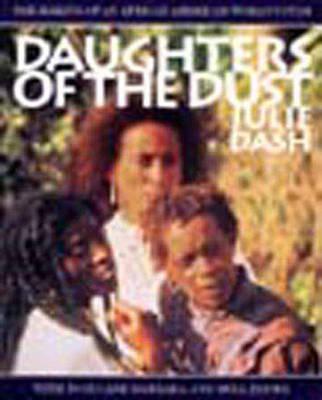
Julie Dash wrote and directed ""Daughters of the Dust"", the first nationally distributed African American feature film to come out of America. The film tells the story of an African American sea-island, or Gullah, family preparing to come to the mainland at the turn of the century. In her visual and lyrical portrayal of the day of their departure, Dash evolves the details of a persisting African culture and the tensions between tradition and assimilation. The book includes Dash's complete screenplay and describes the story of her extraordinary 16-year struggle to complete the project. More than simply a tale of a rising artist, it is the record of an African American woman's determination to tell a story that is both historical and emotionally charged. With an introduction by Toni Cade Bambara, an extended interview with Dash by feminist critic bell hooks, an essay by Greg Tate, Dash's story in her own words, and 16 pages of images from the film by cinematographer Arthur Jafa, this is a book for every admirer of the film and every student of cinema.
Full Product Details
Author: Julie Dash ,
Toni Cade Bambara ,
Bell Hooks
Publisher: The New Press
Imprint: The New Press
Edition: New edition
Dimensions:
Width: 20.30cm
, Height: 1.30cm
, Length: 25.10cm
Weight: 0.474kg
ISBN: 9781565840300
ISBN 10: 1565840305
Pages: 173
Publication Date: 17 December 1992
Audience:
College/higher education
,
General/trade
,
Undergraduate
,
Postgraduate, Research & Scholarly
Format: Paperback
Publisher's Status: Unknown
Availability: Awaiting stock

Reviews
African-American filmmaker Dash turns her award-winning movie of the same title celebrating the Gullah people of South Carolina into a first novel that's often fascinating but rarely gripping. Unlike most fiction derived from or aiming for the screen, Dash's story is slow-moving and rich in description. In moderation, such qualities are productive, but there's overmuch of a good thing here. Though the lengthy monologues imitate tales told in the legendary fashion of griots, West African storytellers, they too often obstruct rather than advance the narrative. And characters seem more vehicles for cultural commentary than people of flesh and blood. Set in the 1920s, when the old rituals and traditions of African life are dying as the young move away to seek easier lives, the people and the place are described by Amelia, a graduate student raised in Harlem. A descendant of Nan, a former slave and the matriarch of the Peazant clan, who still live on Dawtah Island, she's come to stay with her kin while she collects data for an anthropological thesis she's writing on the Gullahs. And while she does this, she learns family secrets (like why her harsh grandmother Haagar ran away from her abusive father); meets colorful characters and kin (like her Aunt Iona, who defied her mother to marry Julien, a Native American who lives deep within the local swamp); notes how African beliefs and customs are still observed; hears the legend of Ibo Landing, the point from which Ibo slaves started walking back to Africa across the water; and becomes close to her cousin Elizabeth, a healer and teacher. Enough material in hand, Amelia goes back to New York but soon returns to care for her ailing mother. It seems likely she'll stay for good. More docu-fiction than the real thing, but, still, a loving tribute to a distinctive people, exotic place, and now-vanished way of life. (Kirkus Reviews)
Author Information
Julie Dash is an American filmmaker. Her 1991 film Daughters of the Dust was the first full-length film by an African American woman with general theatrical release in the United States. Daughters of the Dust was included in the National Film Registry in 2004.