Overview
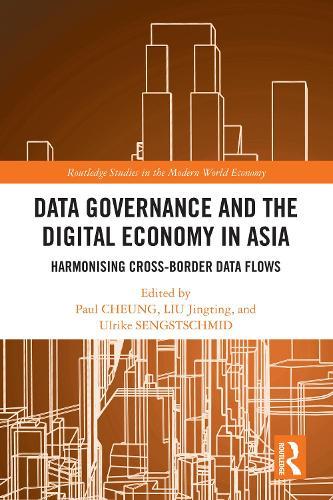
Data governance is the cornerstone of digital economy growth, particularly in Asia, where both the digital economy and the policy space are fast expanding. The chapters collected in this volume delve into how diverse and rapidly evolving data governance models of ASEAN countries and their Asian partners are shaping the regional digital economy integration, particularly through cross-border data flows. The book begins with an examination of the diffusion of data governance rules globally and their economic impacts on a macro level. It then delves into a regional analysis, emphasising the interplay between data governance and economic development. Key discussions include data policies in India, China, South Korea, and ASEAN countries, enriched with insights from industry leaders. The book evaluates the role of regional and international trade agreements in facilitating digital trade and explores the consequences of widely differing data governance models for the ASEAN regional economy, with a special focus on implications for ASEAN’s Digital Economy Framework Agreement. Written for scholars of digital economy, data governance, and digital trade, this book provides a thorough understanding of Asia’s data regulatory environment. Policymakers and industry professionals will also find the book’s insights into the intricacies of digital economy policies and their implications useful in navigating the future of digital economic integration and growth in the ASEAN region.
Full Product Details
Author: Paul CHEUNG , LIU Jingting , Ulrike SENGSTSCHMID
Publisher: Taylor & Francis Ltd
Imprint: Routledge
Weight: 0.453kg
ISBN: 9781032826981
ISBN 10: 1032826983
Pages: 178
Publication Date: 31 December 2024
Audience:
College/higher education
,
Tertiary & Higher Education
Format: Hardback
Publisher's Status: Active
Availability: In Print 
This item will be ordered in for you from one of our suppliers. Upon receipt, we will promptly dispatch it out to you. For in store availability, please contact us.
Table of Contents
List of Figures List of Tables List of Boxes List of Contributors Acknowledgements List of Acronyms and Abbreviations Chapter 1 Introduction Paul Cheung, Liu Jingting, Ulrike Sengstschmid References Chapter 2 Emerging Divergence: Distinct Data Regulatory Models Around the World Jesslene Lee 2.1 Introduction 2.2 Rule-Making through Trade Agreements 2.2.1 Diffusion of Trade Rules 2.2.2 Global Data Governance: Are Distinct Regulatory Regimes Emerging? 2.3 Data Rules in Trade Agreements 2.3.1 Data Protection 2.3.2 Cross-Border Data Flows 2.4 Assessing the Emergence of Distinct Regulatory Regimes 2.4.1 Who are the Rule-Makers? 2.4.2 Diverging Priorities on Salient Issues 2.5 Where does ASEAN Stand? 2.6 Conclusion References Appendix Chapter 3 Digital Personal Data Protection Act, 2023: Charting the Future of India’s Data Regulation Nidhi Gupta, Ammu George 3.1 Introduction 3.2 Analysis of the Provisions of India’s Digital Personal Data Protection Act, 2023 3.2.1 Scope of the Act is Ambiguous when Defining “Person” 3.2.2 Extensive Rights Provided to Data Principals 3.2.3 Obligations Mandated from Data Fiduciaries 3.2.4 Establishment of the Data Protection Board of India 3.3. Implications of the DPDP Act for Digital Businesses 3.3.1 Pro-Business Provisions of the DPDP Act 3.3.2 Provisions of the DPDP Act Negatively Impacting Businesses 3.4. Conclusion References Chapter 4 China’s Cross-Border Data Flow Policies and Implications for Investments Liu Jingting, Ulrike Sengstschmid, Ge Yixuan 4.1 Introduction 4.2 Overview of China’s Data Protection Legal Framework 4.2.1 Mechanisms for Transferring Data Out of China 4.2.2 Users’ Rights 4.3 Comparing the PIPL and GDPR 4.3.1 Similarities 4.3.2. Differences 4.3.3 Comparing Cross-Border Data Transfer Mechanisms 4.4 Implications 4.4.1 Increasing Operating Costs 4.4.2 Increasing Market Concentration 4.4.3 Competitiveness and Innovation 4.4.4 Regulatory Restrictions and Investments 4.4.5 How Firms are Adjusting to the Regulations 4.5 Looking Ahead: China and the Global Policy Environment 4.6 Conclusion References Chapter 5 Improving the Digital Connectivity Between South Korea and ASEAN Through Data Ji Eun Song, Ulrike Sengstschmid, Ni Xu, Ge Yixuan, Liu Jingting 5.1 Introduction 5.2 Data Regulation in South Korea 5.2.1 Overview of South Korea’s Data Regulation: Comparison with Rest of the World 5.2.2 Personal Information Protection Act (PIPA) 5.3. Cross-border data flows between South Korea and the Rest of the World: Challenges 5.4. Cross-Border Data Transfer Mechanisms of South Korea 5.4.1. Major Global Data Governance Frameworks 5.4.2. Free Trade Agreements 5.4.3 Certification 5.4.4 Adequacy Decision 5.5 Cross-border Data Transfer Between Korea and ASEAN 5.5.1 A Comparison Between Korea and Singapore 5.6. Policy Outlook: Greater Engagement 5.7. Conclusion References Chapter 6 Vietnam – Striking a Balance Between National Security and External Pressures Banh Thi Hang, Phan Thi Hong Hanh 6.1. Introduction 6.2. Fundamental Data Regulations in Vietnam 6.2.1. Taxonomy of Data Regulations 6.2.2. Overview of Data Governance in Vietnam 6.3. Comparing Data Regulations in Vietnam's Domestic Regulations and Multilateral Agreements 6.3.2 Comparison in Key Areas of Data Regulations 6.3.3 Conformity Analysis 6.4. A Comparison with Other Countries 6.4.1 Data Localisation 6.4.2 Cross-Border Data Flow 6.4.3 Privacy and Data Protection 6.5. Conclusion References Appendices Appendix 6.1. Developments of Data Localisation Requirement in the EU Appendix 6.2. Cross-Border Data Transfer Regulations in the US Chapter 7 Facilitating Data Flows Across ASEAN: Challenges and Policy Directions Liu Jingting, Ulrike Sengstschmid, Ge Yixuan 7.1 Introduction 7.2 Literature Review 7.2.1 Far-Reaching Impacts of Cross-Border Data Flow Regulations 7.2.2 Challenges for ASEAN Businesses Posed by Data Regulations 7.2.3 External Influences on Data Regulation 7.3 ASEAN’s Diverse Personal Data Protection Landscape 7.3.1 The Open, Conditional, and Control Model of Data Governance 7.4 Remaining Obstacles for Businesses in Cross-Border Data Flows 7.4.1 ASEAN Model Contractual Clauses: Modifications & Legal Status 7.4.2 Interoperability Roadblocks: Incompatibility in National Legislations 7.4.3 Data Compliance Disparity: Unique Challenges for SMEs 7.5 Vietnam’s New Personal Data Protection Decree 7.6 Future Policy Directions 7.6.1 Growing External Influence 7.6.2 Policy Roadmap 7.7 Conclusion References Chapter 8 Further Steps for ASEAN’s Digital Integration: DEFA Liu Jingting, Ulrike Sengstschmid 8.1 Key Takeaways 8.1.1 Policy Fragmentation Carries over into the Digital Governance Space 8.1.2. ASEAN’s Asian Trading Partners Lean Towards the Conditional Model 8.1.3. Intra-ASEAN Fragmentation Challenges Digital Integration 8.1.4. Ambiguity Abounds in Regional Mechanisms 8.2. DEFA: ASEAN’s Opportunity to Write Own Rules and Upgrade Digital Integration 8.3. Limitations: Working in an Evolving Policy Space References
Reviews
Author Information
Paul CHEUNG is a professor (practice) at the Lee Kuan Yew School of Public Policy, National University of Singapore. LIU Jingting is a research fellow at the Asia Competitiveness Institute, Lee Kuan Yew School of Public Policy, National University of Singapore. Ulrike SENGSTSCHMID is a research analyst at the Asia Competitiveness Institute, Lee Kuan Yew School of Public Policy, National University of Singapore.
Tab Content 6
Author Website:
Countries Available
All regions
|