|
|
|||
|
||||
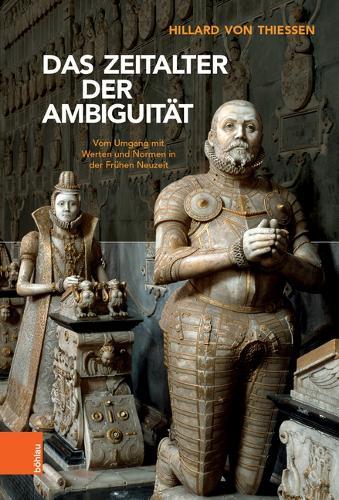
OverviewIn early modern Europe, the willingness and ability of actors to deal with normative contradictions was more pronounced than in modern times. Premodern actors were - and had to be - more tolerant of ambiguity. Since the late Middle Ages, behavioral expectations on the part of the church, the secular authorities and the social environment took on more concrete forms and were increasingly demanded energetically. But there was no consistent order of norms, rather ambiguities and contradictions arose. Thus the early modern era was both: an age of unambiguity, the ideal of purity and discipline on the one hand, and the ambiguity of dealing with norms on the other. Around 1800 efforts increased to fundamentally overcome cultural ambiguity and to create uniqueness - the age of ambiguity ended, even if in modern times the ideal of unambiguity should again prove to be an illusion. Full Product DetailsAuthor: Hillard von ThiessenPublisher: Bohlau Verlag Imprint: Bohlau Verlag Edition: 1. Auflage ed. Weight: 1.152kg ISBN: 9783412521202ISBN 10: 3412521205 Pages: 447 Publication Date: 09 April 2021 Audience: General/trade , General Format: Hardback Publisher's Status: Active Availability: Available To Order We have confirmation that this item is in stock with the supplier. It will be ordered in for you and dispatched immediately. Language: German Table of ContentsReviewsAuthor InformationTab Content 6Author Website:Countries AvailableAll regions |
||||