Overview
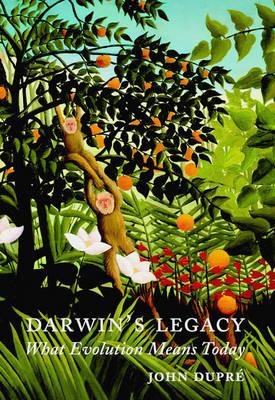
The theory of evolution has fundamentally changed our view of the universe and our place in it. By providing a radically new vision of the origin of human beings, it challenged long-held assumptions about our own significance, and undermined the major arguments for the existence of God. But almost 150 years after the publication of Darwin's Origin of Species these implications are still not properly understood, and in some sectors of society they are actively resisted. The last decade has also seen the rise of a new field, evolutionary psychology, which takes the theory of evolution to provide insight into aspects of human culture and behaviour as diverse as language, morality, sexuality, and art. This book shows that although there are particular aspects of the theory of evolution which remain controversial, and issues still to be settled, there can no longer be any doubt that the basis of the theory is true. It examines the consequences for our view of human nature, religion, and non-human animals. John Dupre then investigates the appropriation of evolutionary biology by psychologists, and argues that their claims are largely spurious: despite its status as one of the most important scientific ideas of all time, the theory of evolution has very little to tell us about the details of human nature and human behaviour.
Full Product Details
Author: John Dupre
Publisher: Oxford University Press
Imprint: Oxford University Press
Dimensions:
Width: 12.90cm
, Height: 1.90cm
, Length: 19.60cm
Weight: 0.265kg
ISBN: 9780192803375
ISBN 10: 0192803379
Pages: 148
Publication Date: 01 January 2004
Audience:
General/trade
,
General
Format: Hardback
Publisher's Status: Active
Availability: To order

Stock availability from the supplier is unknown. We will order it for you and ship this item to you once it is received by us.
Reviews
John Dupre has been one of the philosophers in the forefront of this rethinking of science. He has helped us to rethink what science is, in the light of biology and of evolution. More recently, however, he has turned from defending the biological sciences from those who would disparage them, to attacking them. --Neil Levy, Metapsychology Online Review<br>
<br> John Dupre has been one of the philosophers in the forefront of this rethinking of science. He has helped us to rethink what science is, in the light of biology and of evolution. More recently, however, he has turned from defending the biological sciences from those who would disparage them, to attacking them. --Neil Levy, Metapsychology Online Review<br>
"""John Dupr´e has been one of the philosophers in the forefront of this rethinking of science. He has helped us to rethink what science is, in the light of biology and of evolution. More recently, however, he has turned from defending the biological sciences from those who would disparage them, to attacking them.""--Neil Levy, Metapsychology Online Review"
"""John Dupr� has been one of the philosophers in the forefront of this rethinking of science. He has helped us to rethink what science is, in the light of biology and of evolution. More recently, however, he has turned from defending the biological sciences from those who would disparage them, to attacking them.""--Neil Levy, Metapsychology Online Review"
To write a book entitled 'Darwin's Legacy' is indeed a challenge. But not because explaining the ideas and implications of Charles Darwin is very difficult. But because it is virtually impossible to add anything new to the mountains of commentary already written. John Dupre certainly succeeds in including all of the usual quotes, stories, characters and bedates. But he has little to add. Of course Thomas Paley makes an early entrance with his watch. Shorly followed by Bishop WIlberforce entertaining thoughts of Huxley's ape-like ancestors. And not long after follow Descartes' dualism and Dobzahnsky's famous one-liner. Slowly and uninspiringly we are led throughthe familiar landscape of a modern day critique of Charles Darwin's legacy.This journey is only suspended momentarily towards its end when Dupre launches into an interesting attack on evolutionary psychology: the fashionable field of biology that claims to explain away our thoughts as tools for survival in a stone-age era. And with this the book's novelty is over. The rest is dry and charmless. (Kirkus UK)
Author Information
John A. Dupré is Professor of Philosophy and Sociology at the University of Exeter. He lectures extensively in the U.K., North America, and Europe. His main area of research is the philosophy of science with special interest in the philosophy of biology, the role of values in science, and the nature of biological species. His books include Human Nature and the Limits of Science (OUP).