Overview
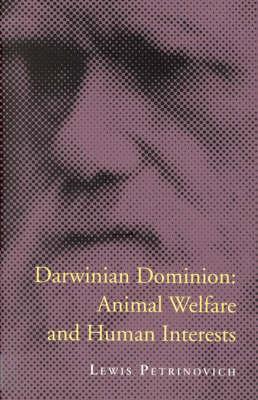
The controversial subject of this work is the permissible use of animals by humans. Lewis Petrinovich argues that humans have a set of cognitive abilities, developing from a suite of emotional attachments, that make them unique among species. Although other animals can think, suffer, and have needs, the interests of members of the human species should triumph over comparable interests of members of other species. This book is the third in a trilogy concerned with the morality of various actions that affect the birth, life and death of organisms. Using principles of moral philosophy, biology, evolutionary theory, neurophysiology, medicine and cognitive science, Petrinovich discusses such topics as foetal and prenatal development, development of the mind and brain in zoos and as pets, and the importance of biodiversity. In the epilogue, he summarizes the main issues and discusses the moral principles governing their resolution.
Full Product Details
Author: Lewis Petrinovich
Publisher: MIT Press Ltd
Imprint: Bradford Books
Edition: New edition
Dimensions:
Width: 15.20cm
, Height: 2.80cm
, Length: 22.90cm
Weight: 0.635kg
ISBN: 9780262661218
ISBN 10: 0262661217
Pages: 441
Publication Date: 26 January 2001
Recommended Age: From 18 years
Audience:
College/higher education
,
Professional and scholarly
,
Undergraduate
,
Postgraduate, Research & Scholarly
Format: Paperback
Publisher's Status: Out of Stock Indefinitely
Availability: Out of stock

Reviews
"""The author brings together a deep, sensitive knowledge of contemporary evolutionary theory and the social sciences, particularly as they interact with human biology. You may not agree with everything that he concludes, but my strong suspicion is that even as you argue with Petrinovich, you will learn and revise your own opinions. Highly recommended!"" - Michael Ruse, Departments of Philosophy and Zoology, University of Guelph; ""Powerfully argued and very well written....an outstanding contribution to a difficult debate."" - Patrick Bateson, Professor of Ethology, University of Cambridge, and Provost, King's College, Cambridge"""
The author brings together a deep, sensitive knowledge of contemporary evolutionary theory and the social sciences, particularly as they interact with human biology. You may not agree with everything that he concludes, but my strong suspicion is that even as you argue with Petrinovich, you will learn and revise your own opinions. Highly recommended! - Michael Ruse, Departments of Philosophy and Zoology, University of Guelph; Powerfully argued and very well written....an outstanding contribution to a difficult debate. - Patrick Bateson, Professor of Ethology, University of Cambridge, and Provost, King's College, Cambridge
Powerfully argued and very well written... an outstandingcontribution to a difficult debate. Patrick Bateson , Professor of Ethology, University of Cambridge, and Provost, King's College, Cambridge The author brings together a deep, sensitive knowledge ofcontemporary evolutionary theory and the social sciences, particularlyas they interact with human biology. You may not agree with everythingthat he concludes, but my strong suspicion is that even as you arguewith Petrinovich, you will learn and revise your own opinions. Highlyrecommended! Michael Ruse , Departments of Philosophy and Zoology, University of Guelph
Author Information
Lewis Petrinovich is Professor of Psychology Emeritus at the University of California, Riverside. He is the author of Human Evolution, Reproduction, and Morality and Living and Dying Well (MIT Press, 1998).