Overview
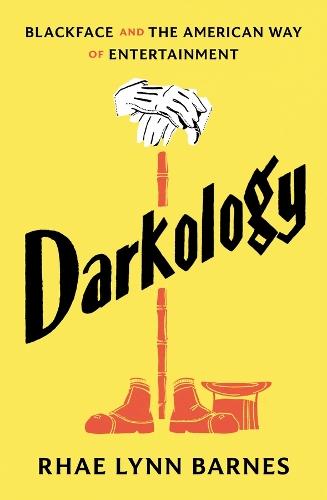
Never before has the disturbing story of blackface and its piercing reflection of American society been so comprehensively told. With?Darkology, Princeton historian Rhae Lynn Barnes meticulously unravels the complex, subterranean, and all-too-often expunged history of ""Darkology""-the insidious study, commodification, and dehumanization of Black life, through which performers caricatured the enslaved and formerly enslaved for their supposed subservience and happy demeanor. Given the extraordinary research reflected in Darkology, it's not surprising that Barnes spent twenty years tracking down ""fading photographs, old movies, bureaucratic detritus, moldy scripts, and living witnesses, assembling an impressive archive that allowed her to demonstrate the astonishingly broad reach of blackface minstrelsy"" (Laurel Thatcher Ulrich). Painstakingly piecing together these scattered shards of evidence, Barnes reveals the shocking extent to which blackface took center stage in every era of American history. This was not a fringe activity. By 1830, as political resistance to slavery grew, blackface exploded from a niche performance into a venomous national export. Within a decade, hardly a theater in the country didn't put on minstrel shows. Following the Civil War, this grotesque entertainment soared, seeping from professional theaters into everyday amateur shows, print, and advertisements. It was everywhere: Elks Clubs, religious institutions, battlefields, universities, and schools. It wasn't just in the Jim Crow era; it defined it. The very name ""Jim Crow"" derives from minstrelsy's founding character. Darkology dismantles the myth that blackface was a fleeting, post-Civil War phenomenon. Even in eras known for liberal progressivism, it flourished. Barnes unearths the startling fact that four-term president Franklin D. Roosevelt was a devotee who died hours before a blackface show he had commissioned at Warm Springs. It permeated U.S. military bases and was even used in World War II Japanese American concentration camps and German POW camps as a bizarre tool of ""Americanization."" After WWII, the tide began to turn as Black veterans and mothers in places like suburban California protested the practice in schools. Still, blackface performances proved resilient, surfacing as late as 1969 at the University of Vermont. Even as the Civil Rights movement fought for equality, blackface remained present in American politics and white supremacist organizing through the Nixon and Ford administrations, its legacy still percolating in variable forms today. By tracing minstrelsy's evolution through oral histories, material culture, and a wide range of multimedia sources, Barnes's ""masterpiece"" (David Blight) forces us to reckon with the myriad ways the American Dream wore blackface. Recasting this American story with ""vivid and engaging storytelling"" (Howard French), Darkology is a landmark work that peers beneath the boulders deliberately obscuring our past-illuminating a path toward a more just and equal society in America's future.
Full Product Details
Author: Rhae Lynn Barnes (Harvard University)
Publisher: W W Norton & Co Ltd
Imprint: Liveright Publishing Corporation
Dimensions:
Width: 16.50cm
, Height: 4.30cm
, Length: 24.40cm
Weight: 0.939kg
ISBN: 9781631496349
ISBN 10: 1631496344
Pages: 528
Publication Date: 24 March 2026
Audience:
General/trade
,
General
Format: Hardback
Publisher's Status: Forthcoming
Availability: Awaiting stock

Reviews
""Rhae Lynn Barnes’s Darkology is not only exemplary scholarship for its sharp original material, precision, and care, its vivid and engaging storytelling recreates a shameless world where the most popular forms of American entertainment treated the demeaning of Black people as the most natural of things."" -- Howard French, author of Born in Blackness and The Second Emancipation ""Toiling for years in archives across the United States, Rhae Lynn Barnes has uncovered an often deliberately buried body of evidence: an indisputable record of the ubiquity of blackface minstrelsy across two centuries of American history. Darkology is the definitive, searing account of that unsettling past."" -- Jill Lepore, author of These Truths and We the People
""In Darkology, Rhae Lynn Barnes shines an unsparing spotlight on blackface, a wildly popular staple of stage and screen that from its inception in the mid-1800s was never mere entertainment. Relying on pernicious stereotypes that served to undermine the humanity of African Americans, blackface on its surface was meant for laughs, but in truth was a tool deployed at all levels of society, from local school boards all the way up to the federal government, that promoted and perpetuated anti-Black racism as the nation’s status quo. Through fastidious research and the painstaking pursuit of archives and documents hidden from historians for decades, Barnes has written nothing short of an exposé of the structural racism that undergirds the very foundations on which America is built. In ways both insidious and institutionalized, blackface has always informed what it means to be American."" -- Henry Louis Gates, Jr., Alphonse Fletcher University Professor; Director, Hutchins Center for African & African American Research
""In Darkology, Rhae Lynn Barnes shines an unsparing spotlight on blackface, a wildly popular staple of stage and screen that from its inception in the mid-1800s was never mere entertainment. Relying on pernicious stereotypes that served to undermine the humanity of African Americans, blackface on its surface was meant for laughs, but in truth was a tool deployed at all levels of society, from local school boards all the way up to the federal government, that promoted and perpetuated anti-Black racism as the nation’s status quo. Through fastidious research and the painstaking pursuit of archives and documents hidden from historians for decades, Barnes has written nothing short of an exposé of the structural racism that undergirds the very foundations on which America is built. In ways both insidious and institutionalized, blackface has always informed what it means to be American."" -- Henry Louis Gates, Jr., Alphonse Fletcher University Professor; Director, Hutchins Center for African & African American Research ""Rhae Lynn Barnes has written a surprising and exhaustive masterpiece about amateur blackface minstrelsy. Barnes dares to demonstrate that laughing at fictional concoctions of Black people has been as American as baseball. Convincingly, she shows that this most popular form of entertainment is central to grasping American culture from Reconstruction all the way to our own time. It never died, Barnes argues, in a vast print culture, in cross-racial performance, in commercialism, and especially with influence in the nation’s closets and family scrapbooks. A ‘contagion,’ like a ‘hidden river’ bursting forth, Americans have always loved and hated blackface. The secrets are out! Readers will be stunned at how much Jim Crow and its endless tenacles, manifested in blackface, have both strangled and released the American imagination. This gigantic spiderweb has captured more of our cultural time and power than most Americans will ever want to believe. With astonishing research, the book reveals as it informs about a tragedy at the heart of who we are."" -- David W. Blight, Yale University, author of the Pulitzer Prize–winning Frederick Douglass ""Rhae Lynn Barnes brilliantly recounts the long and twisted saga of blackface theater in America with remarkable excellence. This is a master class on the degradations of racist stereotyping of African Americas as happy slaves, mammies, half-wits, and raggedy Jim Crow musical clowns. With luminous prose and riveting attention to detail, Barnes investigates what the minstrel tradition means in terms of white supremacy writ large, with devastating results. Who knew that presidents Franklin Roosevelt and Gerald Ford were diehard fans of blackface entertainment? A stunning achievement."" -- Douglas Brinkley, Katherine Tsanoff Brown Chair in Humanities and professor of history at Rice University, author of Rosa Parks ""Rhae Lynn Barnes’s Darkology is not only exemplary scholarship for its sharp original material, precision, and care, its vivid and engaging storytelling recreates a shameless world where the most popular forms of American entertainment treated the demeaning of Black people as the most natural of things."" -- Howard French, author of Born in Blackness and The Second Emancipation ""It is probably hard for present day Americans to believe how pervasive ‘blackface’ was during the 19th through the 20th centuries. Used as ‘entertainment’ in virtually all types of institutions in the country, it telegraphed the contempt in which Black people were held. Meticulously researched and fluidly written, Darkology is a necessary exploration of this revealing and disturbing aspect of American history."" -- Annette Gordon-Reed, author of the Pulitzer Prize–winning The Hemingses of Monticello ""Reading Rhae Lynn Barnes’s Darkology is like taking a tour of the political unconscious of racial capitalism and empire in the United States—violent, desirous, and just plain weird—from slavery all the way down to the present day."" -- Walter Johnson, author of The Broken Heart of America ""Toiling for years in archives across the United States, Rhae Lynn Barnes has uncovered an often deliberately buried body of evidence: an indisputable record of the ubiquity of blackface minstrelsy across two centuries of American history. Darkology is the definitive, searing account of that unsettling past."" -- Jill Lepore, author of These Truths and We the People ""There are many things to praise about this lively and important book. But underlying its many virtues is the author's twenty-year quest to transform a personal interest into a documented history. Darkology demonstrates the truth of the old adage: no source, no history. Undaunted by the perceived unimportance of her topic and by archival efforts to protect the innocent or the guilty, Rhae Lynn Barnes tracked down fading photographs, old movies, bureaucratic detritus, moldy scripts, and living witnesses, assembling an impressive archive that allowed her to demonstrate the astonishingly broad reach of blackface minstrelsy in late nineteenth- and early twentieth-century America."" -- Laurel Thatcher Ulrich, author of the Pulitzer Prize–winning A Midwife’s Tale
Author Information
Rhae Lynn Barnes is an assistant professor of American cultural history at Princeton University and the Sheila Biddle Ford Foundation Fellow at the Hutchins Center for African & African American Research at Harvard University.