Overview
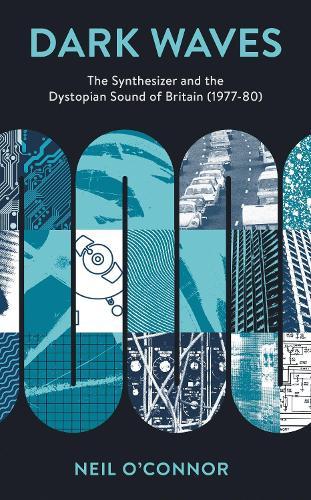
Between 1977 and 1980, Britain was a country and culture in flux. The threat of nuclear war, mass unemployment, and strikes made it a particularly gloomy period historically. Within this, a growing number of electronic music acts were using technology and the synthesizer to soundtrack changing times. Dark Waves: The Synthesizer and the Dystopian Sound of Britain (1977- 80) is the first musicological collection of essays on acts that include Throbbing Gristle, Cabaret Voltaire, and The Human League, mapping how the synthesizer spurred toward a fundamental shift in the mechanisms of electronic musicmaking in late 1970s. The volume traces how, along with the musical aesthetics established by both the Punk and Post-Punk movements, the synthesizer led to new and innovative effects, ideas, processes, and musical genres. Dark Waves explores the background, influences, and use of technology and how such developments would result in the more commercial electronically produced sound of 1980s synth pop which, in turn, shaped the sound of electronic music today.
Full Product Details
Author: Neil O'Connor
Publisher: Bloomsbury Publishing Plc
Imprint: Rowman & Littlefield
Dimensions:
Width: 15.20cm
, Height: 1.20cm
, Length: 22.90cm
Weight: 0.272kg
ISBN: 9798881806552
Pages: 200
Publication Date: 15 February 2025
Audience:
Professional and scholarly
,
Professional & Vocational
Format: Paperback
Publisher's Status: Active
Availability: Manufactured on demand

We will order this item for you from a manufactured on demand supplier.
Reviews
Growing up with the music that Neil O'Connor discusses so successfully in this book, I had an inkling that synthesizers were speaking of a greater, subterranean truth than one I could grasp, a truth of impending doom and fragile hope, of blurred distinctions between machines and humans. O'Connor lays out, with love and precision, the hidden contours of this truth, combining meticulous historical detail with canny reflections on how synthesizers defined a generation of music. -- Joanna Demers, professor of musicology, USC Thornton School of Music
Growing up with the music that Neil O'Connor discusses so successfully in this book, I had an inkling that synthesizers were speaking of a greater, subterranean truth than one I could grasp, a truth of impending doom and fragile hope, of blurred distinctions between machines and humans. O'Connor lays out, with love and precision, the hidden contours of this truth, combining meticulous historical detail with canny reflections on how synthesizers defined a generation of music.
Author Information
DR. NEIL O’CONNOR is electronic music producer and academic at DMARC (Digital Media Arts Research Centre), Department of Computer Science and Information Systems, University of Limerick, Ireland.