Overview
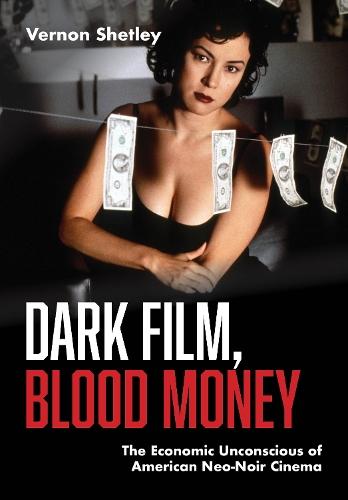
This groundbreaking study reads neo-noir cinema as a response to the transformations in the American economy and society in the long era of national decline. Neo-noir films exert their fascination not only through their suspense, shadowy atmosphere, and moral ambiguity, but also through their registration of the experience of American life in the long twilight of the American Dream. With a sharp curatorial eye and an elegant critical voice, Vernon Shetley interprets landmark works from the noir revival of the early 1970s to the present, showing how neo-noir reflects the darkening national mood as postwar prosperity gave way to economic stagnation and inequality, social alienation, and a deepening sense of crisis. Through close readings of key films and overviews of neo-noir's treatment of the genre's defining themes and archetypes—desire and betrayal, corruption and alienation, the private detective and the femme fatale—Shetley delineates neo-noir's exploration of anxieties about work, money, trust, and exchange. From Chinatown to Mulholland Drive, from Night Moves to Nightmare Alley, neo-noir's marginalized characters and extreme situations emerge in Shetley's account as powerful representations of concerns central to economic and social life. Combining illuminating analysis with lucid prose, this book offers scholars and general readers alike a fresh, penetrating understanding of the dynamics of neo-noir filmmaking and its continually renewed vitality over the last five decades.
Full Product Details
Author: Vernon Shetley
Publisher: Intellect
Imprint: Intellect Books
Dimensions:
Width: 17.00cm
, Height: 1.60cm
, Length: 24.40cm
Weight: 0.610kg
ISBN: 9781835952290
ISBN 10: 1835952291
Pages: 254
Publication Date: 02 February 2026
Audience:
Professional and scholarly
,
Professional & Vocational
Format: Hardback
Publisher's Status: Forthcoming
Availability: Awaiting stock

Reviews
Shetley makes a lot of sense; his choice of films is astute, and his discussion of them inspired. The result is a refreshing, valid and valuable addition to film studies. Phillip Lopate, film critic and essayist, professor at Columbia University, NY, USA Vernon Shetley’s Dark Film, Blood Money: The Economic Unconscious of American Neo-Noir Cinema is a brilliant interrogation of something only film can capture so powerfully, our experience of the new form of economic life that emerged in America after the end of the postwar boom. It is also a compelling account of the moral and psychological implications of the dissolution of solidarity, trust, empathy and simple humanity characteristic of this historical period, and a series of superb, detailed, and beautifully written readings of individual films. Robert Pippin, professor of Social Thought and Philosophy, The University of Chicago, USA
Shetley makes a lot of sense; his choice of films is astute, and his discussion of them inspired. The result is a refreshing, valid and valuable addition to film studies. Phillip Lopate, film critic and essayist, professor at Columbia University, NY, USA Vernon Shetley’s Dark Film, Blood Money: The Economic Unconscious of American Neo-Noir Cinema is a brilliant interrogation of something only film can capture so powerfully, our experience of the new form of economic life that emerged in America after the end of the postwar boom. It is also a compelling account of the moral and psychological implications of the dissolution of solidarity, trust, empathy and simple humanity characteristic of this historical period, and a series of superb, detailed, and beautifully written readings of individual films. Robert Pippin, professor of Social Thought and Philosophy, The University of Chicago, USA Dark Film, Blood Money is an original and significant contribution to the fields of film studies, American culture studies, and studies of film noir. Readers will find valuable insights throughout the work. Dark Film, Blood Money will be an important resource for those teaching film noir, American film history, and American Studies. Written in an accessible, jargon-free style, the book toggles splendidly between close reading of individual films and an overarching account of what neo-noir reveals about American society. -- Julie Grossman, professor of literature and film and television studies, Le Moyne College, NY, USA.
Shetley makes a lot of sense; his choice of films is astute, and his discussion of them inspired. The result is a refreshing, valid and valuable addition to film studies. Phillip Lopate, film critic and essayist, professor at Columbia University, NY, USA Vernon Shetley’s Dark Film, Blood Money: The Economic Unconscious of American Neo-Noir Cinema is a brilliant interrogation of something only film can capture so powerfully, our experience of the new form of economic life that emerged in America after the end of the postwar boom. It is also a compelling account of the moral and psychological implications of the dissolution of solidarity, trust, empathy and simple humanity characteristic of this historical period, and a series of superb, detailed, and beautifully written readings of individual films. Robert Pippin, professor of Social Thought and Philosophy, The University of Chicago, USA
Author Information
Vernon Shetley teaches literature and film at Wellesley College, MA, USA. He is the author of After the Death of Poetry: Poet and Audience in Contemporary America and essays on a range of film-related subjects, including Blade Runner, Saving Private Ryan, the Olsen Twins, and Scarlett Johansson’s science fiction films, which have appeared in both edited collections and peer-reviewed journals.