Overview
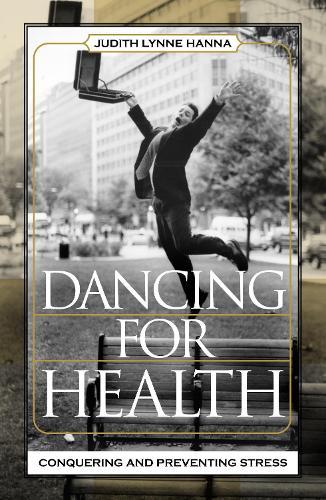
Throughout history and in contemporary times, people worldwide have danced to cope with the stresses of life. But how has dance helped people resist, reduce, and escape stress? What is it about dance that makes it a healing art? What insights can we gain from learning about others' use of dance across cultures and eras? Dancing for Health addresses these questions and explains the cognitive, emotional and physical dimensions of dance in a spectrum of stress management approaches. Designed for anyone interested in health and healing, Dancing for Health offers lessons learned from the experiences of people of different cultures and historical periods, as well as current knowledge, on how to resist, reduce, and dance away stress in the disquieting times of the 21st century. Anthropologists and psychologists will benefit from the unique theoretical and ethnographic analysis of how dance affects communities and individuals, while dancers and therapists will take away practical lessons on improving their and their patients' quality of life.
Full Product Details
Author: Judith Lynne Hanna
Publisher: AltaMira Press
Imprint: AltaMira Press
Dimensions:
Width: 18.00cm
, Height: 1.70cm
, Length: 22.70cm
Weight: 0.417kg
ISBN: 9780759108592
ISBN 10: 0759108595
Pages: 264
Publication Date: 20 July 2006
Audience:
General/trade
,
General
Format: Paperback
Publisher's Status: Active
Availability: In Print

This item will be ordered in for you from one of our suppliers. Upon receipt, we will promptly dispatch it out to you. For in store availability, please contact us.
Reviews
Hanna, with her unique vision as a dancer and anthropologist, has written a wonderfully comprehensive book illuminating the interplay between dance and stress. By offering a cross-cultural perspective, she deftly describes dance across the world as both a strategy to communicate and relieve stress as well as a potential cause of stress to the performer and observer. -- Ginny Wilmerding, President, International Association for Dance Medicine & Science Hanna draws on her own experiences as a life-long student of dance, on anthropological research, and on her worldwide travels to demonstrate the role of dance as a healing art for all kinds of stress. Divided into three sections—""Setting the Stage,"" ""Historical and Non-Western Dance-Stress Relations,"" and ""Western Dance-Stress Relations""—the book's 11 chapters explore dance as art, as entertainment, as therapeutic exercise, and as a competitive discipline. The author describes how numerous cultures have employed dance to deal with life crises, resolve conflicts, revitalize the past, and face the future. She also details the many physical and emotional pitfalls dancers encounter, for example issues surrounding body image. This well-written book will interest a broad audience, including health researchers, therapists, psychologists, dancers, and anthropologists. * Choice Reviews * Dance, that double edged sword, ought to come with a warning label. Now it has one at last — Dr. Judith Hanna's book. It helps you explore dance, whether you see it as high art or sexy entertainment, whether you use it as therapeutic exercise or competitive discipline. Dr. Hanna understands it as only someone can who loves it as a fan, who practices it as a student, and who researches it as a scholar. To share her insights, she keeps the prose perky and the concepts clear. -- George Jackson, dance critic and historian In an impressive, descriptive way Hanna elaborates that dance is a communication that we cannot express through words, a venue for storytelling while involved in a commonly accepted form of therapy…. Hanna's book presents a new and interesting perspective on how dance can be therapeutic and help relieve the stress response…. I strongly recommend this book to everyone, dance professional or amateur, including those with an interest in the health aspects of dance. * Body, Movement and Dance In Psychotherapy *
Dance, that double edged sword, ought to come with a warning label. Now it has one at last -- Dr. Judith Hanna's book. It helps you explore dance, whether you see it as high art or sexy entertainment, whether you use it as therapeutic exercise or competitive discipline. Dr. Hanna understands it as only someone can who loves it as a fan, who practices it as a student, and who researches it as a scholar. To share her insights, she keeps the prose perky and the concepts clear.--Jackson, George
Hanna, with her unique vision as a dancer and anthropologist, has written a wonderfully comprehensive book illuminating the interplay between dance and stress. By offering a cross-cultural perspective, she deftly describes dance across the world as both a strategy to communicate and relieve stress as well as a potential cause of stress to the performer and observer. -- Ginny Wilmerding, President, International Association for Dance Medicine & Science Hanna draws on her own experiences as a life-long student of dance, on anthropological research, and on her worldwide travels to demonstrate the role of dance as a healing art for all kinds of stress. Divided into three sections- Setting the Stage, Historical and Non-Western Dance-Stress Relations, and Western Dance-Stress Relations -the book's 11 chapters explore dance as art, as entertainment, as therapeutic exercise, and as a competitive discipline. The author describes how numerous cultures have employed dance to deal with life crises, resolve conflicts, revitalize the past, and face the future. She also details the many physical and emotional pitfalls dancers encounter, for example issues surrounding body image. This well-written book will interest a broad audience, including health researchers, therapists, psychologists, dancers, and anthropologists. CHOICE Dance, that double edged sword, ought to come with a warning label. Now it has one at last - Dr. Judith Hanna's book. It helps you explore dance, whether you see it as high art or sexy entertainment, whether you use it as therapeutic exercise or competitive discipline. Dr. Hanna understands it as only someone can who loves it as a fan, who practices it as a student, and who researches it as a scholar. To share her insights, she keeps the prose perky and the concepts clear. -- George Jackson, dance critic and historian In an impressive, descriptive way Hanna elaborates that dance is a communication that we cannot express through words, a venue for storytelling while involved in a commonly accepted form of therapy... Hanna's book presents a new and interesting perspective on how dance can be therapeutic and help relieve the stress response... I strongly recommend this book to everyone, dance professional or amateur, including those with an interest in the health aspects of dance. Body, Movement and Dance In Psychotherapy
Author Information
Judith Lynne Hanna (Ph.D., Columbia University) is a senior research scholar in the Department of Dance at the University of Maryland, College Park.