|
|
|||
|
||||
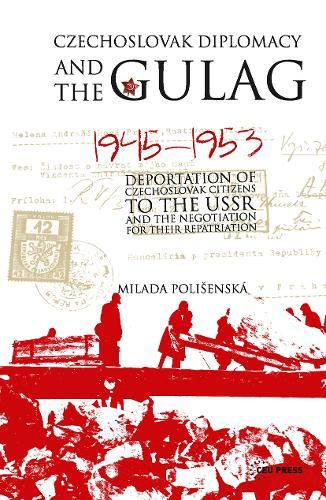
OverviewAfter the entry of the Red Army into Czechoslovak territory in 1945, Red Army authorities began to arrest and deport Czechoslovak citizens to labor camps in the Soviet Union. The regions most affected were Eastern and South Slovakia and Prague. The Czechoslovak authorities repeatedly requested a halt to the deportations and that the deported Czechoslovaks be returned immediately. It took a long time before these protests generated any response. Czechoslovak Diplomacy and the Gulag focuses on the diplomatic and political aspects of the deportations. The author explains the steps taken by the Czechoslovak Government in the repatriation agenda from 1945 to 1953 and reconstructs the negotiations with the Soviets. The research tries to answer the question of why and how the Russians deported the civilian population from Czechoslovakia which was their allied country already during the war. Key words: 1. World War, 1939–1945—Deportations from Czechoslovakia. 2. Forced labor—Soviet Union—History. 3. Labor camps—Soviet Union—History. 4. Czechs—Soviet Union—History. 5. Slovaks—Soviet Union—History. 6. Czechoslovakia—Foreign relations—Soviet Union. 7. Soviet Union—Foreign relations—Czechoslovakia. 8. Czechoslovakia—Foreign relations—1945–1992. 9. Repatriation—Czechoslovakia—History. Full Product DetailsAuthor: Milada PolišenskáPublisher: Central European University Press Imprint: Central European University Press Dimensions: Width: 15.90cm , Height: 2.80cm , Length: 23.40cm Weight: 0.725kg ISBN: 9789633860106ISBN 10: 9633860105 Pages: 440 Publication Date: 01 December 2015 Audience: College/higher education , Postgraduate, Research & Scholarly Format: Hardback Publisher's Status: Active Availability: Manufactured on demand We will order this item for you from a manufactured on demand supplier. Table of ContentsContents FOREWORD INTRODUCTION PART ONE: POLITICS AND DIPLOMACY I. CZECHOSLOVAK-SOVIET REPATRIATION NEGOTIATIONS 1. The Czechoslovak-Soviet treaty of 8 May 1944 and its flouting by the Soviet Union in 1945 2. Czechoslovak and Soviet information and arguments in 1946 3. The enforcement of the selective principle II. SCREENINGS AND TRANSPORTS 1. The repatriation camp in Luisdorf near Odessa 2. The repatriation camp Maramaros Sziget in Romania 3. The final phase of screening in Luisdorf and Sziget Excursus: Czechoslovak diplomats in Moscow in charge of the repatriations agenda III. THE OFFICIAL TERMINATION OF REPATRIATION AND THE EPILOGUE 1. Reaction of Czechoslovak institutions, numbers and reports 2. The repatriation obligations of the USSR and international diplomacy 3. The return to Czechoslovakia of deportees and prisoners from the USSR after the official termination of repatriation 4. Other dimensions of repatriation diplomacy PART TWO: CZECHOSLOVAKIA AND ITS INHABITANTS AS THE VICTIMS OF DEPORTATION I. DEPORTATIONS FROM SLOVAKIA 1. Circumstances of deportation 2. Personal stories of deported civilians II. OTHER DEPORTATIONS FROM CZECHOSLOVAKIA TO THE USSR 1. The deportation of emigres from Russia and Ukraine and the forced repatriation of Soviet citizens Excursus: Camps for White Emigres - especially dangerous criminals 2. Subcarpathian Rus and Transcarpathian Ukraine 3. Czechoslovak Silesia: Teschen and the Hlucin and Kravare regions III: COMPENSATION FOR THE DEPORTEES 1. The beginnings of rehabilitation and the redressing of wrongs at the federal level 2. The legalisation of compensation in Slovakia 3. Compensation in the Czech Republic APPENDICES CONCLUSION LIST OF ABBREVIATIONS BIBLIOGRAPHY, ARCHIVAL AND OTHER SOURCES NOTES GEOGRAPHIC INDEX NAME INDEXReviewsAuthor InformationMilada Polišenská is a Czech professor and researcher specialized in history of diplomacy and international relations, and modern and contemporary history of Central and Eastern Europe. Currently she works in Prague as Provost of the Anglo-American University. Tab Content 6Author Website:Countries AvailableAll regions |
||||