Overview
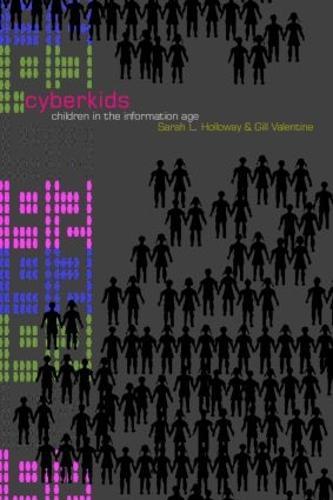
Cyberkids draws together research in the sociology of childhood and social studies of technology to explore children's experiences in the Information Age. The book addresses key policy debates about social inclusion and exclusion, children's identities and friendships in on-line and off-line worlds and their relationships with families and teachers. It counters contemporary moral panics about children's risk from dangerous strangers on-line, about corruption and lost innocence from adult-centred material on the web and about the addiction to life on the screen. Instead, by showing how children use ICT in balanced and sophisticated ways, the book draws out the importance of everyday uses of technology and the ways in which children's local experiences are embedded within, and in part, constitute the global.
Full Product Details
Author: Sarah Holloway ,
Gill Valentine
Publisher: Taylor & Francis Ltd
Imprint: Routledge
Dimensions:
Width: 15.60cm
, Height: 1.20cm
, Length: 23.40cm
Weight: 0.350kg
ISBN: 9780415230599
ISBN 10: 0415230594
Pages: 190
Publication Date: 03 October 2002
Audience:
College/higher education
,
Tertiary & Higher Education
,
Undergraduate
Format: Paperback
Publisher's Status: Active
Availability: In Print

This item will be ordered in for you from one of our suppliers. Upon receipt, we will promptly dispatch it out to you. For in store availability, please contact us.
Reviews
In this important volume, the authors tackle some of the most pressing issues relating to children and computer usage. While parents endorse the benefits for academic attainment and employment prospects, fears include the risk of corruption, the loss of imaginative opportunities for play and social withdrawal. Are we creating a generation of 'Mouse Potatoes'? The findings on which the book is based are the result of a two-year government-funded study of children's use of computers at school and in the home. They are disturbingly at odds with popular and policy understandings of the technology. Holloway and Valentine found that computer use in the classroom tended to be governed by peer pressure, with boys and girls bringing gendered attitudes to the keyboard. The boys' interest in cars, football, programming and the search for porn was seen as part of their bonding process. The girls on the other hand were less interested in the technical aspects and games and more concerned with communication, using the chat pages and sending emails. The study also looked at life around the screen in the family home. Where the computer was located in the bedroom, it appeared to be part of a developing bedroom culture linked to concerns about children withdrawing spatially and the decline of the family. But having the computer in a shared space meant that it acted as a popular gathering point for all family members. The 'Electronic Sodom' that so many parents worry will leave their children vulnerable to paedophiles and neo-Nazi groups failed to materialise. The authors found no undue risk, with many children appearing to be a lot more knowledgeable and competent at arranging their own lives than they were given credit for. The detailed list of findings will be surprising to both parents and teachers. Overall the study suggests there is little evidence that the government's IT policy is working given the uneven patterns of provision between schools and the varied management strategies of schools themselves. And since adults and schools present computer usage through an adult lens they may be unwittingly discouraging rather than stimulating their use. Many popular fears are unfounded. Children aren't spending excessive time indoors and computers don't encourage a breakdown in family relations. Well structured and backed by theoretical debate, this book is essential reading for all those in the teaching profession and will be an eye opener for parents. (Kirkus UK)
Author Information
Sarah L. Holloway is a lecturer in Geography at the University of Loughborough., Gill Valentine is Professor of Geography at the University of Sheffield.