Overview
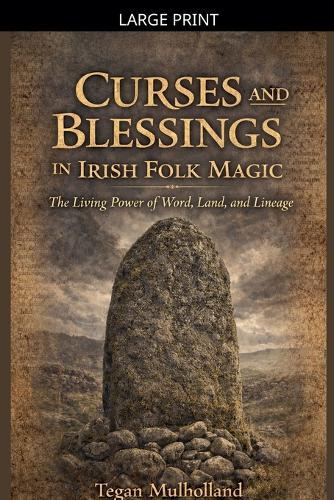
Ireland's folk magical tradition is not soft candlelight and wishful thinking. It is mud on boots, salt in the pocket, whispered words at a crossroads, and prayers that blur into threats when justice demands it. It lives in kitchens and fields, at holy wells and graveyard gates, in the knowledge carried by healers whose lineage runs back further than anyone can trace, and in the soil of fields that remember every wrong ever committed on them. Curses and Blessings in Irish Folk Magic is a comprehensive exploration of one of Europe's most coherent and most misunderstood magical traditions, rooted in a cosmology that has never separated the sacred from the practical, the living from the dead, or the human community from the non human world that shares its landscape. Drawing on the primary sources of the Irish folk tradition, including the testimony gathered by Lady Gregory, Douglas Hyde, and the fieldworkers of the Irish Folklore Commission, this book moves through the full range of the tradition's concerns. The moral universe that gives curses and blessings their force. The spoken word as a vehicle of power, from the formal satire of the bardic tradition to the desperate malediction of the dispossessed. The holy wells where petitions for healing and petitions for justice were made at the same water. The evil eye and the elaborate system of protection and cure the tradition developed in response to it. The agrarian magic of boundaries, fairy forts, and the land that notices what is done on it. The bean feasa, the wise woman whose inherited knowledge served her community across the full range of human need. The Aos Sí and the precise relational protocols that governed dealings with beings who were neither human nor divine. The objects of power, charm stones and iron and rowan and written charms, that made protective force portable. The dead whose presence in the lives of the living was continuous, practical, and demanding of acknowledgment. The curse as an instrument of community justice, feared because it worked and recognized as working because it was backed by something larger than individual anger. The journey of the tradition through diaspora, its survival and transformation in America, Australia, Britain, and the Caribbean. And the present moment, where authentic living practice sits alongside romantic distortion and the genuine hunger of people seeking real connection with something that has always been real. This is a tradition that took seriously the weight of words, the obligations of hospitality, the interests of the dead, the requirements of the non human world, and the capacity of the moral universe to correct what human institutions failed to address. It was developed by people paying close attention to a world they understood to be alive at every level, and it continues to be maintained by people who have inherited that understanding and found no reason to abandon it. Tegan Mulholland grew up in the west of Ireland in a household where the old prayers were still said and the local wells still visited at the proper times of year. She has spent years working with the primary sources of the Irish folk tradition, from the archives of the Irish Folklore Commission to the scholarship of those who have examined that material with critical rigor. She lives in the west of Ireland and continues to visit the wells.
Full Product Details
Author: Tegan Mullholland
Publisher: Tegan Mullholland
Imprint: Tegan Mullholland
Edition: Large type / large print edition
Dimensions:
Width: 15.20cm
, Height: 1.40cm
, Length: 22.90cm
Weight: 0.331kg
ISBN: 9798224603886
Pages: 244
Publication Date: 21 February 2026
Audience:
General/trade
,
General
Format: Paperback
Publisher's Status: Active
Availability: Available To Order

We have confirmation that this item is in stock with the supplier. It will be ordered in for you and dispatched immediately.