|
|
|||
|
||||
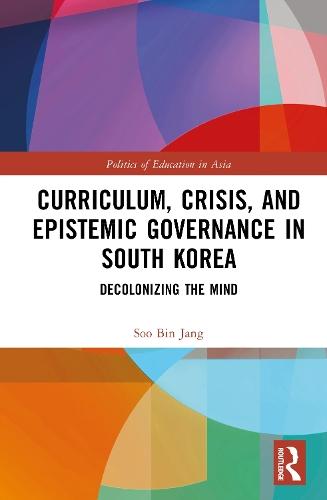
OverviewOffering an illuminating exploration of power dynamics and colonial legacies within South Korean education, this timely book examines how the South Korean state governs through curriculum reform, turning public participation into a moralized and technical project of national development. This book draws on archival documents, policy reports, and extensive interviews with curriculum committee members to reveal how crisis narratives, future-oriented discourse, and OECD expertise shape contemporary educational reform. Across six chapters, the author shows how democratic procedures become administrative rituals, how citizens are mobilized as ethical subjects of reform, and how participation serves to refine—rather than challenge—developmentalist state power. Further, the book traces this dynamic from Cold War nation-building to recent curriculum revisions, illustrating how moral language, expert authority, and bureaucratic coordination work together to foreclose political alternatives. With theoretical frameworks and critical perspectives that speak to broader Asian and transnational contexts, this book is a vital resource for scholars and academics of education policy, postcolonial studies and comparative studies. It will also be relevant to educators and policymakers interested in curriculum reform, democratic governance, state power, and the shifting relationship between expertise and public participation. Full Product DetailsAuthor: Soo Bin Jang (University of Delaware, USA)Publisher: Taylor & Francis Ltd Imprint: Routledge Weight: 0.453kg ISBN: 9781032739526ISBN 10: 1032739525 Pages: 190 Publication Date: 14 May 2026 Audience: College/higher education , Professional and scholarly , Tertiary & Higher Education , Professional & Vocational Format: Hardback Publisher's Status: Forthcoming Availability: Not yet available This item is yet to be released. You can pre-order this item and we will dispatch it to you upon its release. Table of ContentsContents List of Figures List of Tables Series Editors’ Foreword Acknowledgement Introduction 1. Epistemic Governance for Progress: Five Conjunctures in Korea’s Modern History 2. Savage Developmentalism as Epistemic Governance: Korean Education Between National Salvation and Imperial Subjection 3. Prophecy and Crisis: How the Future Becomes a Curriculum 4. Authoring the Future: The OECD-Korea Interface 5. Performing Democracy: Participation as Procedures 6. Stop the Future: Refusal and Livable Life Appendix A IndexReviewsAuthor InformationSoo Bin Jang is Assistant Professor of Social Studies Education in the School of Education at University of Delaware, USA. Tab Content 6Author Website:Countries AvailableAll regions |
||||