Overview
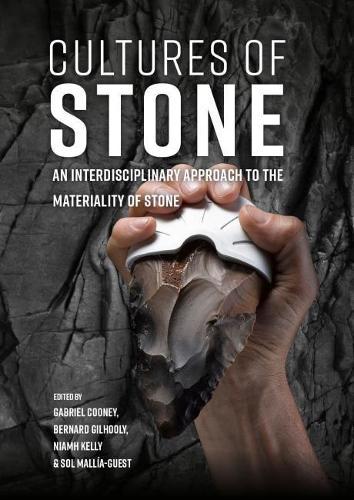
This volume establishes a rich cross-disciplinary dialogue about the significance of stone in society across time and space. The material properties of stone have ensured its continuing importance; however, it is its materiality which has mediated the relations between the individual, society and stone. Bound up with the physical properties of stone are ideas on identity, value, and understanding. Stone can act as a medium through which these concepts are expressed and is tied to ideas such as monumentality and remembrance; its enduring character creating a link through generations to both people and place. This volume brings together a collection of seventeen papers which draw on a range of diverse disciplines and approaches; including archaeology, anthropology, classics, design and engineering, fine arts, geography, history, linguistics, philosophy, psychology and sciences. 45 colour, 60 b/w illustrations
Full Product Details
Author: Gabriel Cooney ,
Bernard Gilhooly ,
Niamh Kelly ,
Sol Mallía-Guest
Publisher: Sidestone Press
Imprint: Sidestone Press
ISBN: 9789088908910
ISBN 10: 9088908915
Pages: 315
Publication Date: 14 May 2020
Audience:
Professional and scholarly
,
Professional & Vocational
Format: Paperback
Publisher's Status: Active
Availability: Out of stock

The supplier is temporarily out of stock of this item. It will be ordered for you on backorder and shipped when it becomes available.
Author Information
Professor Gabriel Cooney is an Adjunct Professor in the School of Archaeology, University College Dublin. He is a Member of the Royal Irish Academy and a Fellow of the Society of Antiquaries of London. He served as Chair of the Historic Monuments Council, Northern Ireland 2009-2019 and was a member of the Heritage Council, Ireland, 2005-2015. He was appointed Chair of the Discovery Programme, Ireland in 2019. He is an Expert Member, International Committee on Archaeological Heritage Management (ICAHM), International Council on Monuments and Sites (ICOMOS). He served on the ICOMOS World Heritage Panel in 2018-2019. Gabriel’s area of specialisation is the Neolithic period and he has a particular interest in the use of stone by Neolithic people, from the artefact to the monumental scale. He is the director of the long running Irish Stone Axe Project which was the context for the discovery of a Neolithic axe quarry on Lambay, an island off the east coast of Ireland. His current focus of quarry studies is the North Roe Felsite Project in Shetland, investigating the character and the wider role of a major quarry complex during the Neolithic period in the Shetland archipelago. Bernard completed his BA, MA, and PhD in University College Dublin (UCD). His PhD focused on the manufacture and range of uses of Irish Mesolithic and Neolithic shale and porcellanite axes and adzes. This utilised a series of methodologies including quantitative and qualitative analysis, and the manufacture and use of experimental replicas. Bernard is an assistant keeper of antiquities in the National Museum of Ireland. He is also a member of the North Roe Felsite Project which is studying stone axe manufacture and use on the Shetland Islands. He is a member of the Mesolithic in Mar Lodge project, looking into early Holocene hunter gatherer activity in the Scottish uplands. Bernard is also a researcher and contributor to the Irish Stone Axe Project (ISAP), a leading research programme focusing on recording Irish stone axes ‘in order to provide a better understanding of the people and societies who used them’. Niamh Kelly is a PhD researcher with the School of Archaeology in University College Dublin. Her current research focuses on coarse stone tool technology from Ireland and the Irish Sea region, and the roles they play in defining task, self, culture and ritual. She has worked as a researcher and specialist on numerous projects across Ireland, Britain and wider Europe including the North Roe Felsite Project on the Shetland Islands, the Mesolithic in Mar Lodge in the Scottish uplands and Priniatikos Pyrgos in Crete. Niamh also has over ten years teaching experience at third level and is currently the Coordinator of a pre-university programme in Cultural and Heritage Studies based in the National Print Museum, Dublin. Sol Mallía-Guest is a current PhD candidate at UCD School of Archaeology, exploring the role of flint artefacts in the Irish Neolithic from a comprehensive biographical approach, merging technological and use-wear analyses. Her current research builds on her MA work (UCD, 2011) that revealed the intricate life-paths of ‘everyday’ flint tools from Irish Early Neolithic rectangular timber houses. Trained as a lithics specialist and introduced to experimental and use-wear studies in Argentina (UBA; INAPL; CADIC-CONICET), she initially developed an interest in the significance of stone for early farming communities facing environmental risk and uncertainty. She has been involved in research for over 15 years both in academic and large-scale development projects, from rockshelters in the southern Argentinian Puna to prehistoric settlements and portal tombs in the eastern lowlands and the west coast of Ireland.