Overview
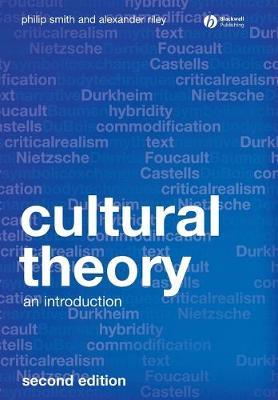
This second edition of Cultural Theory provides a concise introduction to cultural theory, placing major figures, traditional concepts, and contemporary themes within a sharp conceptual framework. Provides a student-friendly introduction to what can often be a complex field of study Updates the first edition in response to reader feedback and to the changing nature of the field Includes additional coverage of theorists from the classical period to include Nietzsche and DuBois Introduces entirely new chapters on race and gender theory, and the body Considers themes that have become more important in theoretical activity in recent years such as computers and virtual reality, cosmopolitanism, and performance theory Draws on theories and theorists from continental Europe as well as the English-speaking world
Full Product Details
Author: Philip Smith (Yale University) ,
Alexander Riley (Bucknell University)
Publisher: John Wiley and Sons Ltd
Imprint: Wiley-Blackwell
Edition: 2nd edition
Dimensions:
Width: 17.20cm
, Height: 1.80cm
, Length: 24.70cm
Weight: 0.553kg
ISBN: 9781405169073
ISBN 10: 1405169079
Pages: 320
Publication Date: 25 July 2008
Audience:
College/higher education
,
Undergraduate
Format: Paperback
Publisher's Status: Active
Availability: Manufactured on demand

We will order this item for you from a manufactured on demand supplier.
Reviews
"""Highly recommended to anyone interested in acquiring a theoretical basis on which to systematize their knowledge of cultural theory. Indeed, the authors manage to make the complex simple enough to understand without oversimplifying."" (Discourse Studies, 2010) ""Presenting such a wide-ranging and multifarious set of ideas in a coherent manner constitutes a very considerable achievement. The book offers anyone interested in cultural theory a broad conspectus—provided of course it is read as a whole."" (Metapsychology Online Reviews, February 2009)"
Highly recommended to anyone interested in acquiring a theoretical basis on which to systematize their knowledge of cultural theory. Indeed, the authors manage to make the complex simple enough to understand without oversimplifying. (Discourse Studies, 2010) “Presenting such a wide-ranging and multifarious set of ideas in a coherent manner constitutes a very considerable achievement. The book offers anyone interested in cultural theory a broad conspectus--provided of course it is read as a whole. (Metapsychology Online Reviews, February 2009)
Author Information
Philip Smith is Associate Professor of Sociology at Yale University and Deputy Director of the Yale Center for Cultural Sociology. His books include Cultural Theory: An Introduction (Blackwell, 2001), Why War? The Cultural Logic of Iraq, the Gulf War and Suez (2005), The Cambridge Companion to Durkheim (with Jeffrey C. Alexander) (2005), and Punishment and Culture (2008). Alexander Riley is Associate Professor of Sociology at Bucknell University. He is the author of Godless Intellectuals?: How Durkheimian Sociology and Poststructuralism Reinvented the Intellectual Pursuit of the Sacred (2008).