|
|
|||
|
||||
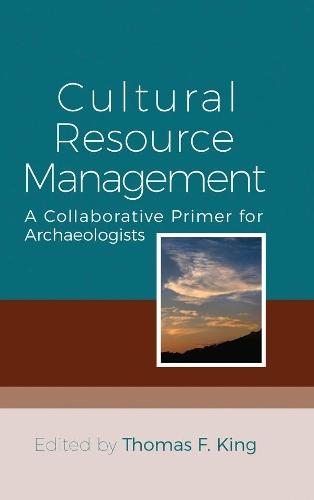
OverviewStressing the interdisciplinary, public-policy oriented character of Cultural Resource Management (CRM), which is not merely “applied archaeology,” this short, relatively uncomplicated introduction is aimed at emerging archaeologists. Drawing on fifty-plus years’ experience, and augmented by the advice of fourteen collaborators, Cultural Resource Management explains what “CRM archaeologists” do, and explores the public policy, ethical, and pragmatic implications of doing it for a living. Full Product DetailsAuthor: Thomas F. KingPublisher: Berghahn Books Imprint: Berghahn Books ISBN: 9781789206234ISBN 10: 1789206235 Pages: 176 Publication Date: 29 February 2020 Audience: Professional and scholarly , Professional & Vocational , Postgraduate, Research & Scholarly Format: Hardback Publisher's Status: Active Availability: In Print This item will be ordered in for you from one of our suppliers. Upon receipt, we will promptly dispatch it out to you. For in store availability, please contact us. Table of ContentsPreface Introduction to Cultural Resource Management in the United States List of Abbreviations Chapter 1. What is CRM? How Does it Differ from Archaeology? Chapter 2. What CRM Archaeologists Do: Consultation and Identification Chapter 3. What CRM Archaeologists Do: Evaluation Chapter 4. What CRM Archaeologists Do: Assessing Adverse Effect Chapter 5. What CRM Archaeologists Do: Resolving Adverse Effect Chapter 6. What Else Do CRM Archaeologists Do? Chapter 7. Special Cases and Loose Ends Chapter 8. Examples of Worldwide Cultural Resource/Heritage Management Archaeology and CRM in Australia Caitlin Allen Cultural Resource Management in Belize Jaime J. Awe A Very Brief Introduction to China's Wenwu Management System and CRM Archaeology Wang Renyu CRM in Europe Raimund Karl CRM in Nigeria Kolawole Adekola Chapter 9. Thoughts in Conclusion Appendix: Legal Matters About the Author and Collaborators IndexReviewsIt is very well written, effectively organized, and spot-on: an insider's succinct explication and critique of how 21st century CRM works, aimed at up and coming and journeyman archaeologists. Stephen L. Black, Texas State University “It is very well written, effectively organized, and spot-on: an insider’s succinct explication and critique of how 21st century CRM works, aimed at up and coming and journeyman archaeologists.” • Stephen L. Black, Texas State University Author InformationThomas F. King is the International Group for Historic Aircraft Recovery's (TIGHAR's) Senior Archaeologist. He is also the author of many textbooks and journal articles about archaeology and historic preservation. From 1977 to 1979. he helped develop archaeological and historic preservation programs in the Federated States of Micronesia, the Republic of Palau, and the Republic of the Marshall Islands. Between 1979 and 1989 King was employed by the Advisory Council on Historic Preservation in Washington DC, where he and his wife, the late Patricia Parker, were responsible for writing National Register Bulletin 38, a U.S. government guideline document that many indigenous groups and local communities have used to protect their cultural heritage from destructive government projects. Tab Content 6Author Website:Countries AvailableAll regions |
||||