|
|
|||
|
||||
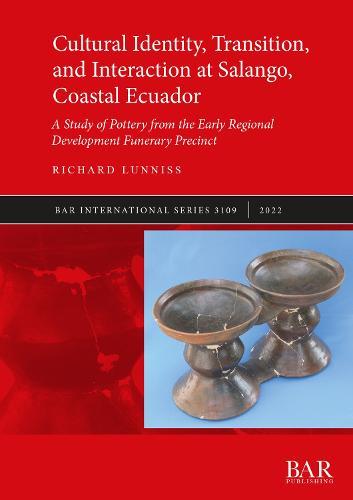
OverviewThe Early Regional Development (100 BC-AD 300) funerary precinct at Salango, on the central coast of Ecuador, was situated at the point of convergence of the Bahía II and Early Guangala culture zones. With plentiful line drawings and colour photographs, this book uses pottery from the precinct to present a detailed and closely contextualized description of Early Regional Development ceramic traditions for coastal Ecuador. As a result, we gain valuable insights into the dynamics of cultural identity, transition, and interaction as manifest in a highly structured pottery assemblage from a key Pre-Columbian site of this area. Attention is brought to designs made with the two principal decorative modes: iridescent paint on serving wares and red finger paint designs on kitchen wares. Assemblage analysis points to the complex set of cultural factors and processes involved in its composition, and an important local ceramic tradition is identified for the first time. Spanish summaries are included for each chapter. Full Product DetailsAuthor: Richard LunnissPublisher: BAR Publishing Imprint: BAR Publishing ISBN: 9781407359977ISBN 10: 1407359975 Pages: 148 Publication Date: 30 November 2022 Audience: Professional and scholarly , Professional & Vocational Format: Paperback Publisher's Status: Active Availability: Available To Order We have confirmation that this item is in stock with the supplier. It will be ordered in for you and dispatched immediately. Table of ContentsList of figures List of tables 2022 Preface and Acknowledgements 2004 Preface and Acknowledgements 1. Introduction 1.1 Aims and Scope of the Study 1.2 Previous Research 1.2.1 Guangala 1.2.2 Bahía II 1.2.3 Guangala and Bahía II: Absolute Chronology 1.3 Salango and the Biogeography of the Central Coast 1.4 OMJPLP-141B-T3 Salango 2. The Pottery 2.1 The Sample and the Method of Analysis 2.2. Serving Bowls 2.2.1 Machalilla Serving Bowls 2.2.2 Early Engoroy Serving Bowls 2.2.3 Serving Bowl Form 1 2.2.4 Serving Bowl Form 2 2.2.5 Serving Bowl Form 3 2.2.6 Serving Bowl Form 5 2.2.7 Serving Bowl Form 8 2.2.8 Serving Bowl Form 9 Short 2.2.9 Serving Bowl Form 9 Long 2.2.10 Serving Bowl Form 10 Open 2.2.11 Serving Bowl Form 10 Short 2.2.12 Serving Bowl Form 10 Long 2.2.13 Serving Bowl Form 11 2.2.14 Serving Bowl Form 10/11 2.2.15 Serving Bowl Form 12 2.2.16 Serving Bowl Form 13 2.2.17 Serving Bowl Form 14 2.2.18 Serving Bowl Form 15 2.2.19 Serving Bowl Form 16 2.2.20 Serving Bowl Form 17 2.2.21 Miscellaneous Serving Bowl Forms 2.2.22 Serving Bowls of Uncertain Form 2.2.23 Serving Bowl Bases 2.2.24 Exterior Flanges on Serving Bowls 2.2.25 Notched and Nicked Lips on Serving Bowls 2.2.26 Serving Bowl Decorative Techniques 2.3 Kitchen Bowls 2.4 Thickwalled Bowls 2.5 Funerary Urn 2.6 Serving Jars 2.6.1 Bottles 2.6.2 Serving Jars with Flaring Rims 2.6.3 Serving Jars with Dark Brown or Black Slip 2.6.4 Serving Jars with Red Slip 2.6.5 Wide-necked Serving Jars 2.6.6 Serving Jars with Vertical Rims 2.6.7 Serving Jars with Structured Rims 2.6.8 Unplaced Body Sherds 2.6.9 Decorative Techniques Applied to Serving Jars 2.7 Kitchen Jars 2.7.1 Standard Kitchen Jars 2.7.2 Red Finger Paint Decoration 2.7.3 Unusual Fabrics, Rim Forms, Painted Designs, and Finishes 2.7.4 Jars with Polished Red Slip or Paint 2.7.5 Jars with Paint in Narrow Bands 2.7.6 Jars with Incised Decoration 2.7.7 Massive Jars 2.8 Neckless Jars 2.9 Miscellaneous Jars 2.10 Rims of Uncertain Form 2.11 Ceramic Figurines 2.12 Miscellaneous Ceramic Objects 3. Analysis of the Assemblage 3.1 Residuality 3.2 Sample Composition and Distribution 3.3 Trends in Form, Decoration, and Finish 3.3.1 Serving Bowls 3.3.2 Kitchen Bowls 3.3.3 Serving Jars 3.3.4 Kitchen Jars 3.3.5 Summary 3.4 Ceramic Phases and the Context of Change 3.5 Unusual Vessels, Imports, and their Depositional Context 3.6 Comparison, Correlation, and Chronology 3.6.1 Guangala 3.6.2 Bahía 3.6.3 Serving Jars with Flaring Rims 3.6.4 The Double Compotera 3.6.5 Dragons 3.6.6 Summary and Chronology 4. Discussion 5. Conclusions ReferencesReviews'The sample from Salango as well as the site itself is likely among the most important and most carefully excavated for the coastal region. This author's work is among the few detailed presentations of the data. The publication also offers very clear, concise summaries of previous research which would be an easy and useful reference for anyone trying to understand the history of ceramic research for these periods on the coast of Ecuador.' Dr Maria Masucci, Drew University Author InformationRichard Lunniss holds a PhD from the Institute of Archaeology, University College London. Since 1982 he has been closely involved in the study of Salango, on the central coast of Ecuador. He is currently a Research Professor at the Universidad Técnica de Manabí, Portoviejo and a Research Archaeologist for Ecuador's Instituto Nacional de Patrimonio Cultural. Tab Content 6Author Website:Countries AvailableAll regions |
||||