Overview
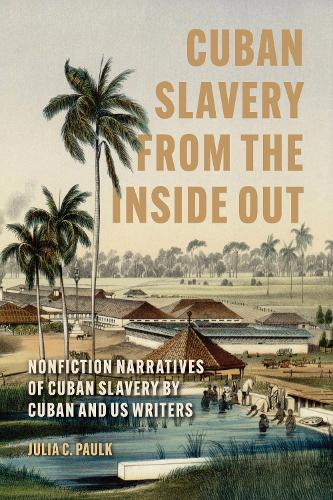
Cuban Slavery from the Inside Out: Nonfiction Narratives of Cuban Slavery by Cuban and US Writers is a critical exploration of how nineteenth-century nonfiction texts—written by authors from both Cuba and the United States—documented, rationalized, and contested the institution of slavery in Cuba. Though separated by language and national identity, both countries shared foundational beliefs in racial hierarchy and imperial control, rooted in colonial justifications that evolved from religious and racialized frameworks. The first half of the book focuses on Cuban authors writing from within a slaveholding society. It offers a new interpretation of Juan Francisco Manzano’s celebrated autobiography and examines lesser-known artículos de costumbres by writers such as Anselmo Suárez y Romero, which reflect differing levels of complicity with Afro-Cuban plantation culture. It also analyzes rarely discussed passages from the Condesa de Merlin’s La Havane, revealing her explicit support for Cuban slavery and her rejection of democratic principles. In the second half, the book turns to US writers whose nonfiction travel narratives and memoirs—by figures such as Maturin Murray Ballou, Julia Ward Howe, and Eliza McHatton Ripley—shed light on how US perceptions of Cuban slavery were shaped by longstanding Hispanophobic ideologies. These texts illustrate how US racial supremacy and imperial ambition drew on and reinforced the same colonial logic that underpinned slavery in Cuba. Drawing from literary analysis, historical context, and decolonial critique, Cuban Slavery from the Inside Out reveals how narratives about Cuban slavery helped shape transnational ideas of race, power, and resistance. It is an essential resource for scholars of Cuban history, Atlantic slavery, hemispheric American studies, and the lasting legacies of colonialism.
Full Product Details
Author: Julia C. Paulk
Publisher: University Press of Mississippi
Imprint: University Press of Mississippi
ISBN: 9781496861504
ISBN 10: 1496861507
Pages: 277
Publication Date: 13 February 2026
Audience:
College/higher education
,
Postgraduate, Research & Scholarly
Format: Paperback
Publisher's Status: Active
Availability: Not yet available

This item is yet to be released. You can pre-order this item and we will dispatch it to you upon its release.
Reviews
By exploring how coloniality shaped narratives from both 'inside' and 'outside' Cuba, Paulk manages to deepen our understanding of how racial and imperial ideologies operated during the nineteenth century. This is an invaluable text as the study's insights could inform readers' understandings of the era and the lasting effects of coloniality.--Nicole Roberts, coeditor of Trinidad y Tobago/Cuba: Historia, Lengua y Literatura
Author Information
Julia C. Paulk is associate professor of Spanish at Marquette University in Milwaukee, Wisconsin. Specializing in nineteenth-century Cuban and comparative literature, Paulk has published scholarly articles in such journals as Afro-Hispanic Review, Latin American Literary Review, Hispanófila, Luso-Brazilian Review, and Revista Hispánica Moderna. She is currently at work on a book-length study of the representation of indentured Chinese in Cuban literature.