Overview
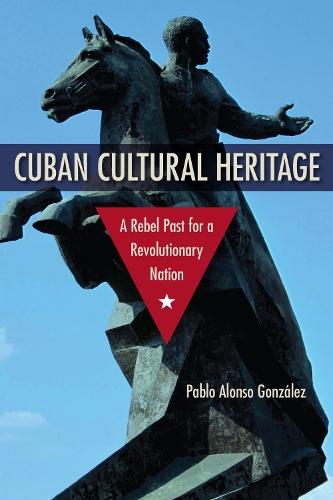
Cuban Cultural Heritage explores the role that cultural heritage and museums played in the construction of a national identity in postcolonial Cuba. Starting with independence from Spain in 1898 and moving through Cuban-American rapprochement in 2014, Pablo Alonso González illustrates how political and ideological shifts have influenced ideas about heritage and how, in turn, heritage has been used by different social actors to reiterate their status, spread new ideologies, and consolidate political regimes. Unveiling the connections between heritage, power, and ideology, Alonso González delves into the intricacies of Cuban history, covering key issues such as Cuba’s cultural and political relationships with Spain, the United States, the Soviet Union, and so-called Third World countries; the complexities of Cuba’s status as a postcolonial state; and the potential future paths of the Revolution in the years to come. This volume offers a detailed look at the function and place of cultural heritage under socialist states.
Full Product Details
Author: Pablo Alonso Gonzalez
Publisher: University Press of Florida
Imprint: University Press of Florida
Dimensions:
Width: 15.20cm
, Height: 2.30cm
, Length: 22.80cm
Weight: 0.620kg
ISBN: 9780813056630
ISBN 10: 0813056632
Pages: 320
Publication Date: 16 January 2018
Audience:
Professional and scholarly
,
Professional & Vocational
Format: Hardback
Publisher's Status: Active
Availability: Manufactured on demand

We will order this item for you from a manufactured on demand supplier.
Reviews
Fills a void by examining the politics of heritage from a geographic and postcolonial perspective, skillfully weaving materiality, ideology, and history together in a critique of nationalism during the republican and revolutionary periods. . . . Conceptually cohesive and rich in detail. --Choice
Effectively analyzes the evolving shape of the heritage discourse across these periods and casts light on the nature of heritage production in socialist and postcolonial societies globally. -Paul B. Niell, author of Urban Space as Heritage in Late Colonial Cuba: Classicism and Dissonance on the Plaza de Armas of Havana, 1754-1828 Aptly shows how cultural and historical heritage have played a key role during a century of deep social and political change in Cuba. -Carmen Ortiz Garcia, Spanish National Research Council
Fills a void by examining the politics of heritage from a geographic and postcolonial perspective, skillfully weaving materiality, ideology, and history together in a critique of nationalism during the republican and revolutionary periods. . . . Conceptually cohesive and rich in detail. --Choice Successful in bringing historic debates over Cuba's cultural heritage into the present context, offering insight on the indeterminate future of the Caribbean nation. --Journal of Cultural Heritage
Author Information
Pablo Alonso González is postdoctoral researcher at the Institute of Social Sciences, University of Lisbon. He is the author of several books, including Cultural Parks and National Heritage Areas: Assembling Cultural Heritage, Development and Spatial Planning.