Overview
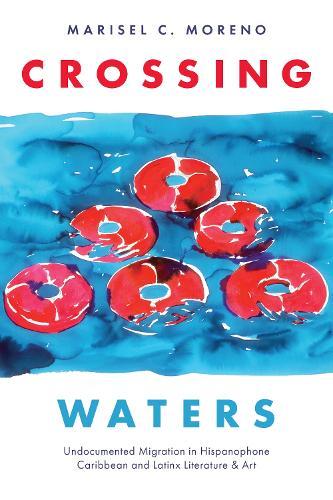
Debates over the undocumented migration of Latin Americans invariably focus on the southern US border, but most migrants never cross that arbitrary line. Instead, many travel, via water, among the Caribbean islands. The first study to examine literary and artistic representations of undocumented migration within the Hispanophone Caribbean, Crossing Waters relates a journey that remains silenced and largely unknown. Analyzing works by novelists, short-story writers, poets, and visual artists replete with references to drowning and echoes of the Middle Passage, Marisel Moreno shines a spotlight on the plight that these migrants face. In some cases, Puerto Rico takes on a new role as a stepping-stone to the continental United States and the society migrants will join there. Meanwhile the land border between Haiti and the Dominican Republic, the only terrestrial border in the Hispanophone Caribbean, emerges as a complex space within this cartography of borders. And while the Border Patrol occupies US headlines, the Coast Guard occupies the nightmares of refugees. An untold story filled with beauty, possibility, and sorrow, Crossing Waters encourages us to rethink the geography and experience of undocumented migration and the role that the Caribbean archipelago plays as a border zone.
Full Product Details
Author: Marisel C. Moreno
Publisher: University of Texas Press
Imprint: University of Texas Press
Dimensions:
Width: 15.20cm
, Height: 2.80cm
, Length: 22.90cm
Weight: 0.626kg
ISBN: 9781477325599
ISBN 10: 147732559
Pages: 304
Publication Date: 26 July 2022
Audience:
Professional and scholarly
,
Professional & Vocational
Format: Hardback
Publisher's Status: Active
Availability: To order

Stock availability from the supplier is unknown. We will order it for you and ship this item to you once it is received by us.
Reviews
Moreno seamlessly accommodates the Caribbean’s unruly multiplicities—of national contexts, identities, and migration pathways—without sacrificing nuance and specificity...Her capacious framing allows Crossing Waters to proceed assuredly through the folds of successive Caribbean geopolitical contexts—from the erosion of birthright citizenship in the Dominican Republic to shifting U.S. policy toward Cuban refugees—while maintaining a remarkably coherent arc...Moreno’s framing of migration as a process that often lacks a defined end resonates with the ongoingness of border studies writ large and Caribbean border and migration studies in particular...Scholars of migration would do well to follow Moreno’s impulse to understand border studies as both an anchor and a current. * ASAP/J * A momentous contribution that expands the field of Latinx Studies into Caribbean water and land. It opens many crucial and fruitful avenues of consideration for the overlooked study of the travails of Caribbean undocumented migration. * A Contracorriente *
Moreno seamlessly accommodates the Caribbean’s unruly multiplicities-of national contexts, identities, and migration pathways-without sacrificing nuance and specificity...Her capacious framing allows Crossing Waters to proceed assuredly through the folds of successive Caribbean geopolitical contexts-from the erosion of birthright citizenship in the Dominican Republic to shifting U.S. policy toward Cuban refugees-while maintaining a remarkably coherent arc...Moreno’s framing of migration as a process that often lacks a defined end resonates with the ongoingness of border studies writ large and Caribbean border and migration studies in particular...Scholars of migration would do well to follow Moreno’s impulse to understand border studies as both an anchor and a current. (ASAP/J) A momentous contribution that expands the field of Latinx Studies into Caribbean water and land. It opens many crucial and fruitful avenues of consideration for the overlooked study of the travails of Caribbean undocumented migration. (A Contracorriente) Crossing Waters is an excellent contribution to Caribbean migration studies, border studies, and Latinx literatures and cultures...[Moreno's] prose is insightful, clear, and defies traditional anthropological and necro-political contexts to argue for futurities that are not only more democratic but also centered on living and not dying. (Centro Journal) Eloquently written for various audiences to benefit from its jargon-free pages, Crossing Waters is an invitation for generations of scholars to continue adding to the area of immigrant studies. (The Latinx Project) Moreno calls overdue attention to intra-Caribbean migrations as represented in cultural production, thus decentering the United States as destination point...Crossing Waters successfully redraws and redefines our own critical borders. (New West Indian Guide) Moreno breaks new ground in her focus on intra-Caribbean voyages. (American Literary History)
Author Information
Marisel C. Moreno is the Rev. John A. O'Brien Associate Professor in the Department of Romance Languages and Literatures at the University of Notre Dame. She is the author of Family Matters: Puerto Rican Women Authors on the Island and the Mainland.