|
|
|||
|
||||
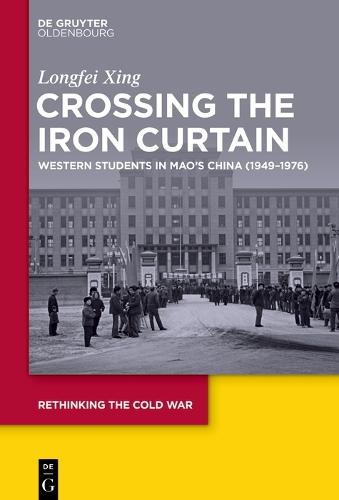
OverviewDuring the Cold War, an invisible “iron curtain” divided the Western world from Maoist China. What motives lay behind the façade of educational exchange? This book explores the experiences of Western students in China from 1949 to 1976, revealing how education functioned as a strategic tool of people’s diplomacy. Through an analysis of the PRC’s educational policies, tailored curricula, and student memoirs, it reconstructs the landscape of studying in Maoist China. The study shows how the Chinese state sought to shape Western students’ understandings and attitudes through an education grounded in proletarian politics, a curriculum combining open-door schooling with productive labor, and a management system that differentiated between insiders and outsiders. It also examines how these strategies shaped Western students’ perceptions and influenced their retrospective reflections. Offering a fresh perspective on Sino-Western encounters, this book demonstrates how state-led diplomacy was intertwined with personal, unofficial interactions through education. These connections enriched the state-centric narrative of Cold War diplomacy, serving as reference for scholars of public diplomacy, international relations, and educational exchange. Full Product DetailsAuthor: Longfei XingPublisher: De Gruyter Imprint: De Gruyter Oldenbourg Weight: 0.500kg ISBN: 9783119147446ISBN 10: 3119147443 Pages: 280 Publication Date: 03 November 2025 Audience: Professional and scholarly , College/higher education , Professional & Vocational , Postgraduate, Research & Scholarly Format: Hardback Publisher's Status: Active Availability: In Print This item will be ordered in for you from one of our suppliers. Upon receipt, we will promptly dispatch it out to you. For in store availability, please contact us. Table of ContentsReviewsAuthor InformationLongfei Xing, Institute of East Asian Studies, University of Cologne, Cologne, Germany. Tab Content 6Author Website:Countries AvailableAll regions |
||||