Overview
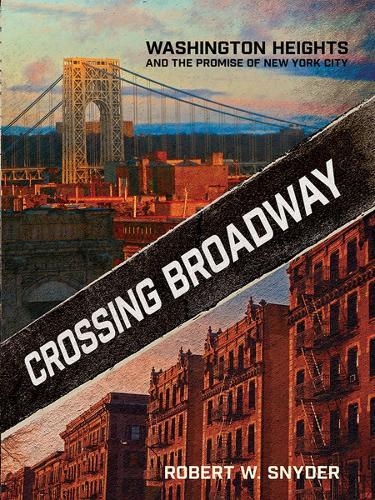
In the 1970s, when the South Bronx burned and the promise of New Deal New York and postwar America gave way to despair, the people of Washington Heights at the northern tip of Manhattan were increasingly vulnerable. The Heights had long been a neighborhood where generations of newcomers-Irish, Jewish, Greek, African American, Cuban, and Puerto Rican-carved out better lives in their adopted city. But as New York City shifted from an industrial base to a service economy, new immigrants from the Dominican Republic struggled to gain a foothold. Then the crack epidemic of the 1980s and the drug wars sent Washington Heights to the brink of an urban nightmare. But it did not go over the edge. Robert W. Snyder's Crossing Broadway tells how disparate groups overcame their mutual suspicions to rehabilitate housing, build new schools, restore parks, and work with the police to bring safety to streets racked by crime and fear. It shows how a neighborhood once nicknamed ""Frankfurt on the Hudson"" for its large population of German Jews became ""Quisqueya Heights""-the home of the nation's largest Dominican community. The story of Washington Heights illuminates New York City's long passage from the Great Depression and World War II through the urban crisis to the globalization and economic inequality of the twenty-first century. Washington Heights residents played crucial roles in saving their neighborhood, but its future as a home for working-class and middle-class people is by no means assured. The growing gap between rich and poor in contemporary New York puts new pressure on the Heights as more affluent newcomers move into buildings that once sustained generations of wage earners and the owners of small businesses. Crossing Broadway is based on historical research, reporting, and oral histories. Its narrative is powered by the stories of real people whose lives illuminate what was won and lost in northern Manhattan's journey from the past to the present. A tribute to a great American neighborhood, this book shows how residents learned to cross Broadway-over the decades a boundary that has separated black and white, Jews and Irish, Dominican-born and American-born-and make common cause in pursuit of one of the most precious rights: the right to make a home and build a better life in New York City.
Full Product Details
Author: Robert W. Snyder
Publisher: Cornell University Press
Imprint: Three Hills
Dimensions:
Width: 15.50cm
, Height: 2.70cm
, Length: 23.50cm
Weight: 0.907kg
ISBN: 9780801449611
ISBN 10: 0801449618
Pages: 312
Publication Date: 18 December 2014
Audience:
General/trade
,
College/higher education
,
Professional and scholarly
,
General
,
Tertiary & Higher Education
Format: Hardback
Publisher's Status: Active
Availability: Manufactured on demand

We will order this item for you from a manufactured on demand supplier.
Reviews
Crossing Broadway is a brilliant and beautiful book. It brings to the twenty-first-century reader insights-often reflected in the work of Herbert Gans, David Montgomery, and Herbert Gutman-from a long tradition of engagement with the struggles and triumphs of the working people in our great cities. In showing how the residents of Washington Heights linked a devotion to community with uncommon political energy and shrewdness, Robert W. Snyder offers us hope that our nation may yet find a better and more democratic approach to our public life. Crossing Broadway will inspire all who love our cities, who care about popular rule, and who know that the underdogs can win. -E. J. Dionne Jr., author of Our Divided Political Heart and a syndicated columnist At once analytical, historical, and personal, in this engaging and richly researched community study Robert W. Snyder uses the vantage offered by New York's Washington Heights to illuminate large puzzles of urban change. Ranging across the domains of crime, education, housing, and citizenship, Crossing Broadway reflectively identifies structures, experiences, and agents that, together, compose a decent city. -Ira Katznelson, Ruggles Professor of Political Science and History, Columbia University, and author of the Bancroft Prize-winning book, Fear Itself: The New Deal and the Origins of Our Time Crossing Broadway is a comprehensive, compelling, and honest narrative about Washington Heights and its different ethnic, racial, and religious groups. The book narrates a story of failures and triumphs experienced by the immigrant groups and their children. The reader will appreciate the delicate manner and sensitivity Robert W. Snyder uses when analyzing difficult moments in the history of the neighborhood: racial and ethnic discrimination against Blacks, Dominicans and Puerto Ricans and anti-Semitism against Jews; the violence provoked by deviant groups, particularly youth gangs; the heated years of drug trafficking in Washington Heights; the political rivalries between established white politicians and the emerging Dominican politicians, and the confrontations between Dominicans and the police. With a photographic sensibility, Snyder vividly sets the scene and describes how groups fought and stigmatized each other, and then ended up rubbing elbows with one another, either because these groups managed to undermine their ignorance and lost their fear of each other or because they simply had no choice. -Ramona Hernandez, Director of CUNY Dominican Studies Institute and co-author of The Dominican Americans Crossing Broadway is a terrific book that successfully links the story of immigrant communities and ethnic succession in Washington Heights to the larger history of the city of New York and the nation at large. Robert W. Snyder shows how the topography of northern Manhattan reinforced boundaries of race, class and ethnicity and made efforts to unite the community around common interests more difficult. He usefully reminds us that history is made, not by impersonal forces such as deindustrialization or market revitalization, but by the actions of individuals who, in the case of Washington Heights, remade their city in the face of capital flight, crime and community abandonment. -Eric C. Schneider, University of Pennsylvania, author of Smack: Heroin and the American City Crossing Broadway gives an immediate sense of the transformation of urban life since World War II, especially the 'urban crisis' of the 1960s and 1970s and its aftermath. A skillful writer, Robert W. Snyder has constructed a strong, engaging narrative that covers a long sweep of history, balancing big themes with closely told stories of everyday life. -Joshua B. Freeman, Distinguished Professor of History, CUNY Graduate Center, author of American Empire, 1945-2000: The Rise of a Global Power, the Democratic Revolution at Home
Crossing Broadway is a brilliant and beautiful book. It brings to the twenty-first-century reader insights-often reflected in the work of Herbert Gans, David Montgomery, and Herbert Gutman-from a long tradition of engagement with the struggles and triumphs of the working people in our great cities. In showing how the residents of Washington Heights linked a devotion to community with uncommon political energy and shrewdness, Robert W. Snyder offers us hope that our nation may yet find a better and more democratic approach to our public life. Crossing Broadway will inspire all who love our cities, who care about popular rule, and who know that the underdogs can win. -E. J. Dionne Jr., author of Our Divided Political Heart and a syndicated columnist At once analytical, historical, and personal, in this engaging and richly researched community study Robert W. Snyder uses the vantage offered by New York's Washington Heights to illuminate large puzzles of urban change. Ranging across the domains of crime, education, housing, and citizenship, Crossing Broadway reflectively identifies structures, experiences, and agents that, together, compose a decent city. -Ira Katznelson, Ruggles Professor of Political Science and History, Columbia University, and author of the Bancroft Prize-winning book, Fear Itself: The New Deal and the Origins of Our Time Crossing Broadway is a comprehensive, compelling, and honest narrative about Washington Heights and its different ethnic, racial, and religious groups. The book narrates a story of failures and triumphs experienced by the immigrant groups and their children. The reader will appreciate the delicate manner and sensitivity Robert W. Snyder uses when analyzing difficult moments in the history of the neighborhood: racial and ethnic discrimination against Blacks, Dominicans and Puerto Ricans and anti-Semitism against Jews; the violence provoked by deviant groups, particularly youth gangs; the heated years of drug trafficking in Washington Heights; the political rivalries between established white politicians and the emerging Dominican politicians, and the confrontations between Dominicans and the police. With a photographic sensibility, Snyder vividly sets the scene and describes how groups fought and stigmatized each other, and then ended up rubbing elbows with one another, either because these groups managed to undermine their ignorance and lost their fear of each other or because they simply had no choice. -Ramona Hernandez, Director of CUNY Dominican Studies Institute and co-author of The Dominican Americans
Drawing on research studies, oral histories, and contemporaneous reporting, Snyder'swell-paced narrative projects the neighborhood's serial make-overs against the backdropof Gotham's turn from postwar industrial andcorporate colossus to a place where manufacturing jobs, white people, and corporationsseemed to depart all at once...Historians of the city will find much tothink about in this stylish, well-researched,and balanced popular history. -Thomas Kessner, Journal of American History (March 2016) Crossing Broadway is a brilliant and beautiful book. It brings to the twenty-first-century reader insights-often reflected in the work of Herbert Gans, David Montgomery, and Herbert Gutman-from a long tradition of engagement with the struggles and triumphs of the working people in our great cities. In showing how the residents of Washington Heights linked a devotion to community with uncommon political energy and shrewdness, Robert W. Snyder offers us hope that our nation may yet find a better and more democratic approach to our public life. Crossing Broadway will inspire all who love our cities, who care about popular rule, and who know that the underdogs can win. -E. J. Dionne Jr., author of Our Divided Political Heart and a syndicated columnist At once analytical, historical, and personal, in this engaging and richly researched community study Robert W. Snyder uses the vantage offered by New York's Washington Heights to illuminate large puzzles of urban change. Ranging across the domains of crime, education, housing, and citizenship, Crossing Broadway reflectively identifies structures, experiences, and agents that, together, compose a decent city. -Ira Katznelson, Ruggles Professor of Political Science and History, Columbia University, and author of the Bancroft Prize-winning book, Fear Itself: The New Deal and the Origins of Our Time Crossing Broadway is a comprehensive, compelling, and honest narrative about Washington Heights and its different ethnic, racial, and religious groups. The book narrates a story of failures and triumphs experienced by the immigrant groups and their children. The reader will appreciate the delicate manner and sensitivity Robert W. Snyder uses when analyzing difficult moments in the history of the neighborhood: racial and ethnic discrimination against Blacks, Dominicans and Puerto Ricans and anti-Semitism against Jews; the violence provoked by deviant groups, particularly youth gangs; the heated years of drug trafficking in Washington Heights; the political rivalries between established white politicians and the emerging Dominican politicians, and the confrontations between Dominicans and the police. With a photographic sensibility, Snyder vividly sets the scene and describes how groups fought and stigmatized each other, and then ended up rubbing elbows with one another, either because these groups managed to undermine their ignorance and lost their fear of each other or because they simply had no choice. -Ramona Hernandez, Director of CUNY Dominican Studies Institute and co-author of The Dominican Americans Crossing Broadway is a terrific book that successfully links the story of immigrant communities and ethnic succession in Washington Heights to the larger history of the city of New York and the nation at large. Robert W. Snyder shows how the topography of northern Manhattan reinforced boundaries of race, class and ethnicity and made efforts to unite the community around common interests more difficult. He usefully reminds us that history is made, not by impersonal forces such as deindustrialization or market revitalization, but by the actions of individuals who, in the case of Washington Heights, remade their city in the face of capital flight, crime and community abandonment. -Eric C. Schneider, University of Pennsylvania, author of Smack: Heroin and the American City Crossing Broadway gives an immediate sense of the transformation of urban life since World War II, especially the 'urban crisis' of the 1960s and 1970s and its aftermath. A skillful writer, Robert W. Snyder has constructed a strong, engaging narrative that covers a long sweep of history, balancing big themes with closely told stories of everyday life. -Joshua B. Freeman, Distinguished Professor of History, CUNY Graduate Center, author of American Empire, 1945-2000: The Rise of a Global Power, the Democratic Revolution at Home Far too many people still view Washington Heights through the prism of the recent past. Crime, drugs, and rampant lawlessness-all of which scarred the neighborhood in the late '80s and early '90s-are the first things that come to mind. In fact, Washington Heights has emerged phoenix-like from the ashes of the crack years and is experiencing a renaissance that is reshaping and redefining the community. Crossing Broadway tells the complete and true story of this much-maligned neighborhood with erudition, elan, and the soft touch of personal attachment. Robert W. Snyder's book is a testament to the tenacity, dynamism, and vitality of the people who have made Washington Heights their home. If you want to truly understand Washington Heights, then Crossing Broadway is an absolute must-read. -Led Black, writer, filmmaker, and editor-in-chief of www.UptownCollective.com
Author Information
Robert W. Snyder is Associate Professor of Journalism and American Studies at Rutgers University-Newark. He is the author of Transit Talk: New York's Bus and Subway Workers Tell Their Stories and The Voice of the City: Vaudeville and Popular Culture in New York and coauthor of Metropolitan Lives: The Ashcan Artists and Their New York. Formerly the editor of Media Studies Journal, he also worked at Newsday, the journalism review More, the Tarrytown Daily News, and Channel 13/WNET, the public television station of New York City. Snyder served as a consultant and interview source for National Public Radio's Sonic Memorial project on September 11 and the World Trade Center, which won the Peabody Award.