Overview
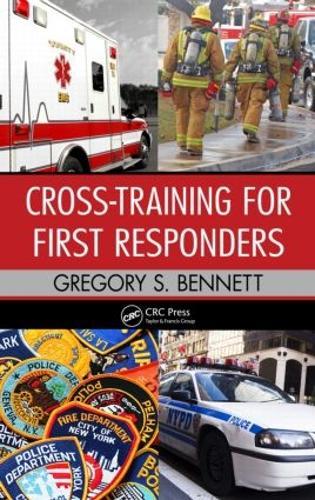
Covering exercises, training curricula, and cost-effective recommendations, this manual prepares first responders to face multiple threats from multiple sources. Applying the concept of cross-training to round out skill-sets, it prepares these diverse outfits to assist each other and overcome traditional philosophical and logistical boundaries. Through table-top scenarios, case examples, and discussion of common sticking points, this innovative book enables response professionals and practitioners to be more effective and better equipped in the face of increased threats and threat potential from multi-faceted disaster scenarios.
Full Product Details
Author: Gregory Bennett
Publisher: Taylor & Francis Inc
Imprint: CRC Press Inc
Dimensions:
Width: 15.60cm
, Height: 2.30cm
, Length: 23.40cm
Weight: 0.624kg
ISBN: 9781439826539
ISBN 10: 1439826536
Pages: 283
Publication Date: 21 June 2010
Audience:
Professional and scholarly
,
Professional & Vocational
Format: Hardback
Publisher's Status: Active
Availability: In Print

This item will be ordered in for you from one of our suppliers. Upon receipt, we will promptly dispatch it out to you. For in store availability, please contact us.
Reviews
The communications difficulties experienced in disasters have been well-documented. The classic example in the popular mind is the inability of New York City fire and police departments to communicate with each other on Sept. 11, 2001. ... Bennett wants professional and volunteer first responders to get on the same page on these issues and more sophisticated ones as well. The National Incident Management System is making some strides in this direction, he says, but it will take some years before its effects are felt extensively. Cross-Training for First Responders explains the kind of training necessary to overcome the emergency response communications gap. --In the Natural Hazards Observer, September 2011
The communications difficulties experienced in disasters have been well-documented. The classic example in the popular mind is the inability of New York City fire and police departments to communicate with each other on Sept. 11, 2001. ... Bennett wants professional and volunteer first responders to get on the same page on these issues and more sophisticated ones as well. The National Incident Management System is making some strides in this direction, he says, but it will take some years before its effects are felt extensively. Cross-Training for First Responders explains the kind of training necessary to overcome the emergency response communications gap. -In the Natural Hazards Observer, September 2011
Author Information
Gregory Bennett has been involved in emergency services for more than twenty-three years. He is a career law enforcement officer, and has risen to the rank of Lieutenant for the Middlesex County (NJ) Sheriff's Department, where he has been employed for twenty-one years. He has also been a firefighter for 24 years, including 3 as a Chief and 7 as a staff chief.a In addition, he is a fire instructor and Deputy Office of Emergency Management (OEM) Coordinator.a Greg holds a Bachelor of Science degree in Criminal Justice from the University of Dayton, Ohio, earned in 1986.