Overview
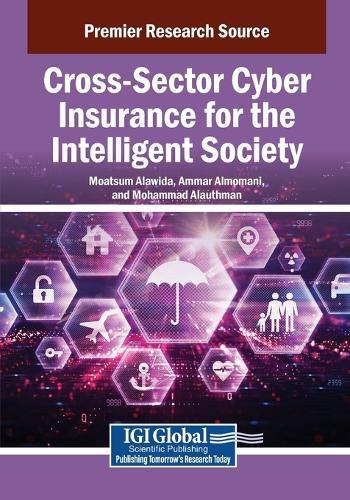
As societies utilize smart technologies, the need for cybersecurity measures and cross-sector cyber insurance grows more urgent. In an intelligent society, cyber incidents can have extreme impacts. Cross-sector cyber insurance emerges as a tool to manage these risks, offering financial protection, resilience planning, and coordinated response mechanisms. However, this field faces challenges in standardizing risk assessment, ensuring regulatory compliance, and fostering collaboration across industries. As threats become sophisticated, the development of cyber insurance frameworks is essential to safeguarding both public and private sectors in a digital world. Cross-Sector Cyber Insurance for the Intelligent Society explores the role of cyber insurance in managing digital risks across sectors within a connected and data-driven society. It examines how cross-sector collaboration, regulatory frameworks, and cyber threats influence the design of cyber insurance models. This book covers topics such as cyber technology, risk assessment, and healthcare systems, and is a useful resource for engineers, business owners, policymakers, educators, medical professionals, academicians, researchers, and scientists.
Full Product Details
Author: Moatsum Alawida ,
Ammar Almomani ,
Mohammad Alauthman
Publisher: IGI Global
Imprint: IGI Global
ISBN: 9798337363417
Pages: 330
Publication Date: 06 August 2025
Audience:
College/higher education
,
Professional and scholarly
,
Tertiary & Higher Education
,
Professional & Vocational
Format: Paperback
Publisher's Status: Active
Availability: In Print

This item will be ordered in for you from one of our suppliers. Upon receipt, we will promptly dispatch it out to you. For in store availability, please contact us.
Author Information
Moatsum Alawida is an Assistant Professor of Cybersecurity at Abu Dhabi University. He earned his PhD in Computer Science with a specialization in Cybersecurity (Cryptography) from the School of Computer Sciences, Universiti Sains Malaysia, in 2020. He has published over 55 articles in high-impact factor journals. From 2021 to 2024, he was ranked among the top 2% of scientists worldwide. His research interests include cybersecurity, chaotic systems, chaos-based cryptography, multimedia security, blockchain, quantum-based cryptography, and traditional cryptography. Dr. Alawida has served as a referee for esteemed journals such as IEEE, Springer, Elsevier and others. He has also contributed to numerous conferences as a committee member, presenter, and organizer. Additionally, he has received multiple internal and external research grants. Prof. Ammar Almomani : contacted at email: ammarnav6@bau.edu.jo Professor Ammar Almomani is an academic staff member in the School of Computing at Higher Colleges of Technology (HCT) in Sharjah, UAE, specializing in cybersecurity with a focus on artificial intelligence. He also served as the Head of the Research and Innovation Department before. and is a professor at Al-Balqa Applied University in Jordan. Academic and Professional Background: Prof. Almomani holds a Ph.D. in advanced internet security and monitoring from Universiti Sains Malaysia (USM), ranked #142 in the QS World University Rankings 2021. He also possesses a Master’s degree in Computer Information Systems focusing on e-commerce security and a Bachelor’s degree in Computer Science. With over 20 years of combined teaching and industry experience, he has worked at four leading academic institutions since 2006, teaching more than 47 topics across cybersecurity, computer science, and engineering disciplines. His expertise spans network security, wireless security, cryptography, cloud computing, ethical hacking, artificial intelligence, and big data analytics. Prof. Almomani also brings three years of industrial experience from the National Information Technology Center in Jordan. Research and Publications: A globally recognized researcher, Prof. Almomani was ranked among the Top 2% of influential researchers worldwide by Stanford University and the Scopus Index (2023-2024). With a prolific publication record of over 150 peer-reviewed articles, including 100 in Scopus-indexed journals (Scopus citations: 2000; H-index: 22), he also holds 10 patents granted in Germany and India. His works have earned 4080 citations on Google Scholar (H-index: 331; I-index: 66). He is a consultant and expert member of the UAE Research Map (R&D), frequently chairs international journals and conferences, and has a strong online following with over 108,000 readers on ResearchGate. Research Interests: Prof. Almomani’s research interests focus on cybersecurity topics, including internet and network security, wireless security, cryptography, intrusion detection systems (IDS), IoT security, and cloud computing. His work often leverages intelligent techniques for threat detection, especially in combating botnets, worms, and other cyber threats. With over 100 publications in cybersecurity, AI, and data science, he remains at the forefront of innovation in these fields. Dr. Mohammad Alauthman (contacted at email: mohammad.alauthman@uop.edu.jo) He is an associate professor and chair of the Information Security Department at the Faculty of Information Technology, University of Petra inAmman, Jordan. His research interests lie in network security, intrusion detection systems,and the application of artificial intelligence techniques like machine learning and deep learning for botnet detection, DDoS detection, spam email filtering, IoT security, and network traffic classification. He obtained his Ph.D. in computer science with a focus on network security from Northumbria University in the UK in 2016. Alauthman has been awarded several research grants in the field of network security, supporting his work on advanced intrusion detection systems and the development of AI-driven security solutions. These grants have enabled him to conduct extensive research and collaborate with international experts. His funded projects have focused on enhancing the resilience of network infrastructures against emerging threats and improving the accuracy of threat detection mechanisms.