Overview
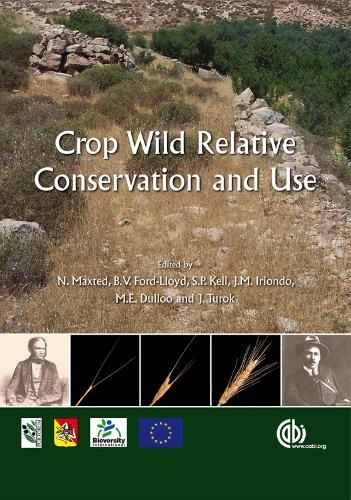
Crop wild relatives (CWR) are species closely related to crop plants which can contribute beneficial traits, such as pest or disease resistance and yield improvement. These species are critical for improving agricultural production and increasing food security. They are also essential components of natural and semi-natural habitats as well as agricultural systems, and are therefore vital in maintaining ecosystem health. However, CWR, like any other group of wild species, are subject to an increasing range of threats: habitat loss, degradation and mismanagement, over-collection and climate change. Through an examination of the national, regional and global context of CWR, these authoritative studies present methodologies and case studies that review and provide recommendations for global conservation and use. Topics range from the establishment of conservation priorities and strategies, threat assessment and genetic erosion and pollution.
Full Product Details
Author: Professor Nigel Maxted (University of Birmingham, UK) ,
Brian Ford-Lloyd (University of Birmingham, UK) ,
Dr Shelagh Kell (University of Birmingham, UK) ,
Jose M. Iriondo (Universidad Rey Juan Carlos, Spain)
Publisher: CABI Publishing
Imprint: CABI Publishing
Dimensions:
Width: 17.20cm
, Height: 3.80cm
, Length: 24.40cm
Weight: 1.719kg
ISBN: 9781845930998
ISBN 10: 1845930991
Pages: 720
Publication Date: 18 December 2007
Audience:
Professional and scholarly
,
Professional & Vocational
Format: Hardback
Publisher's Status: Active
Availability: In Print

This item will be ordered in for you from one of our suppliers. Upon receipt, we will promptly dispatch it out to you. For in store availability, please contact us.
Reviews
[A]n excellent and comprehensive review and integration of the latest information about crop wild relatives.-- Plant Protection Science
[A]n excellent and comprehensive review and integration of the latest information about crop wild relatives. --Plant Protection Science
[A]n excellent and comprehensive review and integration of the latest information about crop wild relatives.
Author Information
Professor and Consultant in Plant Genetic Conservation. Research Interests: Plant conservation and broader biodiversity conservation and use, with specific expertise in: field conservation, taxonomy, ecogeography, GIS, population sampling, population management, reserve management, on-farm conservation, gene flow and genetic diversity studies of various plant groups. Work experience throughout Africa, the Middle East, Caucasus, Central Asia and Europe. Shelagh Kell has been working internationally in the field of plant genetic resources conservation and sustainable use for more than 20 years. She is currently Project Manager and Research Fellow at the School of Biosciences, College of Life and Environmental Sciences, University of Birmingham (UoB), UK; Editor-in-Chief, Plant Genetic Resources: Characterization and Utilization, published by Cambridge University Press (CUP) on behalf of the National Institute of Agricultural Botany (NIAB), UK; and Chair of the Genetic Resources section of the European Association for Research on Plant Breeding (EUCARPIA). She has undertaken previous consultancies for the Secretariat of the International Treaty on Plant Genetic Resources for Food and Agriculture (ITPGRFA); Food and Agriculture Organization of the United Nations (FAO); Bioversity International; United Nations Development Programme (UNDP); and International Union for Conservation of Nature (IUCN). She has worked both within and outside Europe, including missions to China, the Indian Ocean, the Fertile Crescent, Mesoamerica and South America. She has also been an Author, Tutor, Research Supervisor and Examiner for the University of London External Programme since 2001. She is co-editor of two published volumes, lead and co-author of a range of peer-reviewed journal articles, book chapters and other publications, and is founder and co-editor of the newsletter, Crop wild relative. José María Iriondo Alegría is a full professor of the Biodiversity and Conservation Area of Rey Juan Carlos University (URJC) in Madrid (Spain). He holds a degree in Agricultural Engineering specialized in plant sciences, a specialist degree in Plant Genetic Resources and a PhD from the Plant Genetic Resources Conservation Program of the Technical University of Madrid (UPM). His research and training are specialized in in situ conservation of crop wild relatives (CWR) and wild food plants (WFP), threatened plants, and alpine plants affected by climate change. In 1999, he joined the working group on Crop Wild Relative Conservation of ECPGR (European Cooperative Programme for Plant Genetic Resources) and have since worked on CWR in Europe developing criteria, methodologies and standards for the conservation and management of these PGR, through active participation in four European research projects (PGR Forum, AEGRO, PGR Secure y Farmer's Pride). Presently, he is vice-chair of the CWR working group of ECPGR and a member of the Advisory Committee of EURISCO, the European database of plant genetic resources. His research is specialized in in situ plant conservation with a focus on population dynamics, reproductive biology, population genetics, biotic interactions and local adaptations in the context of climate change. Dr Dulloo is a Team Leader for a Bioversity International Initiative on Effective Genetic Resources Conservation and Use. Dr Dulloo is also co-Leader of the Genetic Diversity Cluster in the CGIAR Research Program on Roots, Tubers and Bananas, as well as co-Chair of the Crop Wild Relative Specialist Group. He has been a Senior Policy Officer at the FAO. He was the lead author of the 2005 Millennium Ecosystem Assessment Report and, more recently, lead author of Chapter 2.2 Status and Trends - Nature in the IPBES Global Assessment on Biodiversity and Ecosystem Services Report. He won the World Bank 2009 Development Marketplace Award on Climate Adaptation. Dr Dulloo has published widely on biodiversity and the conservation of genetic resources.