|
|
|||
|
||||
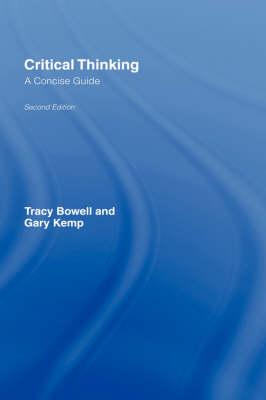
OverviewAttempts to persuade us - to believe something, to do something, to buy something - are everywhere. What is less clear is how to think critically about such attempts and how to distinguish those that are sound arguments. Critical Thinking: A Concise Guide is a much-needed guide to argument analysis and a clear introduction to thinking clearly and rationally for oneself. Accessibly written, this book equips students with the essential skills required to tell a good argument from a bad one. Key features of the book include: Clear, jargon-free discussion of key concepts in argumentation How to avoid common confusions surrounding words such as 'truth', 'knowledge' and 'opinion' How to identify and evaluate the most common types of argument How to spot fallacies and tell good reasoning from bad Chapter summaries, exercises, examples, and a glossary The second edition has been updated to include topical new examples from politics, sport, medicine and music, as well as new exercises throughout. Full Product DetailsAuthor: Tracey Bowell (University of Waikato, New Zealand) , Gary Kemp (University of Glasgow, UK)Publisher: Taylor & Francis Ltd Imprint: Routledge Edition: 2nd New edition Dimensions: Width: 15.60cm , Height: 2.30cm , Length: 23.40cm Weight: 0.726kg ISBN: 9780415343121ISBN 10: 0415343127 Pages: 336 Publication Date: 22 April 2005 Audience: Primary & secondary/elementary & high school , College/higher education , Educational: Primary & Secondary , Tertiary & Higher Education Replaced By: 9780415471824 Format: Hardback Publisher's Status: Out of Print Availability: In Print Limited stock is available. It will be ordered for you and shipped pending supplier's limited stock. Table of ContentsReviews'This concise guide offers relevant, rigorous and approachable methods... thoughtfully structured series of chapters, with clear definitions... this book [is] a valuable resource for developing a useful understanding of methods of persuasion.' - Times Educational Supplement 'This concise guide offers relevant, rigorous and approachable methods... thoughtfully structured series of chapters, with clear definitions... this book [is] a valuable resource for developing a useful understanding of methods of persuasion.' - Times Educational Supplement 'This concise guide offers relevant, rigorous and approachable methods... thoughtfully structured series of chapters, with clear definitions... this book [is] a valuable resource for developing a useful understanding of methods of persuasion.' - Times Educational Supplement Author InformationTracy Bowell is lecturer in philosophy at the University of Waikato, New Zealand. Gary Kemp is lecturer in philosophy at Glasgow University. Tab Content 6Author Website:Countries AvailableAll regions |
||||